

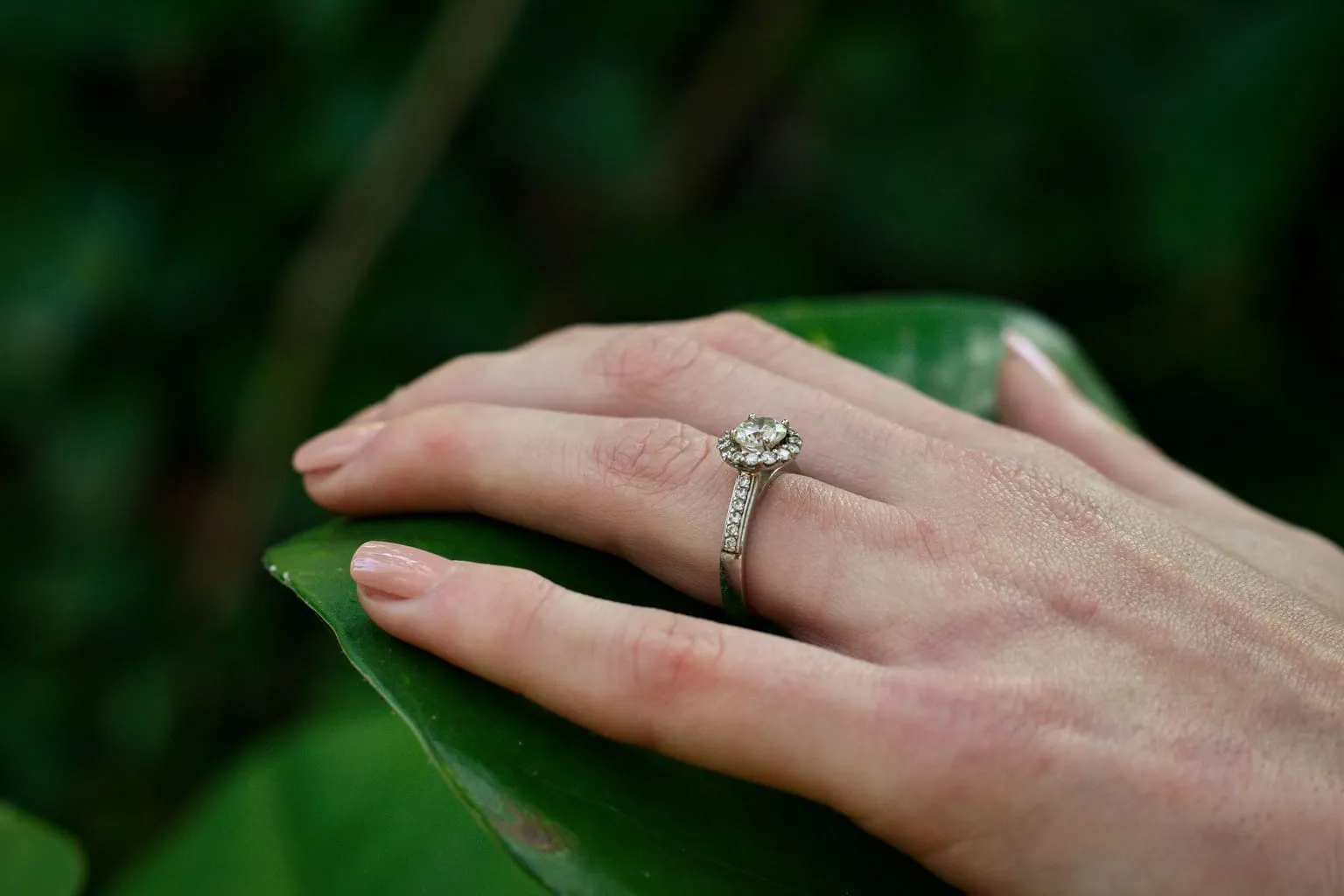
Diamond engagement rings are priced by four grades and by one fact a photograph never shows: whether the diamond grew in the ground or in a laboratory. On the six listings below, read on each seller’s own site on 23 September 2026, the same 1 carat round in the same 14K white gold setting cost about five times as much natural as lab-grown, and two of the six figures buy a setting with no center diamond in it at all. Our overall pick is Angara’s Knife-Edged Classic Round Diamond Solitaire, a complete 18K gold ring with a natural G, VS2 stone printed on the page, under $900.
What is on this page12 sections
Our Top Picks
- Our top pick
Best overall
Illustration of the setting type, not a photo of this ring.
Angara Knife-Edged Classic Round Diamond Solitaire Engagement RingA complete natural-diamond ring at an entry price, with the grade printed on the page rather than left to a photograph.
- 18K yellow gold
- $863
Best 1-carat natural diamond
Illustration of the setting type, not a photo of this ring.
Angara Solitaire Round Claw-Set Diamond Classic Engagement RingA full carat of natural diamond with the grade and the millimeter size stated for the exact configuration you pay for.
- 14K white gold
- $6,074
Best lab-grown for color and clarity
Illustration of the setting type, not a photo of this ring.
Angara Lab-Grown Round Diamond Tapered Cathedral Solitaire Engagement RingA near-colorless, very slightly included stone at half a carat, for a buyer who wants the top of the grade scales more than size.
- 14K yellow gold
- $1,052
Best 1-carat lab-grown value
Rare Carat Vivian Solitaire Engagement Ring With 1 Carat Round Lab Diamond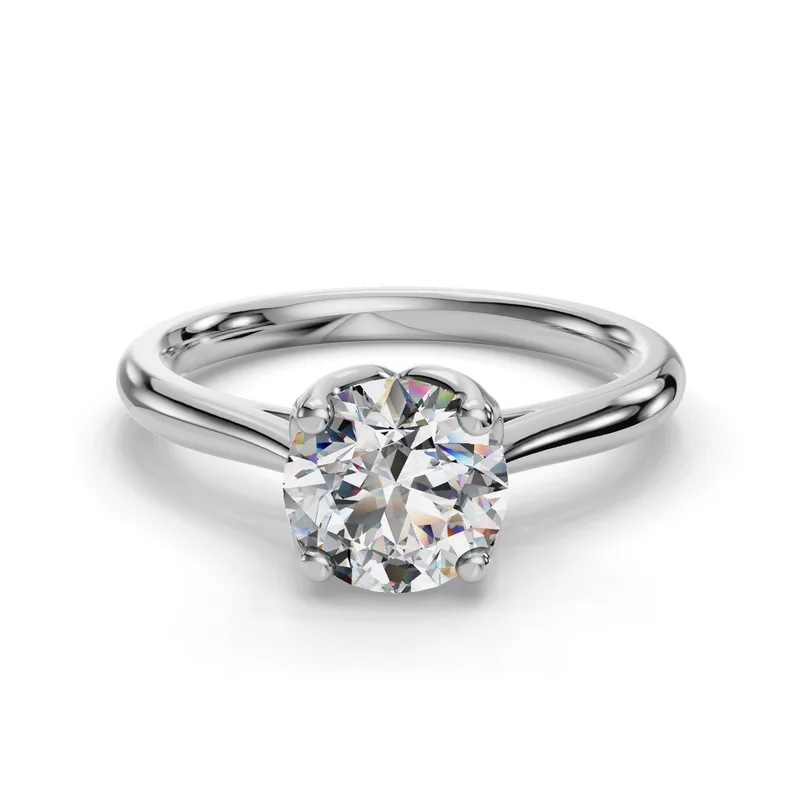
A full carat of lab-grown diamond for about what the half-carat lab-grown pick costs, for a buyer who puts size ahead of a top color grade.
- 14K white gold
- $1,335
Best setting for choosing your own diamond
Illustration of the setting type, not a photo of this ring.
With Clarity The Fleur RingA buyer who wants to pick the carat, color, clarity and origin of the center diamond instead of taking a seller's bundle.
- 14KT or 18KT gold in white, yellow or rose, or platinum
- $1,440 to $2,220
Best three-stone setting
Illustration of the setting type, not a photo of this ring.
With Clarity The Chrysler Pear Three Stone RingA three-stone design with the side-stone weight and grades already stated, for a buyer set on that style rather than a solitaire.
- 14KT or 18KT gold in white, yellow, rose or two-tone, or platinum
- $3,140 to $4,080
What is on this page12 sections
Key Takeaways
- On one Angara design read on 23 September 2026, moving from 1 to 2 carats of natural G, VS2 diamond multiplied the price by about 3.6, while the same step in lab-grown moved it from $1,205 to $1,907.
- The FTC’s Jewelry Guides define a diamond as essentially pure carbon with a hardness of 10 and a refractive index of 2.42, and since 2018 it no longer requires the stone to be natural, while a lab-grown stone sold as cultured must carry a qualifier such as laboratory-grown.
- Rapaport News, reporting The Knot’s 2026 Real Weddings Study, put the average natural-diamond engagement ring at 7,000 dollars for 1.6 carats and the average lab-grown ring at 4,300 dollars for 2 carats, for couples married in 2025.
- Edahn Golan’s lab-grown index fell 13% year over year in the second quarter of 2026 and is down 96% since July 2018, but those are wholesale prices for loose stones, not what a store charges for a ring.
- GIA grades cut only on round brilliants, so a cut label on any other shape, or a retailer’s own cut name, is the seller’s description rather than a GIA grade.
Diamond Engagement Rings Compared
Read the stone column before the price column. Four of these figures buy a finished ring with its diamond stated, and two buy the metal around a diamond you have not chosen yet. Prices are as each page opened, or as configured where the link says so, on 23 September 2026, in US dollars.
| Ring | Price range | Center stone, per the listing | Metal | Returns, per the seller | Resizing, per the seller |
|---|---|---|---|---|---|
| $863 | Natural round diamond, 1/6 ct tw, G color, VS2 clarity, enhancement stated as none | 18K yellow gold | Free 30-day returns from the date of delivery, free return shipping in the US; two free return labels per order | One free resizing within the first year, under the lifetime warranty | |
Angara Solitaire Round Claw-Set Diamond Classic Engagement RingBest 1-carat natural diamond | $6,074 | Natural round diamond, 1 ct tw, G color, VS2 clarity, 6.4mm, enhancement stated as none | 14K white gold | Free 30-day returns from the date of delivery, free return shipping in the US; two free return labels per order | One free resizing within the first year, under the lifetime warranty |
Angara Lab-Grown Round Diamond Tapered Cathedral Solitaire Engagement RingBest lab-grown for color and clarity | $1,052 | Lab-grown round diamond, 1/2 ct tw, D-E color, VVS clarity | 14K yellow gold | Free 30-day returns from the date of delivery, free return shipping in the US; two free return labels per order | One free resizing within the first year, under the lifetime warranty |
Rare Carat Vivian Solitaire Engagement Ring With 1 Carat Round Lab DiamondBest 1-carat lab-grown value | $1,335 | Lab-grown round diamond, 1.00 ct, H color, VS1 clarity, cut labeled Rare Carat Ideal Cut | 14K white gold | Free 30-day returns and a stated 100% money back guarantee | 1-year free resizing, per the product page |
With Clarity The Fleur RingBest setting for choosing your own diamond | $1,440 to $2,220 | None included: the center diamond is chosen separately, in round, marquise, oval or elongated cushion | 14KT or 18KT gold in white, yellow or rose, or platinum | Returns within 30 days, free within the US; not accepted at With Clarity's stores | Complimentary within 30 days of receipt |
With Clarity The Chrysler Pear Three Stone RingBest three-stone setting | $3,140 to $4,080 | Lab-grown side stones included, pear and round, 1 1/3 ct total, average color F+ and clarity VS+; center stone (round, emerald or oval) chosen separately | 14KT or 18KT gold in white, yellow, rose or two-tone, or platinum | Returns within 30 days, free within the US; not accepted at With Clarity's stores | Complimentary within 30 days of receipt |
Price ranges from the makers' sites, checked 23 September 2026. Prices change; the maker's site has the current one.
The Best Diamond Engagement Rings, Reviewed
Best overall
Angara Knife-Edged Classic Round Diamond Solitaire Engagement Ring
by Angara
Best for: A complete natural-diamond ring at an entry price, with the grade printed on the page rather than left to a photograph.
A complete natural-diamond ring with the carat, color, clarity and treatment printed in the listing's diamond information block, so the figure is the whole ring and not a setting waiting for a stone.
Illustration of the setting type, not a photo of this ring.
What we like
- Carat, color, clarity and the words Enhancement: None are all stated for the configuration priced
- Solid 18K gold and a natural diamond in a complete ring under $900
- Angara publishes a chart of what each fractional carat label covers, and its 1/6 label means 0.15 to 0.17 ct
Keep in mind
- 1/6 ct is a small stone, and this design stops at 1/2 ct
- No grading laboratory is named on the product page for this stone
- After the 30-day window Angara's policy charges a 20% restocking fee and no free label
- Price range
- $863 as the page opened (marked down from $959)
- Material
- 18K yellow gold
- Widths
- Not published for this design
- Sizes
- 3 to 15 in quarter sizes, per the size selector
- Guarantee
- Lifetime warranty covering re-polishing, stone tightening, rhodium re-plating and one free resizing in the first year; returns refused on a ring repaired, resized or engraved by another jeweler
Best 1-carat natural diamond
Angara Solitaire Round Claw-Set Diamond Classic Engagement Ring
by Angara
Best for: A full carat of natural diamond with the grade and the millimeter size stated for the exact configuration you pay for.
One design sold at 3/4, 1, 2 and 3 carats in five natural and lab-grown qualities, which makes it the clearest place we found to see what each of the 4Cs costs while the setting stays the same.
Illustration of the setting type, not a photo of this ring.
What we like
- Carat, color, clarity and a 6.4mm diameter all stated for the configuration priced
- 14K white gold, the harder and cheaper of the two karats most US engagement rings use
- The same page switches to lab-grown stones and renames the product Lab-Grown when you do, so the comparison is honest
Keep in mind
- About seven times the price of the 1/6 ct pick above
- A configurable page shows a different price at every carat, quality and metal; this figure is for the exact configuration linked
- No grading laboratory is named on the product page for this stone
- Price range
- $6,074 as configured (marked down from $6,749)
- Material
- 14K white gold
- Widths
- Not published for this design
- Sizes
- 3 to 15 in quarter sizes, per the size selector
- Guarantee
- Lifetime warranty covering re-polishing, stone tightening, rhodium re-plating and one free resizing in the first year; returns refused on a ring repaired, resized or engraved by another jeweler
Best lab-grown for color and clarity
Angara Lab-Grown Round Diamond Tapered Cathedral Solitaire Engagement Ring
by Angara
Best for: A near-colorless, very slightly included stone at half a carat, for a buyer who wants the top of the grade scales more than size.
The words lab-grown sit in the product name itself, and the page offers a 3/4 ct upgrade on the same ring for $117 more.
Illustration of the setting type, not a photo of this ring.
What we like
- D-E color and VVS clarity, near the top of both GIA scales, with lab-grown disclosed in the product title
- A complete ring, not a setting, at just over $1,000
- The step to 3/4 ct on the same ring costs little, which is the lab-grown price curve in one click
Keep in mind
- Color and clarity are given as ranges (D-E, VVS) rather than a single grade
- No grading laboratory is named on the product page for this stone
- Half a carat is modest next to what the same money buys lower down the grade scales
- Price range
- $1,052 as the page opened (marked down from $1,169)
- Material
- 14K yellow gold
- Widths
- Not published for this design
- Sizes
- 3 to 15 in quarter sizes, per the size selector
- Guarantee
- Lifetime warranty covering re-polishing, stone tightening, rhodium re-plating and one free resizing in the first year; returns refused on a ring repaired, resized or engraved by another jeweler
Best 1-carat lab-grown value
Rare Carat Vivian Solitaire Engagement Ring With 1 Carat Round Lab Diamond
by Rare Carat
Best for: A full carat of lab-grown diamond for about what the half-carat lab-grown pick costs, for a buyer who puts size ahead of a top color grade.
The page itemizes the complete ring as $395 for the diamond and $940 for the setting, so you can see that the stone is under a third of the price.
What we like
- A full carat in a complete ring for close to the price of the half-carat pick above
- 1-year free resizing, the longest free resizing window stated on any product page here
- The diamond and setting prices are shown separately, which no other complete ring here does
Keep in mind
- Ideal Cut is Rare Carat's own label, not a GIA cut grade
- No grading laboratory is named on this product page
- H color and VS1 clarity sit a step below the D-E, VVS lab-grown pick
- Price range
- $1,335 for the complete ring
- Material
- 14K white gold
- Widths
- Not published on the page we read
- Sizes
- 3 to 10, per the product data
- Guarantee
- Stated as guaranteed for life on the product page; the setting is handcrafted in the USA and finished to order
- Made in
- USA, per the listing
Best setting for choosing your own diamond
With Clarity The Fleur Ring
by With Clarity
Best for: A buyer who wants to pick the carat, color, clarity and origin of the center diamond instead of taking a seller's bundle.
A vintage-style solitaire setting that the description calls a six-prong setting inspired by a blooming flower, with engraving along the bridge, priced as a setting and labeled Lab Diamond Setting Price on the page.
Illustration of the setting type, not a photo of this ring.
What we like
- Seven metal options with a published price for each: $1,440 in 14KT, $2,070 in 18KT and $2,220 in platinum
- Four center-stone shapes on the same setting
- 30-day complimentary resizing written on the product page itself
Keep in mind
- Every figure is the setting only; the center diamond is priced and added separately
- The lifetime warranty excludes the center stone
- With no stone included there is no carat, color or clarity to compare with the complete rings
- Price range
- $1,440 to $2,220, setting only
- Material
- 14KT or 18KT gold in white, yellow or rose, or platinum
- Widths
- 2mm, per the product details
- Sizes
- Chosen on the listing
- Guarantee
- Lifetime cleaning and replacement of stones under 0.10ct from everyday wear; center stones on engagement rings are not covered
Best three-stone setting
With Clarity The Chrysler Pear Three Stone Ring
by With Clarity
Best for: A three-stone design with the side-stone weight and grades already stated, for a buyer set on that style rather than a solitaire.
Pear side stones on milgrain pavé shoulders around a four-prong center, with the side-stone weight, origin and average grades printed in the product details.
Illustration of the setting type, not a photo of this ring.
What we like
- Ten gold and two-tone combinations plus platinum: $3,140 in 14KT, $3,930 in 18KT and $4,080 in platinum
- Side-stone weight, origin and average grades stated rather than left as accent diamonds
- Three center-stone shapes on the same setting
Keep in mind
- The highest setting-only price on this page, before any center stone is added
- The side stones are lab-grown, so a natural center would sit beside lab-grown shoulders
- Center stone chosen and priced separately, the same caveat as the Fleur
- Price range
- $3,140 to $4,080, setting only
- Material
- 14KT or 18KT gold in white, yellow, rose or two-tone, or platinum
- Widths
- 2.86mm to 3mm band, 2.2mm to 2.9mm high, per the product details
- Sizes
- Chosen on the listing
- Guarantee
- Lifetime cleaning and replacement of stones under 0.10ct from everyday wear; center stones on engagement rings are not covered
How We Chose
- Every listing opened on the seller’s own site on 23 September 2026, from the US store and in US dollars, with the sale price and the struck-through price both recorded where a page showed two.
- Both kinds of diamond represented, natural and lab-grown, because the choice between them moves the price more than any single grade does.
- Settings labeled as settings, because a setting figure and a finished ring figure are not comparable when only one of them has a center diamond in it.
- One design priced at every carat and quality it offers, so the effect of each grade could be read without changing the ring around it.
- Every grade copied from the listing, never judged from a photograph, and anything a page did not state written as not stated.
- No star ratings, no review counts and nothing about how a ring looks worn, because we did not buy or wear these rings.
What Makes a Diamond a Diamond
Section 23.12 of the FTC Jewelry Guides defines a diamond as a mineral consisting essentially of pure carbon crystallized in the isometric system, with a hardness of 10, a specific gravity of about 3.52 and a refractive index of 2.42. It calls it unfair or deceptive to use the unqualified word diamond for anything that does not meet that definition. That is the line between a diamond and a simulant such as cubic zirconia or moissanite, which our guide to diamond alternatives compares, and between a diamond and a moissanite engagement ring that looks like one.
What the Listing Has to Say About a Lab-Grown Stone
In its 2018 revision, published in the Federal Register, the FTC removed the word natural from the definition, because lab-created stones with essentially the same optical, physical and chemical properties as mined diamonds are also diamonds. What the guides require instead is disclosure. Section 23.12(c)(3) allows a lab-created diamond to be called cultured only with a clear and conspicuous qualifier such as laboratory-created or laboratory-grown. Both lab-grown complete rings on this page say so in their product names, and the Angara claw-set page renames the product Lab-Grown the moment you switch its quality selector to a lab stone. Treat a listing that says only diamond, at a price that looks like a lab-grown price, as a question to ask before you pay.
The 4Cs, and Which Ones Move the Price Most
GIA writes that the value and quality of a diamond reflects all 4Cs and not just carat weight. The most useful way to see what that means in money is to hold the ring still and change one grade at a time. Angara’s claw-set solitaire, our 1 carat natural pick, sells the same 14K white gold setting at four carat weights and five qualities, so on 23 September 2026 we priced it across them.
| Angara claw-set solitaire, 14K white gold | Origin | Price in US dollars, read 23 September 2026 |
|---|---|---|
| 3/4 ct, I-J, I1-I2 | Natural | 2,645 |
| 3/4 ct, H, SI2 | Natural | 2,879 |
| 3/4 ct, G, VS2 | Natural | 3,743 |
| 1 ct, I-J, I1-I2 | Natural | 3,851 |
| 1 ct, H, SI2 | Natural | 4,508 |
| 1 ct, G, VS2 | Natural | 6,074 |
| 2 ct, G, VS2 | Natural | 22,049 |
| 3 ct, G, VS2 | Natural | 74,177 |
| 1 ct, F-G, VS | Lab-grown | 1,205 |
| 1 ct, D-E, VVS | Lab-grown | 1,250 |
| 2 ct, F-G, VS | Lab-grown | 1,907 |
| 3 ct, F-G, VS | Lab-grown | 2,537 |
Three readings. Carat is the steepest grade on a natural stone: each whole carat added multiplied the price by more than three. Color and clarity matter but less: at 1 carat, the step from the lowest quality Angara offers to G, VS2 added about 58%. And on lab-grown stones every grade is cheap, so the top quality at 1 carat cost only 45 dollars more than the next one down, and 3 carats cost about twice what 1 carat did. For how price climbs carat by carat across more sellers, see our guide to diamond ring price by carat.
Carat: Weight, Not Size
GIA defines a metric carat as 200 milligrams, and adds that if two diamonds were identical in color, clarity and cut, the heavier one would be rarer and would likely cost more. Carat is a weight. How big a stone looks depends on its shape and proportions as well, and GIA (2025) writes that elongated shapes such as oval, marquise and pear can look larger than a round of the same carat weight. One more thing to read on a listing: a fraction is a band, not a number. Angara’s own carat range chart, printed on each of its product pages, gives its 1 carat label as 0.96 to 1.11 carats and its 3/4 label as 0.70 to 0.79. Ask for the exact weight if it matters to you.
Color: D to Z
GIA’s D-to-Z scale grades how much color a diamond shows, from D for colorless to Z for light yellow, light brown or light gray, with every letter in between receiving a grade. Three of our picks give a single letter (G on both Angara natural rings, H on Rare Carat’s lab-grown one) and one gives a range, D-E, which is how Angara grades its lab-grown qualities. Since 1 October 2025 GIA itself describes lab-grown stones as Premium or Standard rather than grading them on its natural-diamond scales, so a letter on a lab-grown listing is the seller’s or another laboratory’s.
Clarity: FL to I3
GIA’s clarity scale has eleven grades in six groups: Flawless, Internally Flawless, VVS1 and VVS2, VS1 and VS2, SI1 and SI2, and I1, I2 and I3. GIA describes VS stones as having inclusions observed with effort but minor, SI as having noticeable inclusions, and the I grades as obvious inclusions which may affect transparency, brilliance and durability. The cheapest quality on our one-design table is I1-I2, the group GIA ties to durability, and that is worth knowing before you choose it to reach a bigger carat.
Cut: A Grade Only Rounds Get
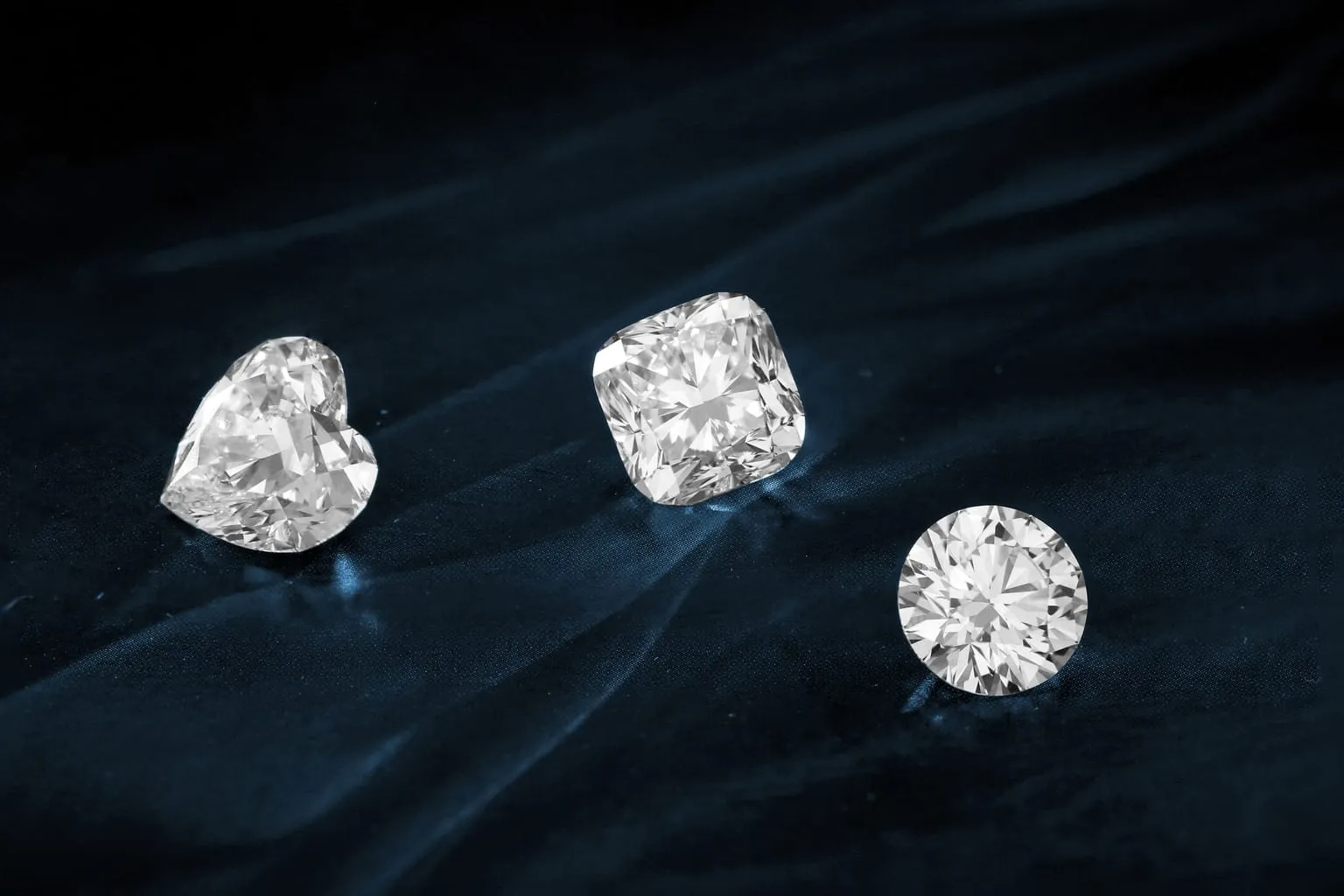
GIA gives cut grades only to round brilliant diamonds, from Excellent to Poor, because they are the only cut with standardized facets. Rare Carat’s Ideal Cut is the retailer’s own label, not a GIA grade, and none of our complete rings names the laboratory that graded its stone on the product page. Shapes, and which ones cost less per carat, are compared in our guide to engagement ring shapes.
Natural or Lab-Grown: What Changes and What Doesn’t
The definition does not change and neither does the hardness. What changes is the price, how the price behaves over time, and the word the listing must carry.
The Price Gap on One Design
On the Angara table above, a natural 1 carat G, VS2 cost about five times a lab-grown 1 carat F-G, VS in the same setting. At 2 carats the natural stone cost more than eleven times as much, and at 3 carats nearly thirty times. The gap widens with size because natural prices climb steeply by carat and lab-grown prices climb far more slowly. Rapaport News, reporting The Knot’s 2026 study, found that buyers of lab-grown rings spent less on average and still bought larger stones than buyers of natural ones.
What Lab-Grown Prices Are Doing
Edahn Golan Diamond Research and Data wrote in its Q2 2026 lab-grown price list that its wholesale index declined 13% year over year and is down 96% since it began tracking in July 2018, with 2 carat stones down 20% on the year and 1 carat rounds up 1%. Those are wholesale prices for loose stones, not retail ring prices, and a store’s price includes the setting, the labor and its margin. The direction is still the useful part: a wholesale index that keeps falling is no basis for expecting a lab-grown stone to hold its purchase price. Our full comparison is in lab-grown vs natural diamonds, and which stores sell lab-grown stones on the best written terms is in where to buy lab-grown diamonds.
Setting Price or Ring Price: What a Listing Is Charging For
Every organic result on the first page for this search on 23 September 2026 was a shop, and shop cards show a photograph, a name and a number. What the number covers is decided one click deeper.
Complete Rings
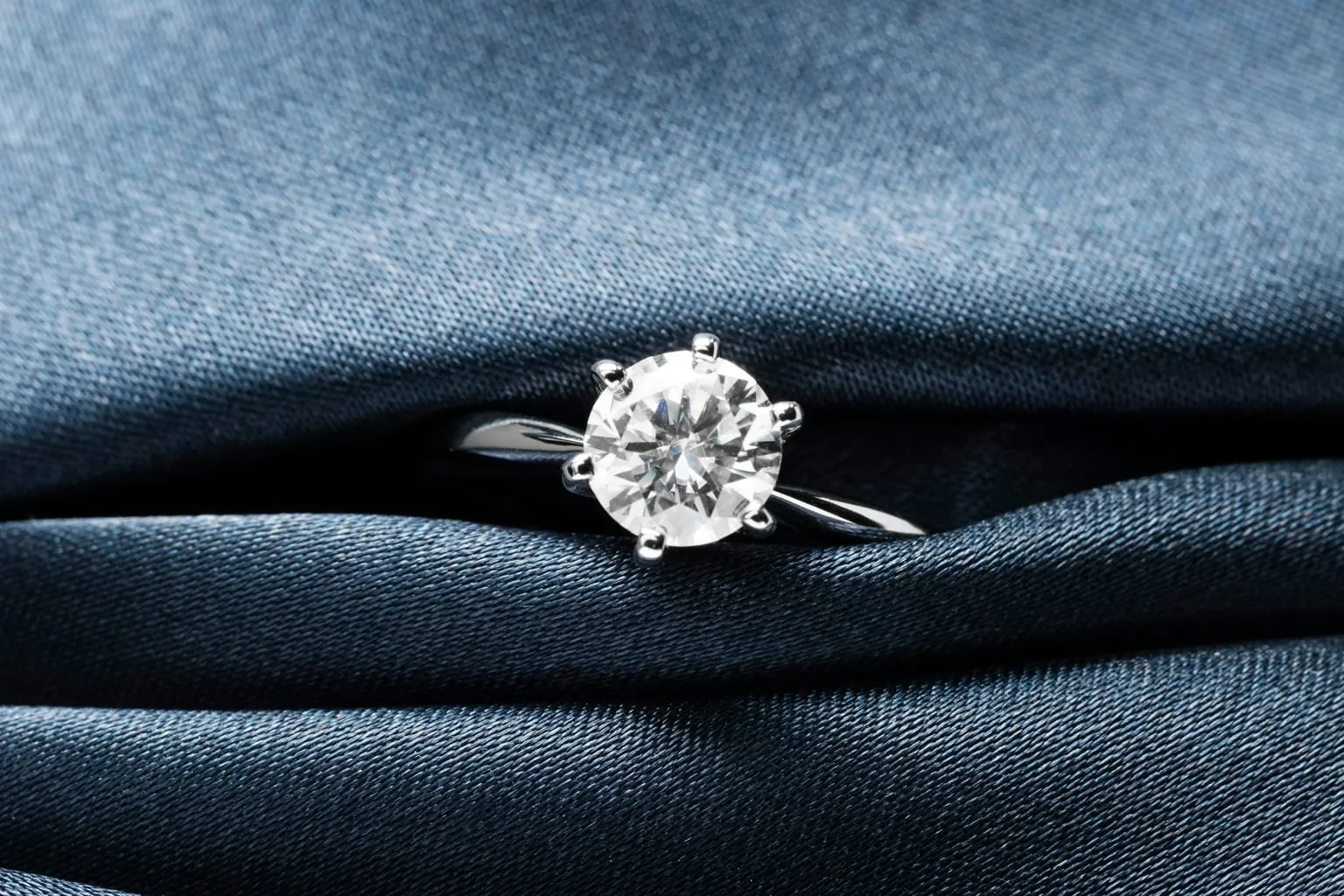
Four of our picks price a finished ring. Angara names the carat, color, clarity and treatment for the configuration you are looking at, and Rare Carat goes a step further by splitting its complete ring into a diamond line and a setting line. On the Vivian the diamond was less than a third of the total, so on that ring the setting, not the stone, took most of the money.
Settings
With Clarity prices the Fleur and the Chrysler as settings, with the words center stone not included beside the buy button. That model is what lets you put a natural or a lab-grown stone in the same mount, and our guide to engagement ring settings covers what each style asks of the stone. The quick check: if a page offers a shape but never a carat, a color and a clarity for the center, you are looking at a setting.
Side Stones Count Too
The Chrysler’s figure already includes 1 1/3 carats of pear and round side stones, stated as lab-grown with average grades of F+ and VS+. If you put a natural center in it, the ring will be natural in the middle and lab-grown on the shoulders, which is fine if you know it and a surprise if you don’t. The same check applies to any halo or pavé band: find the line that says what the small stones are.
Diamond Wedding Rings or Diamond Wedding Bands?
Searches for diamond wedding rings mostly mean engagement rings. On 23 September 2026 four of the top nine results for diamond wedding rings were collection pages that also ranked for diamond engagement rings, so if a solitaire, a halo or a three-stone ring is what you had in mind, the picks above are the answer. If you mean the band worn beside it, whether a pavé row, a channel of small stones or a full eternity band, that is a different purchase with its own sizing questions, and our guide to diamond wedding bands covers it. Buyers shopping for a man’s diamond ring should start with engagement rings for men, and a design no seller stocks is the territory of custom engagement rings.
Which Diamond Engagement Ring Fits Your Budget?
Work down the left column until a row matches you. Every row traces to a listing we opened on 23 September 2026 or to a source quoted above.
| Your situation | What usually works | Why |
|---|---|---|
| Under $500 | Several small diamonds in 10K gold, or a tiny lab-grown solitaire | Our engagement rings under $500 page priced what exists at that line |
| Under $1,000 | A complete ring with a small natural diamond | Angara’s knife-edged solitaire opened under $900 with a G, VS2 stone; see engagement rings under $1,000 and affordable engagement rings |
| $1,000 to $2,000, largest stone | Lab-grown, in a plain solitaire | 1 to 2 carats lab-grown on the Angara claw-set design fell in this band |
| $1,000 to $2,000, top grades | Lab-grown at half a carat | Angara’s cathedral solitaire opened a little over $1,000 in D-E, VVS |
| You want to choose the diamond yourself | A setting, priced as a setting | With Clarity’s Fleur ran $1,440 to $2,220 before any stone |
| A natural 1 carat round | Budget $3,851 to $6,074 on one design | The range across Angara’s three natural qualities at 1 carat |
| Under $10,000 | Natural up to about 1.5 carats, or lab-grown at 3 and above | Our engagement rings under $10,000 page priced that tier |
| You prefer yellow gold | 14K or 18K, stated on the listing | Our gold engagement rings page reads karat and plating language |
| You care most about the store’s terms | Compare returns and resizing first | Our engagement ring stores comparison quotes each policy |
For what couples spend on average, see average engagement ring cost, and for how to set a number of your own, how much to spend on an engagement ring.
Frequently Asked Questions
How Much Should a Real Diamond Engagement Ring Cost?
A real diamond engagement ring should cost what its grades and origin add up to, since no authority sets a right amount. On the complete rings we read on 23 September 2026, natural stones ran $863 to $6,074 and lab-grown ones $1,052 to $1,335. What couples actually spend, from a named survey, is in our average engagement ring cost guide.
Is $2000 Cheap for an Engagement Ring?
It is below what couples spent in 2025 in The Knot’s study, as Rapaport News reported it, but not cheap in what it buys. Under that line, Angara’s claw-set design held a 2 carat lab-grown F-G, VS round on 23 September 2026, while our natural picks stayed at a fraction of a carat. The origin decides it.
Is $3000 Too Little for an Engagement Ring?
No, as long as the money goes where it works hardest. Three thousand dollars covered a 3 carat lab-grown round in 14K white gold on the Angara design we priced, or a 3/4 carat natural stone in its two lower qualities. We found no authority that publishes a floor below which an engagement ring stops counting.
How Big of a Diamond Can You Get for $3,000?
You can get about 3 carats lab-grown or a little under a carat natural for three thousand dollars, on the listings we read. Angara’s natural 3/4 carat ran from $2,645 to $3,743 depending on quality. Shape changes the look as well, and our engagement ring shapes guide explains which ones face up larger.
Is $10,000 Cheap for an Engagement Ring?
No, ten thousand dollars is above the average The Knot’s 2026 study found for either natural or lab-grown rings, as Rapaport News reported it. On the Angara design we priced, it covered a natural 1 carat G, VS2 with money to spare but not 2 carats, which cost more than twice that. Our under $10,000 page covers the tier.
Is a 2 Carat Ring Considered Big?
A 2 carat ring is above the typical natural center stone and about typical for lab-grown. In The Knot’s 2026 figures, as Rapaport News reported them, natural buyers averaged 1.6 carats and lab-grown buyers 2 carats. Carat is weight, and GIA notes that an oval or pear can look larger than a round of the same carat.
What Does a $100,000 Engagement Ring Look Like?
No listing we opened reached that price, so the nearest thing we can describe is a 3 carat natural G, VS2 round in 14K white gold, which cost just over seventy-four thousand dollars on Angara’s claw-set design. The same 3 carats lab-grown cost under $2,600 on the same page. Above that, what rises is carat, color and clarity.
Is Costco the Best Place to Buy Diamond Rings?
Costco is one reasonable place, not the best by any measure we found, because we found no independent ranking of jewelers to settle it. Its own help page says it is not able to customize items offered on Costco.com, so a ring cannot be sized before it ships. Our engagement ring stores comparison reads Costco’s terms beside fifteen other stores.
Sources
- Federal Trade Commission, eCFR, 16 CFR 23.12, Definition and misuse of the word “diamond”, current as accessed 11 September 2026.
- Federal Trade Commission, Federal Register, Guides for the Jewelry, Precious Metals, and Pewter Industries, 16 August 2018.
- GIA 4Cs, Diamond Carat Weight, 2025, accessed 11 September 2026.
- GIA 4Cs, Diamond Color, undated, accessed 23 September 2026.
- GIA 4Cs, Diamond Clarity, undated, accessed 23 September 2026.
- GIA 4Cs, Diamond Cut, undated, accessed 11 September 2026.
- GIA 4Cs, Guide to Diamond Shapes for Engagement Rings, 2025.
- GIA, GIA Launches Updated Laboratory-Grown Diamond Services October 1, 2025.
- Rapaport News, Lab-Grown ‘Taking Over’ Engagement-Ring Spending: The Knot, 2026, reporting The Knot 2026 Real Weddings Study.
- Edahn Golan Diamond Research and Data, After a 96% Decline, What’s Next for Lab-Grown Diamond Prices?, 2026.
- Costco, Can I Return Jewelry Purchased on Costco.com?, undated, accessed 14 September 2026.
- Angara, Knife-Edged Classic Round Diamond Solitaire Engagement Ring, Solitaire Round Claw-Set Diamond Classic Engagement Ring and Lab-Grown Round Diamond Tapered Cathedral Solitaire Engagement Ring (retailer), US store, undated, accessed 23 September 2026.
- Angara, Return and Exchange Policy, undated, accessed 23 September 2026.
- Rare Carat, Vivian Solitaire Engagement Ring With 1 Carat Round Lab Diamond (retailer), undated, accessed 23 September 2026.
- With Clarity, The Fleur Ring and The Chrysler Pear Three Stone Ring (retailer), undated, accessed 23 September 2026.