

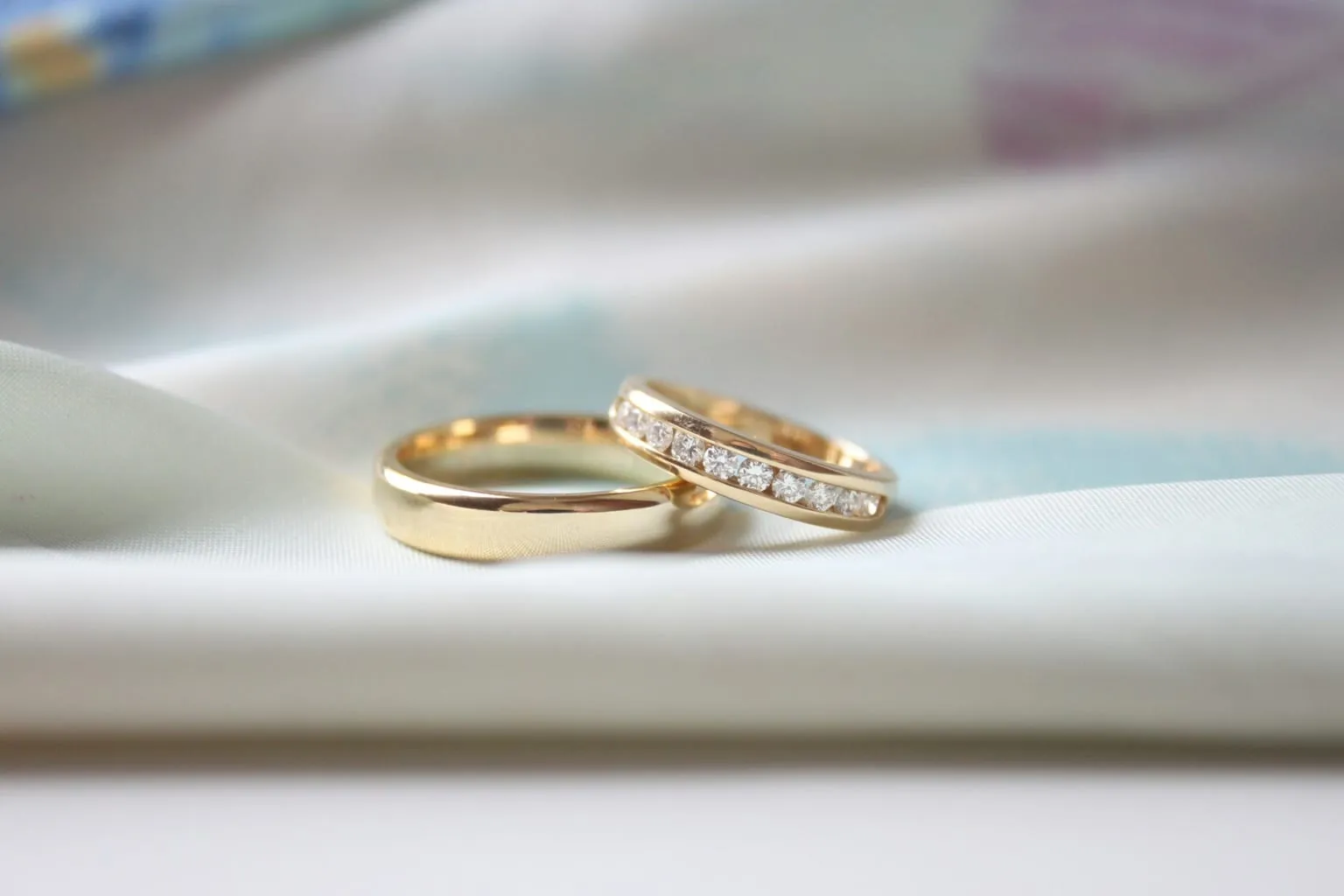
A curved wedding band is a band whose top edge dips so that it can sit flush under an engagement ring whose head or stones would stop a straight band short. Whether you need one is decided by your engagement ring’s setting height, not by taste: Brilliant Earth’s 2026 guide calls setting height the biggest factor in whether a straight band sits flush. Our top pick is the Angara Comfort Fit Curved Plain band, sold in four widths; for the lowest price choose the Brilliant Earth 1.5mm Curved Wedding Ring, and for a pear or marquise point, a chevron.
What is on this page10 sections
Our Top Picks
- Our top pick
Best overall curved band
Illustration of the setting type, not a photo of this ring.
Angara Comfort Fit Curved Plain Wedding BandA curved band with real presence, in the width that lines up with your engagement ring.
- 14K or 18K white, yellow or rose gold, platinum
- From $710 (14K gold, 4.1mm) to $1,205 (18K gold, 5.79mm)
Best budget curve
Illustration of the setting type, not a photo of this ring.
Brilliant Earth 1.5mm Curved Wedding RingA slim curve at the price of a plain band, when the engagement ring should do the talking.
- 14K or 18K white or yellow gold, 14K rose gold, platinum
- From $490 (14K gold) to $790 (platinum)
Best slim contour
Illustration of the setting type, not a photo of this ring.
Angara Contoured Comfort Fit Wedding Band for HerA thin contour beside a delicate engagement ring, with a comfort fit inside.
- 14K or 18K white, yellow or rose gold, platinum
- From $818 (14K gold, 1.5mm) to $1,043 (platinum, 1.8mm)
Best diamond curve
Illustration of the setting type, not a photo of this ring.
Blue Nile Crescendo Curved Diamond Wedding Ring (1/2 ct. tw.)A curve that adds a line of diamonds under the center stone.
- 14K white gold, with natural or lab-grown diamonds
- $1,640
Best diamond chevron
Illustration of the setting type, not a photo of this ring.
Angara Pear and Round Diamond V-Shaped Wedding RingA chevron that frames a pear, marquise or oval point with its own diamonds.
- 14K or 18K white, yellow or rose gold, platinum
- From $971 (14K gold, natural K, I3) to $1,664 (18K gold, natural G, VS2)
Best plain chevron
Illustration of the setting type, not a photo of this ring.
Brilliant Earth Chevron RingA plain V at the lowest price, for a pear or marquise that points toward the band.
- 14K or 18K white or yellow gold, 14K rose gold, platinum
- $490 to $790 (14K gold to platinum)
What is on this page10 sections
Key Takeaways
- Check your engagement ring from the side first: a high-set head leaves room for a straight band, and a low one usually needs a curve (Brilliant Earth).
- Curved, contour, contoured and shaped are sold as one thing; one jeweler draws the line that a curved band is a general shape and a contoured band follows one ring’s outline more closely.
- A chevron or V band is a curve with a point, made for stones that point along the finger, such as a pear or marquise.
- Blue Nile marks its shaped inserts “This ring cannot be resized” on the product page, so read the size line before you buy any shaped band.
- Of the six picks here, prices moved on two between checks a few days apart, so the dated price in each card is the one that counts.
Curved Wedding Bands Compared
Six bands: three plain curves in different widths, one curve set with diamonds, and two chevrons, one plain and one with stones. Prices are the maker’s own, with the date we read them.
| Ring | Shape | Price range | Material | Widths | Sizes |
|---|---|---|---|---|---|
Angara Comfort Fit Curved Plain Wedding BandBest overall curved band | Curved, plain | From $710 (14K gold, 4.1mm) to $1,205 (18K gold, 5.79mm) | 14K or 18K white, yellow or rose gold, platinum | 4.1mm, 4.6mm, 5.23mm or 5.79mm (selectable) | 3 to 15 in quarter sizes |
Brilliant Earth 1.5mm Curved Wedding RingBest budget curve | Curved, plain | From $490 (14K gold) to $790 (platinum) | 14K or 18K white or yellow gold, 14K rose gold, platinum | 1.5mm | Less than 3 to greater than 12, quarter sizes |
Angara Contoured Comfort Fit Wedding Band for HerBest slim contour | Contoured, plain | From $818 (14K gold, 1.5mm) to $1,043 (platinum, 1.8mm) | 14K or 18K white, yellow or rose gold, platinum | 1.5mm or 1.8mm (selectable) | 3 to 15 in quarter sizes |
Blue Nile Crescendo Curved Diamond Wedding Ring (1/2 ct. tw.)Best diamond curve | Curved, diamond set | $1,640 | 14K white gold, with natural or lab-grown diamonds | 2.00mm | Not stated |
Angara Pear and Round Diamond V-Shaped Wedding RingBest diamond chevron | Chevron (V), diamond set | From $971 (14K gold, natural K, I3) to $1,664 (18K gold, natural G, VS2) | 14K or 18K white, yellow or rose gold, platinum | 4.8mm across the V, height 2.7mm | 3 to 15 in quarter sizes |
Brilliant Earth Chevron RingBest plain chevron | Chevron (V), plain | $490 to $790 (14K gold to platinum) | 14K or 18K white or yellow gold, 14K rose gold, platinum | 1.4mm | Less than 3 to greater than 12, quarter sizes |
Price ranges from the makers' sites, checked September 2026. Prices change; the maker's site has the current one.
Two figures in that table matter more than the price. The width decides whether the band looks like a partner to your engagement ring or a second ring beside it, and Angara is the only maker here that sells one curved design in four widths, from 4.1 to 5.79 millimeters. The size range decides whether the band exists for your finger at all: Angara runs from 3 to 15 in quarter sizes on all three of its bands, while Blue Nile’s Crescendo page did not state a range when we read it.
The Best Curved Wedding Bands, Reviewed
Best overall curved band
Angara Comfort Fit Curved Plain Wedding Band
by Angara
Best for: A curved band with real presence, in the width that lines up with your engagement ring.
A plain contoured band sold in four widths, so the width can be matched to the engagement ring's shank instead of accepted as given; the maker gives a height of 2.5mm.
Illustration of the setting type, not a photo of this ring.
What we like
- Four widths on one curved design, the widest choice we found on a curved band
- Sizes 3 to 15 in quarter steps
- Plain metal, so it works under any center stone shape
Keep in mind
- The page makes no claim about which engagement rings it fits
- Every price shown on 18 September 2026 was a 10% sale price, and the 14K price had risen since our 11 September check
- Price range
- From $710 (14K gold, 4.1mm) to $1,205 (18K gold, 5.79mm), platinum $890 to $1,088, checked 2026-09-18 at 10% off list prices of $789 to $1,339
- Material
- 14K or 18K white, yellow or rose gold, platinum
- Widths
- 4.1mm, 4.6mm, 5.23mm or 5.79mm (selectable)
- Sizes
- 3 to 15 in quarter sizes
- Guarantee
- 30-day returns from the date of delivery with free return shipping; one free resizing in the first year
Best budget curve
Brilliant Earth 1.5mm Curved Wedding Ring
by Brilliant Earth
Best for: A slim curve at the price of a plain band, when the engagement ring should do the talking.
A plain curved band with no stones; the maker says the subtle curve helps it sit closely against a matching engagement ring.
Illustration of the setting type, not a photo of this ring.
What we like
- The lowest price of any curved band here, at the 11 September check
- Slim enough to sit under a low setting without adding bulk
- Nothing on the band to compete with the center stone
Keep in mind
- No stones, so it adds no sparkle
- Price not rechecked on 18 September, because Brilliant Earth blocked our reading
- Price range
- From $490 (14K gold) to $790 (platinum), checked 2026-09-11; Brilliant Earth blocks our automated reading, so the price was not rechecked on 2026-09-18
- Material
- 14K or 18K white or yellow gold, 14K rose gold, platinum
- Widths
- 1.5mm
- Sizes
- Less than 3 to greater than 12, quarter sizes
- Guarantee
- Free lifetime warranty, 30-day returns, one free resizing within 60 days (or a year within the sizing range); resized rings cannot be returned
Best slim contour
Angara Contoured Comfort Fit Wedding Band for Her
by Angara
Best for: A thin contour beside a delicate engagement ring, with a comfort fit inside.
A plain comfort fit band whose maker calls it curved and a stylish accompaniment to a matching engagement ring; height 2.5mm.
Illustration of the setting type, not a photo of this ring.
What we like
- Two slim widths, 1.5mm and 1.8mm
- Comfort fit interior, which the other plain curves here do not state
- Sizes 3 to 15 in quarter steps
Keep in mind
- Costs more than the Brilliant Earth curve for a similar width
- No fit claim for any named engagement ring
- Price range
- From $818 (14K gold, 1.5mm) to $1,043 (platinum, 1.8mm), checked 2026-09-18 at 10% off list prices of $909 to $1,159
- Material
- 14K or 18K white, yellow or rose gold, platinum
- Widths
- 1.5mm or 1.8mm (selectable)
- Sizes
- 3 to 15 in quarter sizes
- Guarantee
- 30-day returns from the date of delivery with free return shipping; one free resizing in the first year
Best diamond curve
Blue Nile Crescendo Curved Diamond Wedding Ring (1/2 ct. tw.)
by Blue Nile
Best for: A curve that adds a line of diamonds under the center stone.
Fifteen round natural diamonds, average color G-H and clarity SI1, prong set along a subtle sweetheart curve, per the product page.
Illustration of the setting type, not a photo of this ring.
What we like
- The only diamond-set curved band here with published stone grades
- A lab-grown diamond option on the same design
- No resizing restriction noted on the page, unlike Blue Nile's shaped inserts
Keep in mind
- The price moved from a sale of $984 to $1,640 between 14 and 18 September 2026
- Blue Nile's return clock starts when the order ships, not when it arrives
- Price range
- $1,640 in 14K white gold with natural diamonds, checked 2026-09-18 with no sale price shown; it was $984 on sale on 2026-09-14. The lab-grown option's price was not read
- Material
- 14K white gold, with natural or lab-grown diamonds
- Widths
- 2.00mm
- Sizes
- Not stated
- Guarantee
- 30-day returns counted from the shipment date; one free resize within a year, up or down two sizes, if the design permits; lifetime warranty against manufacturing defects
Best diamond chevron
Angara Pear and Round Diamond V-Shaped Wedding Ring
by Angara
Best for: A chevron that frames a pear, marquise or oval point with its own diamonds.
Two pear diamonds and four round diamonds, prong set in a V; the maker calls it stunning on its own or stacked with an engagement ring.
Illustration of the setting type, not a photo of this ring.
What we like
- Six diamond grades to choose from, natural and lab-grown
- Publishes both the width across the V and the height
- The maker says it can be worn alone as well as stacked
Keep in mind
- The lowest price buys natural diamonds graded K and I3
- A pointed V is cut for one ring's outline
- Price range
- From $971 (14K gold, natural K, I3) to $1,664 (18K gold, natural G, VS2); lab-grown F-G, VS in 14K yellow gold $1,016; checked 2026-09-18 at 10% off
- Material
- 14K or 18K white, yellow or rose gold, platinum
- Widths
- 4.8mm across the V, height 2.7mm
- Sizes
- 3 to 15 in quarter sizes
- Guarantee
- 30-day returns from the date of delivery with free return shipping; one free resizing in the first year
Best plain chevron
Brilliant Earth Chevron Ring
by Brilliant Earth
Best for: A plain V at the lowest price, for a pear or marquise that points toward the band.
A plain V with no stones, which the maker describes as a curved V-shaped chevron silhouette that nestles against many engagement rings for a close fit.
Illustration of the setting type, not a photo of this ring.
What we like
- The same price as Brilliant Earth's plain curve at the 11 September check
- Slim, at 1.4mm, in six metals
- Plain metal, so nothing on the band competes with the center stone
Keep in mind
- Price not rechecked on 18 September
- Very slim beside a large center stone or a wide engagement ring shank
- Price range
- $490 to $790 (14K gold to platinum), checked 2026-09-11; not rechecked on 2026-09-18 because Brilliant Earth blocks our automated reading
- Material
- 14K or 18K white or yellow gold, 14K rose gold, platinum
- Widths
- 1.4mm
- Sizes
- Less than 3 to greater than 12, quarter sizes
- Guarantee
- Free lifetime warranty, 30-day returns, one free resizing within 60 days (or a year within the sizing range); resized rings cannot be returned
What We Left Out
- Blue Nile’s ring inserts. Its Pointed Diamond Insert and Curved Baguette and Round Diamond Ring Insert both carried the line “This ring cannot be resized” on 18 September 2026, and both were on sale that day (30% and 20% off). An insert wraps both sides of the engagement ring, so it is a different purchase from a band; our page on wedding bands for pear shaped engagement rings covers when one makes sense.
- Contour bands sold to match one engagement ring. With Clarity describes its W Bezel band as “perfectly contoured to complement our the w bezel engagement ring”. A band cut for a named ring is the right buy if you own that ring and the wrong one if you do not.
- Independent makers. The Google results for this search are led by small studios such as Melanie Casey, Catbird and Bario Neal. Their bands are real options, and often made to order. This page compares the larger online jewelers whose return and resizing terms we have read in full, so the studios are not ranked here.
How We Chose
- The shape stated by the maker, curved, contoured or V, not guessed from a photograph.
- Widths published in millimeters, so the band can be matched to your engagement ring’s shank.
- One plain and one diamond option for each shape, because a curve under a halo and a curve under a solitaire are different jobs.
- Prices read on the maker’s page with a date, and a note wherever we could not reread them.
- Return and resizing terms readable before paying, since a curved band is the ring most likely to need an exchange.
- No star ratings and no review counts.
Curved, Contour or Chevron: What the Names Mean
Retailers use curved, contour, contoured and shaped for the same product, and the words will not tell you what the band looks like. The Diamond Setter, a jeweler writing about halo rings, is the only source we found that separates two of them: a curved band is “a softer, more general shape”, while a contoured band follows the engagement ring’s outline more closely. So a contour wedding band is the more fitted of the two, and a chevron wedding band, also sold as a V band, is the pointed version.
| Name on the listing | What it usually means | Typical use | Where the term is explained |
|---|---|---|---|
| Curved band | A gentle dip in the top edge, the same all the way along | Low-set solitaires and ovals | Brilliant Earth, The Diamond Setter |
| Contour or contoured band | A dip shaped closer to one ring’s outline | Halo and low-profile settings | The Diamond Setter; Brilliant Earth listings |
| Chevron or V band | A pointed dip, like a letter V | Pear and marquise points | Brilliant Earth pear guide; Vrai |
| Open band | A gap in the top instead of a dip | Tall heads, halos, side stones | Brilliant Earth oval guide |
| Insert or enhancer | Two bands joined around the engagement ring | A ring that should always be worn as a set | Blue Nile product pages |
Why a Curve Is Needed at All
A curve solves one problem: something on your engagement ring sits lower than the top of the shank and blocks a straight band. Brilliant Earth’s guide to choosing a wedding band says high-set rings are “elevated enough to allow a straight band to slide neatly alongside the center stone”, while low-set rings, side stones, decorative galleries and hidden halos can prevent it, and that for low-set rings “a curved or open band is usually the better bet”. The same guide names oval, marquise and pear as the shapes that “extend further across the finger”.
Blue Nile’s wedding band page frames it the other way round, by setting style: low bezel-set rings pair well with straight bands, while prong or cathedral settings often suit contoured or curved bands. The two retailers agree on the method, which is to look at the setting rather than the stone.
The Side-View Test
Stand your engagement ring on a table and look at it at eye level. Daylight under the head means a straight band has room. A head, halo or stone sitting down on the shank means a straight band stops there and leaves a wedge-shaped gap. The Diamond Setter makes the point that the gap “usually comes from the side of the ring”, so a photo from above can look perfect and still hide it.
The Point of a Curved Wedding Band
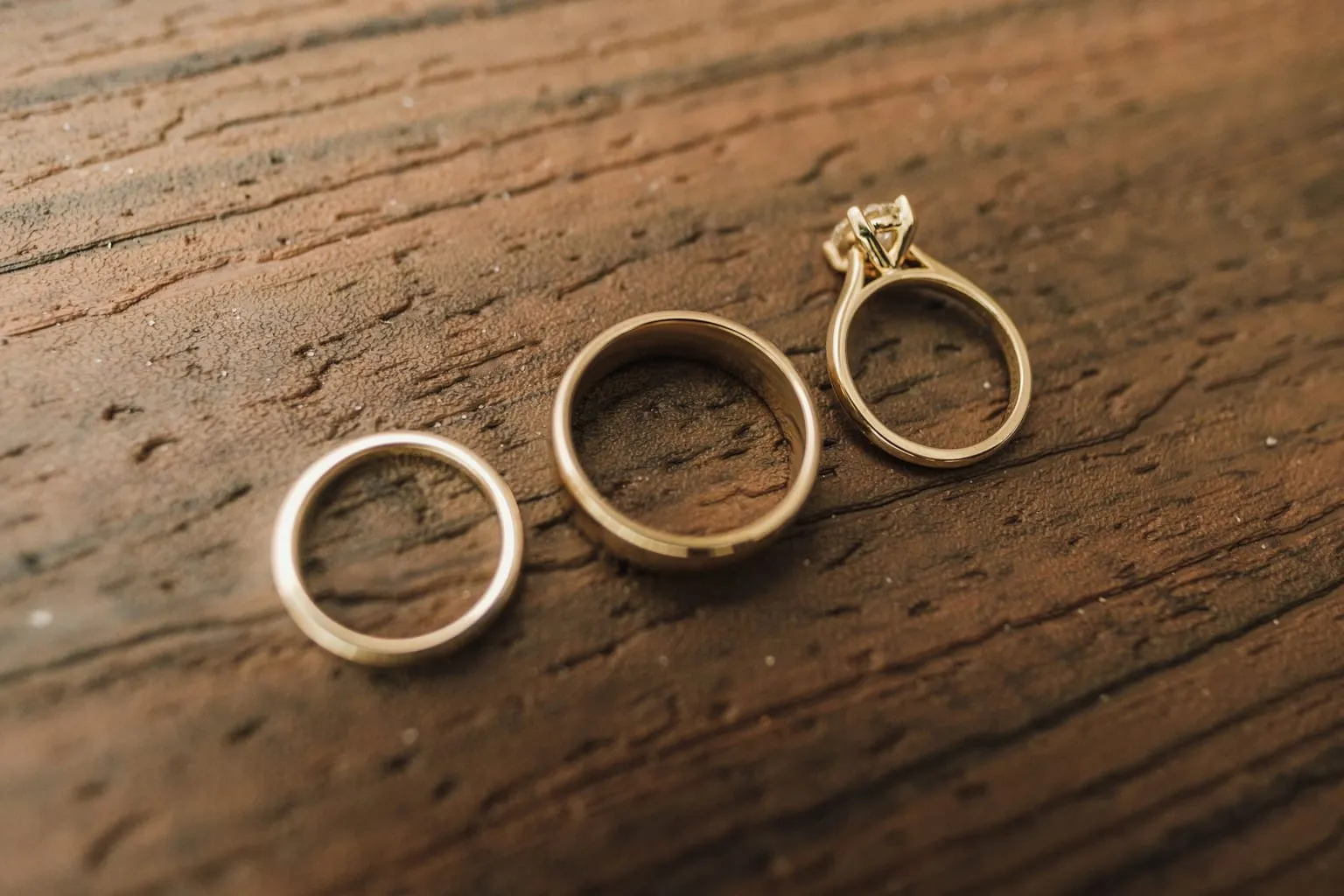
The point is a flush fit with no gap, and a second benefit follows from it. Brilliant Earth’s guide to soldered rings says contoured bands are among the rings that benefit from staying “perfectly aligned”, and that rings rubbing against each other cause scratches, dents and even stone damage over time. A band that nests cannot slide round and rub the way a loose straight band next to a tall head can.
What a curve costs is flexibility. The dip is shaped for one engagement ring in one orientation, so the band will not sit neatly beside a different ring later, and worn on its own it shows a dip with nothing in it. Fox Fine Jewelry adds a practical warning from the maker’s side: ready-made curved bands that match a given engagement ring are rare, which is why jewelers also offer slip-under bands, ring guards and custom work.
Plain Curve or Diamond Curve
A plain curve keeps the attention on the center stone and costs the least; the Brilliant Earth 1.5mm band was from $490 on 11 September. A diamond-set curve adds a second line of sparkle and a second set of stones to maintain: the Blue Nile Crescendo carries 15 round diamonds graded G-H and SI1 on its page. Angara’s V band also comes with lab-grown stones described as F-G, VS; that grade is the seller’s, since from 1 October 2025 GIA no longer grades lab-grown diamonds on its natural clarity scale and describes them as “Premium” or “Standard” instead. If you work with your hands, the plain band has nothing to catch or lose.
Which Way to Wear a Chevron
A V band usually points toward the center stone so the point of a pear or marquise sits inside it. Vrai says its own Signature V Band, because of the depth of its dip, “can be worn facing either way, at the top or at the bottom”, so a deep V also works as a frame from below or above. A shallow V that follows one stone closely has only one right way round.
Which Band for Your Engagement Ring
| Your engagement ring | Band that usually fits | Our page on it |
|---|---|---|
| Round solitaire, set high | Straight band | Wedding bands for a round solitaire |
| Oval, low profile | Curved or contour band | Wedding bands for oval engagement rings |
| Pear or marquise | Chevron, curved or open band | Wedding bands for pear shaped engagement rings |
| Halo or hidden halo | Contour, notched or open band | Wedding bands for halo rings |
| Emerald cut | Straight band | Wedding bands for emerald cut engagement rings |
| Princess cut | Straight band that protects the corners | Wedding bands for princess cut engagement rings |
| Bezel set | Straight or gently curved band | Wedding bands for bezel set engagement rings |
Each of those pages runs the same side-view test against its own shape and names bands for it. This page is the one to use when you already know you want a curve and are choosing between curves.
Resizing and Returns on a Shaped Band
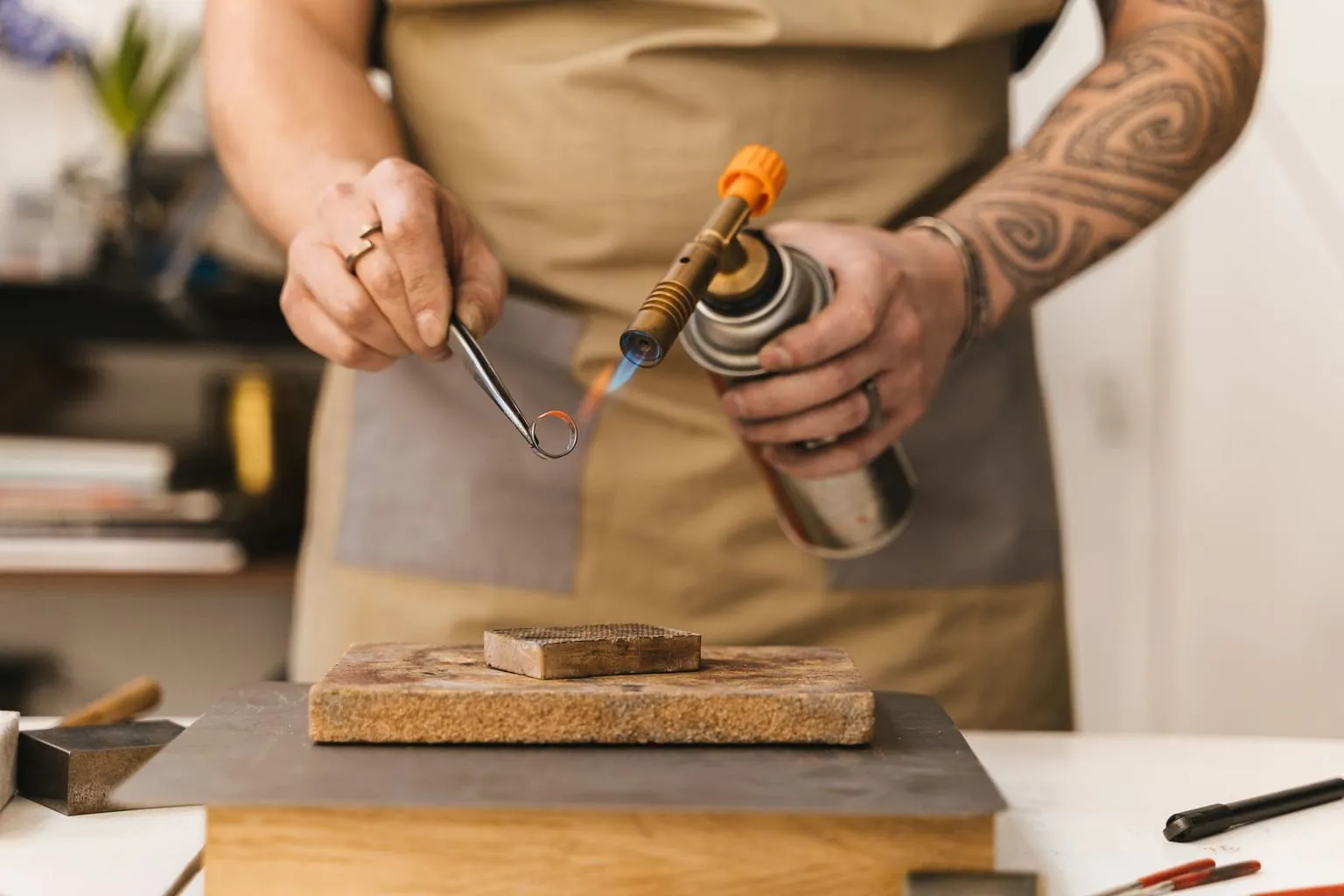
A curved band is the worst ring to buy in a size you are unsure of. Change the diameter and the dip moves relative to the head it was shaped to clear, and some shaped bands cannot be resized at all. Blue Nile’s inserts carry a note that they cannot be resized. Its free resize covers most rings “up or down within two sizes,” once, within six months of purchase (its resizing page, read 22 October 2026), and resized items cannot be returned.
The same trap sits in Brilliant Earth’s terms, read on 14 September: one free resize within 60 days, or a year within the sizing range, and “Rings that have been resized or modified” are not eligible for return. Angara counts its 30 days from the date of delivery and offers one free resize in the first year. So the order is fixed for every seller here: wear the band against your ring, decide, then resize. Our guide to ring resizing cost covers what a jeweler charges after the free window.
Should You Solder a Curved Band?
Soldering joins the two rings permanently, which keeps a contour aligned and stops friction. Brilliant Earth lists the costs as well: the rings can no longer be worn separately, and resizing means separating, resizing and rejoining them. Our guide to wearing an engagement ring with a wedding band covers the other ways to keep two rings together.
Frequently Asked Questions
What Is a Curved Wedding Band Called?
It is sold as a curved, contour, contoured or shaped band, and the names are used interchangeably. A pointed version is called a chevron or V band, and one with a gap instead of a dip is an open band. Compare the side profile in the product photos rather than trusting the label on the listing.
What Is the Point of a Curved Wedding Band?
It lets the band sit flush against an engagement ring whose head, halo or stones would stop a straight band and leave a gap. Brilliant Earth calls a curved or open band the better bet for low-set rings. A band that nests also rubs less against the engagement ring, which reduces scratching over time.
Which Way Do You Wear a Chevron Ring?
Usually with the point toward the center stone, so a pear or marquise tip sits inside the V. Vrai says a deep V such as its Signature V Band can be worn facing either way, above or below the engagement ring. A shallow V shaped closely to one stone normally fits only one way round.
What Are V-Shaped Wedding Bands Called?
They are sold as chevron bands or V bands, and Angara lists its own as a V-shaped wedding ring. Brilliant Earth describes its plain one as a curved V-shaped chevron silhouette. They suit pear and marquise engagement rings, whose point reaches toward the band, and are sold both plain and set with small diamonds.
Do You Need a Curved Band for an Oval Engagement Ring?
Only if the setting is low. Brilliant Earth’s oval stacking guide says higher-profile settings typically let a straight band align easily, while lower-profile settings may need a curved, contoured or open band to prevent gaps. Check your ring from the side before you buy, because the stone shape alone does not decide it.
Sources
- Brilliant Earth, How to Choose a Wedding Band, 2026.
- Brilliant Earth, How to Stack an Oval Engagement Ring with a Wedding Band, 2026.
- Brilliant Earth, Pear Shaped Engagement Ring with Wedding Band, undated, accessed 11/09/2026.
- Brilliant Earth, Soldered Rings: Pros, Cons, and Alternatives, undated, accessed 11/09/2026.
- Brilliant Earth, Free 30-Day Returns and 1-Year Resizes, undated, accessed 14/09/2026.
- Brilliant Earth, 1.5mm Curved Wedding Ring and Chevron Ring, undated, accessed 11/09/2026.
- The Diamond Setter, Halo Ring Wedding Band Fit, undated, accessed 11/09/2026.
- Fox Fine Jewelry, What Kind of Wedding Bands Go With Halo Engagement Rings, undated, accessed 11/09/2026.
- Vrai, How to Pair Your Pear Shaped Engagement Ring With a Wedding Band, undated, accessed 11/09/2026.
- Blue Nile, Wedding Rings, undated, accessed 12/09/2026.
- Blue Nile, Free Ring Resizing and Free Returns, undated, accessed 18/09/2026.
- Blue Nile, Crescendo Curved Diamond Wedding Ring, Pointed Diamond Insert and Curved Baguette and Round Diamond Ring Insert, undated, accessed 18/09/2026.
- Angara, Comfort Fit Curved Plain Wedding Band, Contoured Comfort Fit Wedding Band for Her and Pear and Round Diamond V-Shaped Wedding Ring, US store, undated, accessed 18/09/2026.
- Angara, Return Policy, undated, accessed 14/09/2026.
- GIA, GIA Launches Updated Laboratory-Grown Diamond Services October 1, 2025, accessed 18/09/2026.
- With Clarity, The W Bezel Diamond Wedding Band, undated, accessed 12/09/2026.