

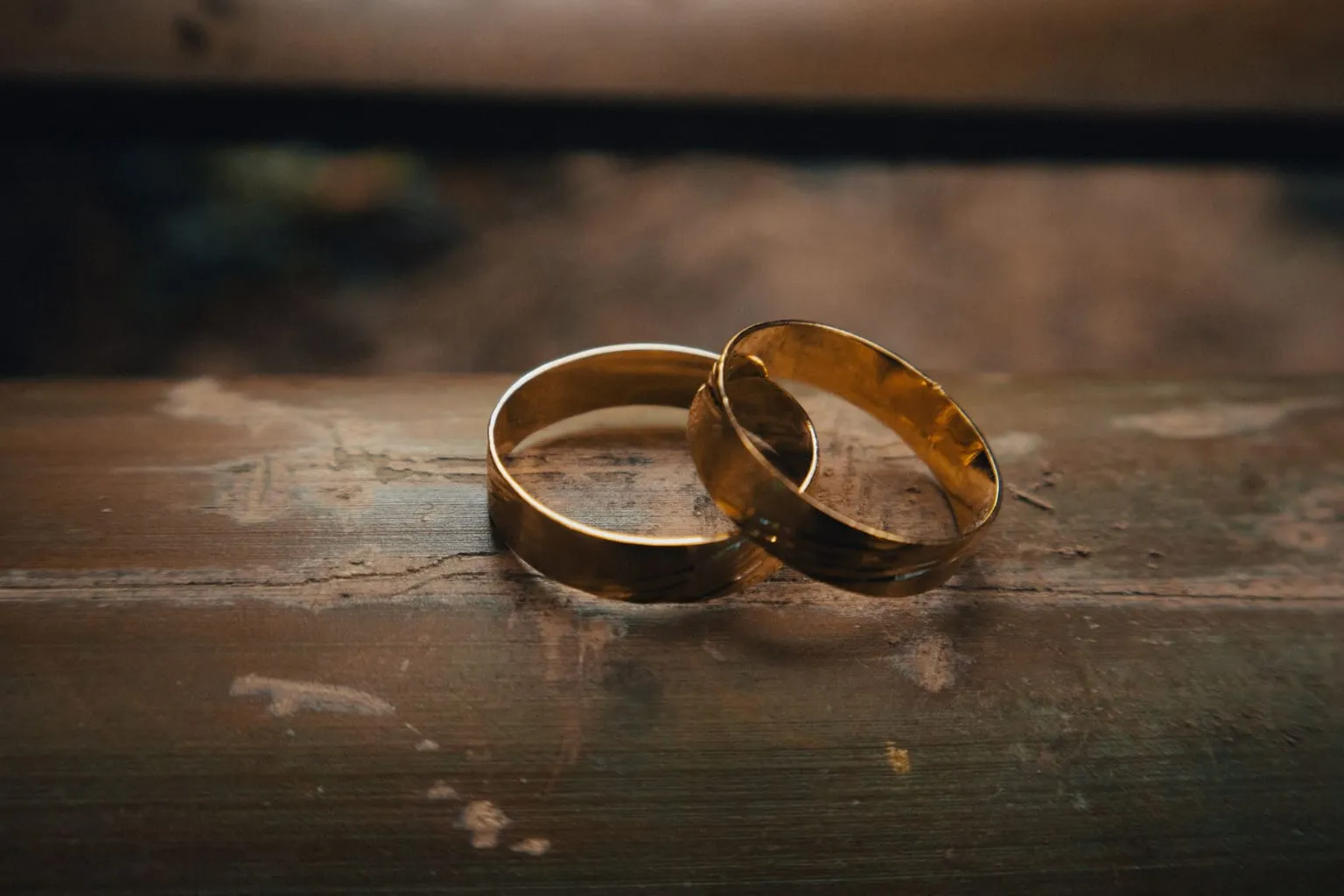
How to clean a gold ring has a short published answer: a few drops of mild dish soap in warm, not hot, water, a soak, a soft brush, a rinse and a pat dry. Jewelers Mutual, a jewelry insurer, and GIA both publish a version of it. What the short answer skips is the metal itself. A plain yellow band, a rose gold ring, a rhodium-plated white gold ring and a gold-plated fashion ring do not respond to cleaning the same way. This guide works through the ring by alloy, karat and finish, and names who said what.
What is on this page8 sections
Key Takeaways
- Jewelers Mutual’s home method is Dawn dish soap in warm, not hot, water, a 15-minute soak, a soft-bristled toothbrush, a rinse with the drain closed and a soft cloth.
- Chlorine is the one hazard every source we read agrees on: GIA says it can damage the alloying metals, and Jewelers Mutual says pools and hot tubs can damage gold.
- GIA names toothpaste among the abrasives that should never be used, because they can erode setting metals.
- The sources split on ammonia: GIA’s gold chart includes it, while Jewelers Mutual’s white gold guide says it can damage rhodium plating.
- Polishing takes off metal. A white gold ring that looks yellow after a clean needs replating, which cleaning cannot do.
Start With What Your Gold Ring Is Made Of
Three questions decide how gently to treat the ring: is the gold solid or a surface layer, what color alloy is it, and what karat.
Solid, Gold Filled or Gold Plated
The Federal Trade Commission’s jewelry guides define the terms. A product called gold plated or gold electroplate carries a gold layer at least 0.175 microns thick (about 7 millionths of an inch), and “gold filled” requires the mechanically applied layer to make up at least 1/20th of the metal’s weight. The FTC also requires that the word gold be qualified when a product is only surface-plated. Read the stamp inside the shank before cleaning: the FTC’s own example markings for a gold layer are abbreviations such as G.E.P. and R.G.P., or the words gold filled, next to the karat.
Jewelers Mutual warns that chlorine, bleach and cleaning products can break down gold plating and reveal the base metal beneath, which then tarnishes, and it names baking soda, hot water, vinegar and hydrogen peroxide as home cleaners that can damage plating.
Yellow, Rose and White Gold
Pure gold is too soft for rings, so it is alloyed. GIA lists copper, silver and zinc for yellow and rose gold, and nickel or palladium, copper and zinc for white gold, adding that white gold is often rhodium plated. Rose gold takes its color from copper, and GIA (2025) says that copper can develop a patina over time. GIA’s everyday-wear table lists yellow gold’s upkeep as very little, with polishing to remove scratches, and rose gold’s as polishing to remove patina. The color differences are covered in white gold vs yellow gold and rose gold vs yellow gold.
Karat and Tarnish
GIA (2025) says pure gold does not tarnish but the alloys in gold jewelry can, and that the lower the karat, the more susceptible the jewelry is to tarnishing. The same page says the lower the karat, the more durable the piece. On GIA’s account, a 10K band trades more susceptibility to tarnish for more durability than an 18K band; see 10k vs 14k gold and 14k vs 18k gold. If a gold ring leaves a mark on your skin, why a ring turns your finger green explains what the sources say.
| Your ring | What the surface is | What cleaning can and cannot do | Source |
|---|---|---|---|
| Solid yellow gold (10K to 18K) | The alloy all the way through | Removes film and tarnish; scratches stay | GIA (2025) |
| Solid rose gold | Gold with copper, which can patina | Removes film; polishing removes patina | GIA (2025) |
| White gold | Alloy under rhodium plating | Removes film; cannot restore worn plating | GIA (2015, 2025); Jewelers Mutual |
| Gold filled | A mechanically applied gold layer of at least 1/20th of the metal weight | Clean gently; a worn layer cannot be cleaned back | FTC, 16 CFR 23 |
| Gold plated or electroplated | A gold layer of at least 0.175 microns over a base metal | Clean gently; replating is the fix for wear | FTC; Jewelers Mutual |
How to Clean a Gold Ring at Home
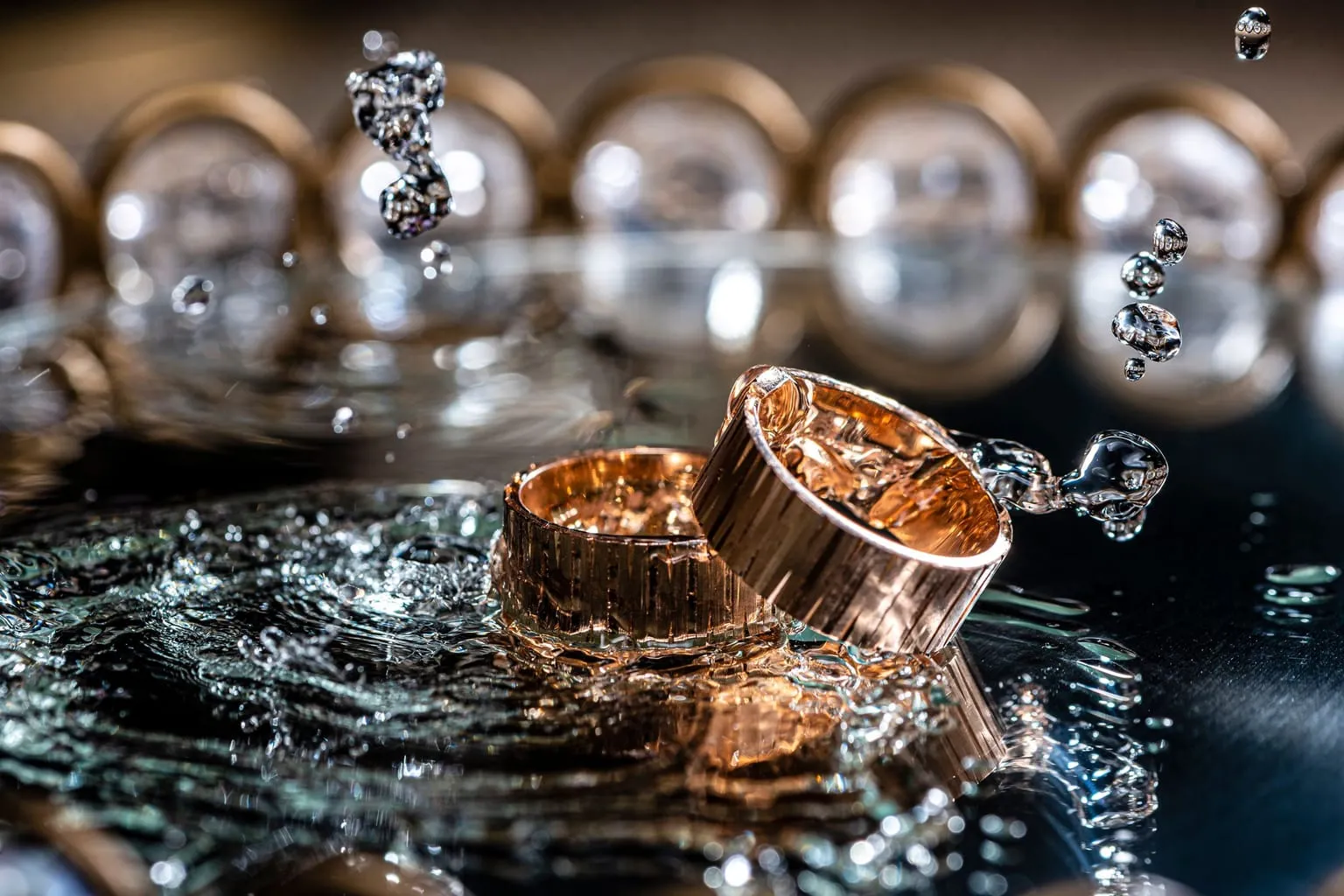
The method is the same for solid yellow, rose and white gold; what changes is how hard you scrub and what you add to the water.
The Soap-and-Water Method
Jewelers Mutual (2020) gives four steps: soak the ring in Dawn dish soap and warm, not hot, water for 15 minutes; brush away dirt with a soft-bristled toothbrush; rinse in a bowl of clean warm water, or under the faucet with the drain closed; pat dry with a soft cloth. Its longer gold guide specifies a new, baby-size soft toothbrush and reminds you that gold is a soft metal, so be gentle while brushing and drying. GIA (2025) gives the same basics for yellow and rose gold: diluted dish soap and water, with a soft cloth or brush to reach prongs and crevices.
For white gold, Jewelers Mutual (2025) keeps the soap but adds cautions: soak 20 to 30 minutes, do not scrub too hard because that can damage the rhodium plating, and dry with a lint-free or microfiber cloth rather than paper towels, which it says can scratch the metal.
Ammonia: Where the Sources Disagree
GIA’s gold engagement ring chart (2018, updated 2025) recommends a 15 to 30 minute soak in water and ammonia with a drop of dish detergent, and its diamond guide recommends an ammonia-based window cleaner. Jewelers Mutual’s gold guide also adds a few drops of ammonia. Its white gold guide, however, lists ammonia with bleach and chlorine as chemicals that can damage rhodium plating, and Nelson Coleman Jewelers says the ammonia in Windex can damage precious metals over time. Our reading, not any source’s: plain soap and water is the step every source accepts, so start there, and leave ammonia out on white gold and plated rings.
Rinse Under the Band
Soap left behind has a cost to skin. A Mayo Clinic dermatologist (2019) says wedding ring dermatitis is often not an allergy but an irritant reaction to soap residue, sweat and dirt trapped under the ring, and advises washing, rinsing and drying thoroughly under rings.
If the Ring Has Stones
A gold setting is only as safe to clean as its softest stone. Jewelers Mutual advises asking your jeweler about home cleaning for any stones other than diamonds, rubies and sapphires. For the stone itself, follow GIA’s diamond ring method or, for colored and treated stones, how to clean an engagement ring.
What Not to Use on a Gold Ring
Most of the damage on a gold ring comes from household products, not from dirt.
| Product | What a named source says | Source |
|---|---|---|
| Chlorine bleach, pools, hot tubs | Can damage gold; chlorine at high temperatures, as in a hot tub, can permanently damage or discolor it | Jewelers Mutual (2020, 2022); GIA (2018) |
| Toothpaste | An abrasive that should never be used; can erode setting metals | GIA (2012); Jewelers Mutual (2020) |
| Baking soda | Slightly abrasive, could scratch softer stones and metals | Jewelers Mutual (2021) |
| Vinegar | Slightly acidic, not suited to plated jewelry | Jewelers Mutual (2021); Nelson Coleman Jewelers |
| Hydrogen peroxide | Can damage gold plating; too harsh for fine jewelry | Jewelers Mutual (2024); Nelson Coleman Jewelers |
| Ammonia, including Windex | Recommended by GIA; said to damage rhodium and metals by others | GIA; Jewelers Mutual (2025); Nelson Coleman Jewelers |
| Rubbing alcohol | One jeweler dips greasy plain gold in it; another expert avoids it | Burdeen’s (2022); Vogue (2025) |
Chlorine Is the One Everybody Agrees On
GIA’s chart says to avoid chlorine and harsh chemicals because they can damage the alloying metals. Jewelers Mutual (2020) calls chlorine the common cleaning chemical that will damage gold, including in pools, hot tubs and laundry bleach. Jewelers Mutual’s advice is to take the ring off before a pool or hot tub and before cleaning with bleach.
Toothpaste and Baking Soda Scratch
GIA’s cleaning guide (2012) names household cleansers and toothpaste as abrasives that should never be used, because they can erode some of the metals used in settings. Jewelers Mutual (2020) says toothpaste has abrasives that can scratch gold, and its 2021 review of homemade cleaners calls baking soda slightly abrasive and warns that an old toothbrush carries toothpaste residue.
Peroxide, Alcohol and Vinegar: What the Sources Do and Do Not Say
No GIA page we opened addresses hydrogen peroxide or rubbing alcohol on gold. Jewelers Mutual (2024) says peroxide, vinegar, baking soda and hot water can damage gold plating, and Nelson Coleman calls peroxide simply too harsh for fine jewelry. On alcohol the sources split: Burdeen’s suggests a quick dip in rubbing alcohol for plain gold soiled with grease, while a jewelry expert quoted by Vogue says to steer clear of alcohol because it can damage certain materials. None of these is needed when soap works.
Ultrasonic and Steam Cleaners
GIA says jewelers use two machines: an ultrasonic cleaner, which sends sound waves through a liquid solution, and a steam cleaner, which uses high-pressure steam. For home use GIA is cautious: many gems can be damaged by ultrasonic cleaning, the vibration can sometimes shake stones loose, and if you are uncertain about a gem’s durability you should avoid the machine. Jewelers Mutual (2025) advises against ultrasonic cleaners on white gold, especially a white gold diamond ring, saying they can loosen stones or damage the metal if not used properly. Gabriel & Co. says heat and pressure from steam may damage fragile gemstones or loosen settings, and that professional steam cleaning is safer for most people than doing it at home. For a plain yellow or rose gold band none of these sources forbids the machine outright; for white gold and for any set ring, let a jeweler check the stones first.
Scratches, Finishes and Polishing
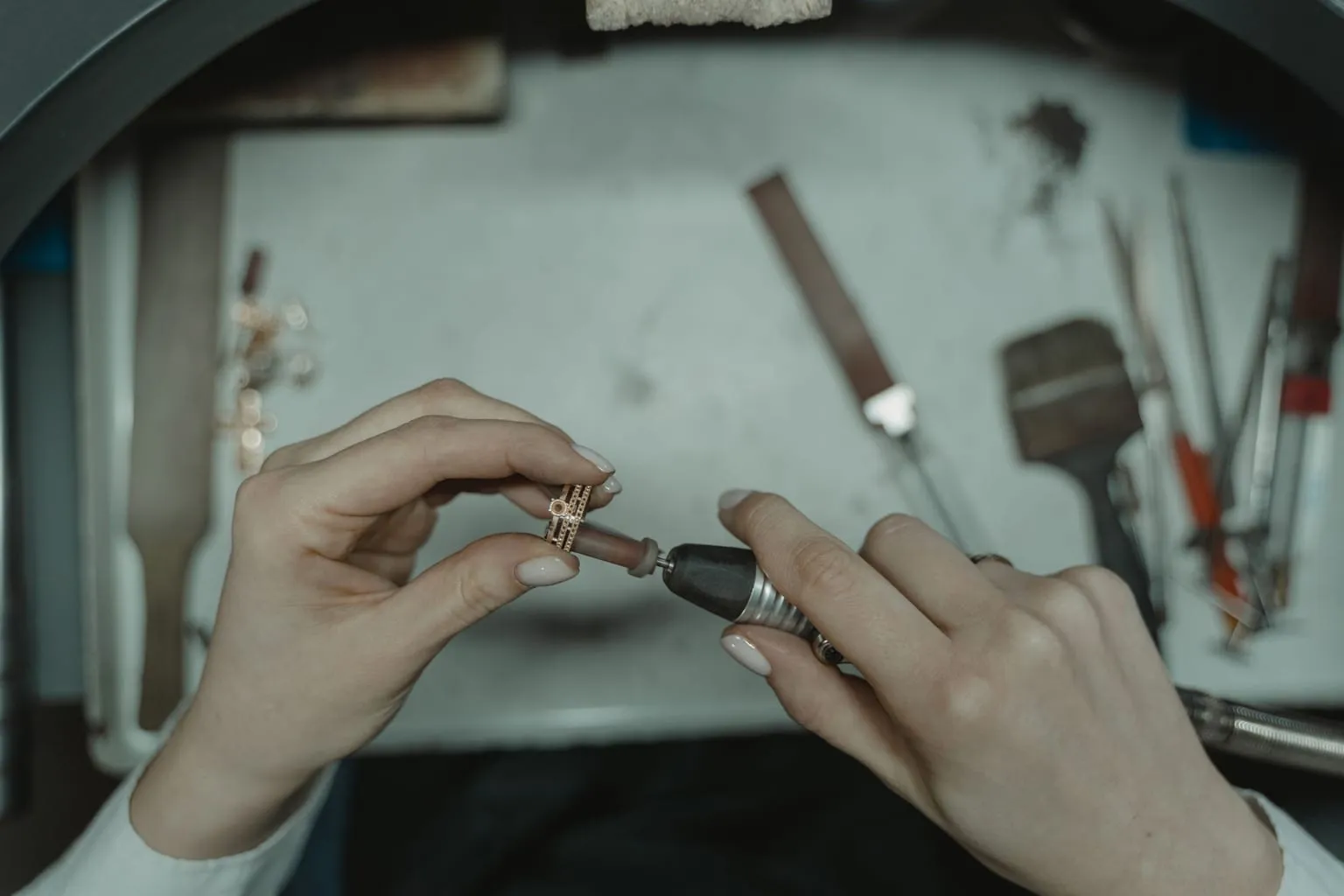
Once a ring is clean, what still looks dull is usually the surface, not the dirt on it.
Dirt or Scratches?
GIA says gold is a soft metal and that it is not unusual for an older gold ring’s shank to become thinner from normal wear. GIA’s metal table lists polishing as the fix for scratches on yellow gold and patina on rose gold. Our reading, not a source’s: if the ring still looks hazy after soap and a soft brush, and the haze turns out to be fine lines when you tilt it under light, cleaning is finished and polishing is the next question.
Polishing Removes Metal
Mark Schneider Fine Jewelry (2026) explains that polishing does not add shine: compounds of progressively finer abrasives wear down the surface until it reflects light evenly, and frequent unnecessary polishing slowly removes metal. That is how jewelers make rings so shiny. Nelson Coleman limits its polishing service to once a year for the same reason, and on 18/09/2026 listed it from $10 for yellow gold. Jewelers Mutual describes a gold polishing cloth as mildly abrasive with a polishing agent, to be used with light pressure on plated pieces.
Satin, Brushed and Hammered Finishes
Polishing erases a textured finish. Nelson Coleman says brushed and matte finishes must be reapplied after polishing, and that etched and hammered effects also have to be put back by the jeweler, and on 18/09/2026 listed an extra $15 for that. Mark Schneider notes that matte and satin finishes scatter light, so small scratches blend in, which is one reason people choose them for everyday rings. Clean a textured ring with soap and a soft brush only, and tell the jeweler about the finish before any polish.
White Gold That Turns Yellow
GIA (2025) says white gold appears faintly yellow unless it is rhodium plated, and that as the plating wears away the ring may start to look warm in color; it puts replating at every few years. Jewelers Mutual (2025) says a white gold ring that looks yellow or dull may be ready for professional rhodium replating. Soap cannot put rhodium back. Nelson Coleman’s polish for white gold, listed from $50 on 18/09/2026, includes the rhodium dip.
Frequently Asked Questions
Can you use Dawn dish soap to clean gold jewelry?
Yes. Jewelers Mutual names it directly: a few drops of Dawn in warm, not hot, water, a soak, a soft toothbrush and a rinse, and it calls basic blue Dawn fine for gold. GIA describes the same method with diluted dish soap. On white gold, Jewelers Mutual adds that hard scrubbing can damage the rhodium plating.
How do jewelers make rings so shiny?
They polish. Mark Schneider Fine Jewelry explains that jewelers work through progressively finer abrasive compounds until the surface reflects light evenly, which removes a tiny amount of metal each time. They also clean with ultrasonic and steam machines, which GIA describes, and Nelson Coleman Jewelers replates white gold with rhodium after polishing.
What should you not use to clean gold jewelry?
Avoid chlorine bleach and chlorinated pools or hot tubs, which Jewelers Mutual and GIA say can damage gold alloys, and abrasives such as toothpaste and baking soda, which can scratch the metal. For plated gold, Jewelers Mutual adds vinegar, hydrogen peroxide and hot water. Plain dish soap in warm water is the safe choice.
Can I use Windex to clean my gold jewelry?
It is not the safe first choice. GIA recommends an ammonia solution for gold and window cleaner for diamonds, but Jewelers Mutual says ammonia can damage the rhodium plating on white gold, and Nelson Coleman Jewelers says the ammonia in Windex can damage precious metals over time. Dish soap in warm water avoids the disagreement.
Can you clean gold with hydrogen peroxide?
The sources we found advise against it. Jewelers Mutual says hydrogen peroxide can damage gold plating, and Nelson Coleman Jewelers calls it too harsh for fine jewelry. No GIA page we opened addresses peroxide on solid gold either way, so none of the published methods uses it. Mild dish soap in warm water does the job.
Is it better to clean jewelry with alcohol or peroxide?
Neither is the published method. Burdeen’s suggests a quick rubbing alcohol dip for greasy plain gold, while an expert quoted by Vogue avoids alcohol because it can damage some materials. Peroxide draws warnings from Jewelers Mutual and Nelson Coleman. Every source we read agrees on mild soap and warm water instead.
Sources
- Jewelers Mutual Group, Cleaning Gold Jewelry in 4 Easy Steps, 2020, updated 2025, accessed 18/09/2026. A jewelry insurer.
- Jewelers Mutual Group, How to Clean Gold Jewelry the Right Way, 2022, updated 2025, accessed 18/09/2026.
- Jewelers Mutual Group, How to Clean White Gold Jewelry, 2025, accessed 18/09/2026.
- Jewelers Mutual Group, How to Clean Rose Gold Jewelry, 2025, updated 2026, accessed 18/09/2026.
- Jewelers Mutual Group, How to Clean Gold-Plated Jewelry: What You Need to Know, 2024, updated 2025, accessed 18/09/2026.
- Jewelers Mutual Group, Using a Homemade Jewelry Cleaner? Avoid These 3, 2021, updated 2025, accessed 18/09/2026.
- GIA 4Cs, Guide to White, Yellow, and Rose Gold Engagement Rings, 2018, updated 2025, accessed 18/09/2026.
- GIA 4Cs, Rose Gold vs. Yellow Gold: Discovering the Differences, 2025, accessed 18/09/2026.
- GIA 4Cs, Best Ring Material for Everyday Wear, 2025, accessed 18/09/2026.
- GIA 4Cs, White Gold vs. Silver: What is the Difference?, 2025, accessed 18/09/2026.
- GIA 4Cs, White Metal Options for Your Engagement Ring, 2015, accessed 18/09/2026.
- GIA 4Cs, Holiday Buying Guide: How to Clean Jewelry, 2015, updated 2025, accessed 18/09/2026.
- GIA 4Cs, How to Clean Your Diamond Jewelry, 2012, accessed 18/09/2026.
- GIA 4Cs, Gems and Ultrasonic Cleaners, 2015, accessed 18/09/2026.
- Federal Trade Commission, 16 CFR Part 23, Guides for the Jewelry, Precious Metals, and Pewter Industries, current eCFR text, accessed 18/09/2026.
- Mayo Clinic News Network, Mayo Clinic Minute: Wedding ring rash, 2019, accessed 18/09/2026.
- Mark Schneider Fine Jewelry, The Science Behind The Shine: Why Jewelry Polishing Is More Complicated Than It Looks, 2026, accessed 18/09/2026.
- Nelson Coleman Jewelers, Jewelry Care Guide, undated, prices accessed 18/09/2026.
- Gabriel & Co., How to Clean Gold Jewelry Safely at Home, 2026, accessed 18/09/2026.
- Burdeen’s Jewelry, Five Best Ways to Clean Fine Jewelry, 2022, accessed 18/09/2026.
- Vogue, How To Clean Jewelry, According to the Experts, 2025, accessed 18/09/2026.