

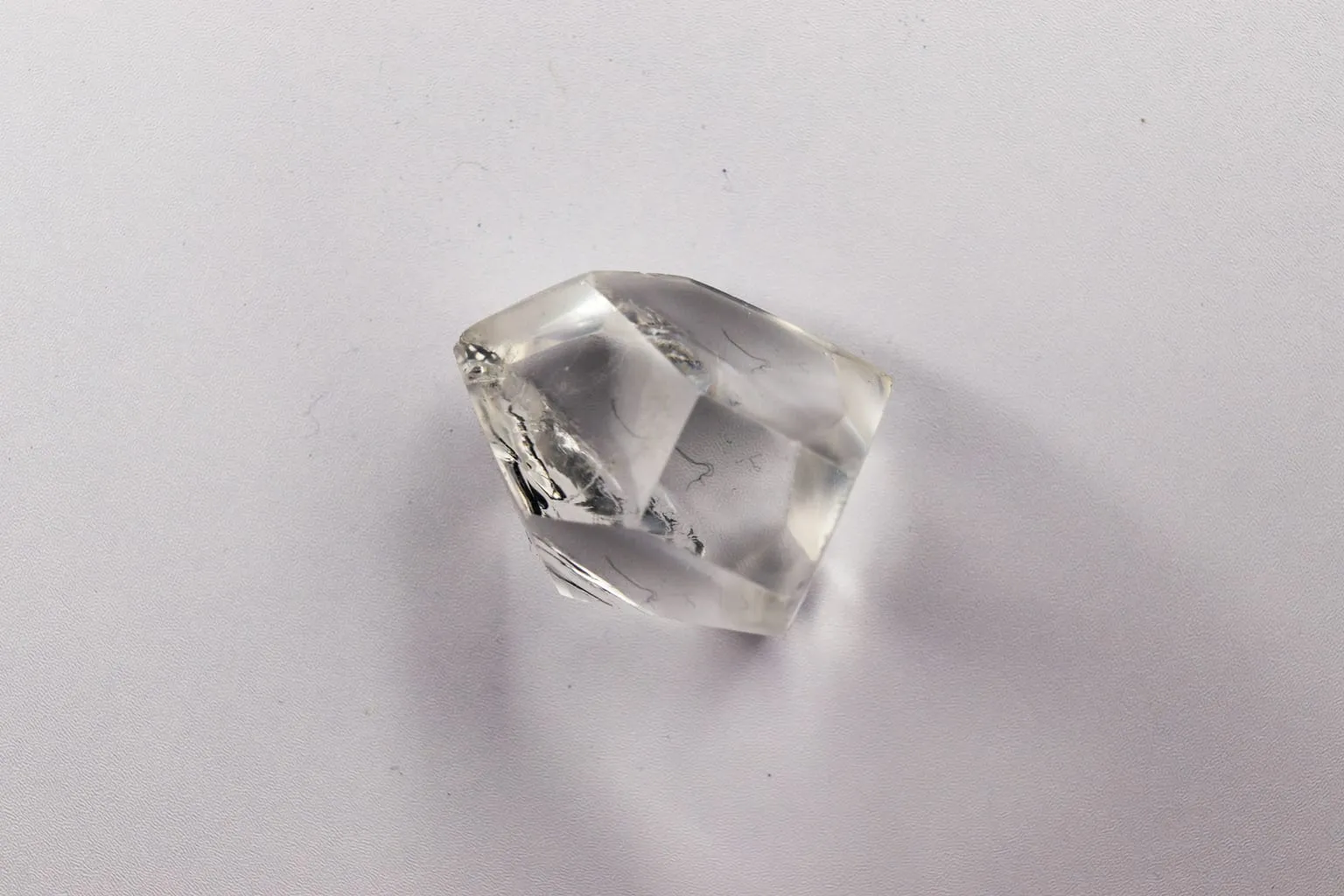
Ethical engagement rings are sold on words that no single body defines, so the useful question is not whether a jeweler calls itself ethical but what each claim on the page actually certifies. “Conflict-free” in the Kimberley Process sense covers one narrow harm; recycled metal, a named mine and a lab-grown stone each cover a different one. The four picks below were read on each seller’s own site on 18 September 2026. Our overall pick is Bario Neal’s Avens solitaire, because every metal option on the order form is labeled reclaimed and the seller names where its diamonds come from.
What is on this page11 sections
Our Top Picks
- Our top pick
Best overall
Illustration of the setting type, not a photo of this ring.
Bario Neal Avens Diamond RingA buyer who wants the metal's origin fixed on the order form and a seller that names where its diamonds come from.
- Prong-set round solitaire; every metal option on the listing is "Reclaimed" (14K and 18K gold or platinum)
- $1,740 to $7,360
Best for a documented Canadian diamond
Illustration of the setting type, not a photo of this ring.
Laura Preshong August Round Brilliant Cut Engagement RingA buyer who wants a mined diamond with paperwork that follows the stone, not just a policy about the company.
- 1.7mm band with two small side diamonds; recycled 14K gold or 950 platinum
- $2,000 to $2,350
Best reclaimed diamonds and a US-mined stone
Illustration of the setting type, not a photo of this ring.
Young in the Mountains Suisaiga Montana Sapphire Solitaire RingA buyer who wants every stone in the ring named by origin, and a colored stone mined in the United States.
- 14K recycled yellow gold, bezel-set center with a pave band
- $4,080
Lowest price with a lab-grown center
Illustration of the setting type, not a photo of this ring.
With Clarity Classic Four Prong Petite Comfort Fit SolitaireA buyer whose ethical line is a lab-grown diamond, and who wants the lowest setting price here.
- 1.8mm comfort fit band, four prongs; 14K or 18K gold or platinum
- $558 to $963
What is on this page11 sections
Key Takeaways
- The Kimberley Process defines conflict diamonds as rough diamonds “used by rebel movements or their allies to finance conflict aimed at undermining legitimate governments”. Nothing in that definition addresses labor conditions or environmental damage.
- The World Diamond Council’s System of Warranties is a statement on business invoices that passes a seller’s guarantee down the chain; a company joins it by completing an online self-assessment.
- Recycled metal is a claim the FTC’s Green Guides address directly: an unqualified “recycled” claim is for a product made entirely of recycled material, minor components aside.
- In 2019 FTC staff warned jewelry marketers not to use unqualified “eco-friendly”, “eco-conscious” or “sustainable” claims.
- GIA says lab-grown diamonds are real diamonds with essentially the same chemical composition and crystal structure as mined ones.
Ethical Engagement Rings Compared
Read the sourcing claim column first, because it is the reason each ring is on this page, and then the returns column, because two of the four sellers give fourteen days. Prices are as each page opened on 18 September 2026, in US dollars, and two of them are settings sold without the center stone.
| Ring | Price range | Metal and setting, per the listing | Stones, per the listing | Sourcing claim, in the seller's words | Returns, per the seller | Resizing, per the seller |
|---|---|---|---|---|---|---|
Bario Neal Avens Diamond RingBest overall | $1,740 to $7,360 | Prong-set round solitaire; every metal option on the listing is "Reclaimed" (14K and 18K gold or platinum) | Natural or lab-grown round diamond, 0.50, 0.75 or 1.0 carat; natural stones from 0.50 carat are GIA certified | Metals "100% recycled or Fairmined certified"; diamonds "primarily of recycled, Australian, and Canadian origin" | Setting returnable within 30 days with a restocking fee; the diamond cannot be returned | One complimentary resize within 1 year of receipt, shipping not included |
Laura Preshong August Round Brilliant Cut Engagement RingBest for a documented Canadian diamond | $2,000 to $2,350 | 1.7mm band with two small side diamonds; recycled 14K gold or 950 platinum | Center stone chosen separately: natural, lab-grown or a colored gem; the side stones are G/H SI natural or F VS lab-grown | Canadian diamonds come with a CanadaMark or Maple Leaf number and a Canadian certificate, per the seller | Completed rings within 14 days of delivery, with a 15% return fee on all orders | One complimentary resize within 90 days |
Young in the Mountains Suisaiga Montana Sapphire Solitaire RingBest reclaimed diamonds and a US-mined stone | $4,080 | 14K recycled yellow gold, bezel-set center with a pave band | 0.72 carat heat-treated blue-green Montana sapphire from the Rock Creek deposit, with 8 reclaimed white pave diamonds | All white melee diamonds reclaimed; Montana sapphires bought "miner-direct whenever possible" | 14 days on unworn Available Now pieces, with a 10% restocking fee capped at $500; resized and sale items are final | Free within one year when bought from the website; a resized ring becomes final sale |
With Clarity Classic Four Prong Petite Comfort Fit SolitaireLowest price with a lab-grown center | $558 to $963 | 1.8mm comfort fit band, four prongs; 14K or 18K gold or platinum | Center stone chosen separately: lab-grown or natural diamond | Follows the Kimberley Process and says it buys no diamonds tied to Zimbabwe's Marange fields; no recycled-metal claim found on the listing | 30 calendar days from receipt; resized items and items worked on by another jeweler are excluded | One free resize within 30 days of purchase, with a $25 one-way shipping fee in the US |
Price ranges from the makers' sites, checked 18 September 2026. Prices change; the maker's site has the current one.
The Best Ethical Engagement Rings, Reviewed
Best overall
Bario Neal Avens Diamond Ring
by Bario Neal
Best for: A buyer who wants the metal's origin fixed on the order form and a seller that names where its diamonds come from.
Bario Neal's listing opened at $1,740 for a 0.50 carat lab-grown diamond in reclaimed 14K gold; the same ring with a 0.50 carat natural diamond was $2,990, and a 1.0 carat natural diamond in reclaimed 18K gold reached $7,360.
Illustration of the setting type, not a photo of this ring.
What we like
- Every metal choice on the listing is labeled "Reclaimed", so the recycled-metal claim is part of what you order rather than a brand slogan
- One design sold with a natural or a lab-grown diamond, priced side by side on the same page
- Bario Neal names the origins of its diamonds (recycled, Canadian and Australian) and says its Canadian stones fall under the Canadian Diamond Code of Conduct
- One complimentary resize within a year of receipt
Keep in mind
- The diamond itself cannot be returned, and a returned setting carries a restocking fee
- The listing does not say which origin a given natural diamond will have, so ask for it in writing before paying
- Fairmined gold is named on the ethics page but is not an option on this listing
- Price range
- $1,740 to $7,360 (0.50 carat lab-grown in reclaimed 14K up to 1.0 carat natural in reclaimed 18K)
- Material
- Prong-set round solitaire; every metal option on the listing is "Reclaimed" (14K and 18K gold or platinum)
- Sizes
- Sizes 2 to 16 in quarter sizes on the listing
- Guarantee
- One-year warranty on manufacturing defects
- Made in
- Philadelphia, per the listing ("Handcrafted in Philadelphia")
Best for a documented Canadian diamond
Laura Preshong August Round Brilliant Cut Engagement Ring
by Laura Preshong
Best for: A buyer who wants a mined diamond with paperwork that follows the stone, not just a policy about the company.
The setting listed at $2,000 in 14K gold and $2,350 in platinum, and the page states "Setting and Center Stone Sold Individually", so the finished ring costs more by the price of the stone you choose.
Illustration of the setting type, not a photo of this ring.
What we like
- The seller says its Canadian diamonds carry a CanadaMark or Maple Leaf number and a government-issued Canadian certificate matched to the GIA report
- Metal is recycled 14K gold or 950 platinum, stated on the product page
- One complimentary resize within 90 days
Keep in mind
- The price shown is the setting alone, and the seller does not sell a setting without a center stone
- Fourteen days to return a finished ring, and a 15% return fee applies to every order, including cancellations
- Resized rings cannot be returned
- Price range
- $2,000 to $2,350 for the setting only; the center stone is priced separately
- Material
- 1.7mm band with two small side diamonds; recycled 14K gold or 950 platinum
- Widths
- 1.7mm band
- Sizes
- 3.25 to 9.25 on the listing
- Guarantee
- Lifetime replacement for manufacturing defects; wear, accidental damage, loss and theft excluded
- Made in
- Boston, per the seller
Best reclaimed diamonds and a US-mined stone
Young in the Mountains Suisaiga Montana Sapphire Solitaire Ring
by Young in the Mountains
Best for: A buyer who wants every stone in the ring named by origin, and a colored stone mined in the United States.
Young in the Mountains listed the Suisaiga at $4,080 as a single finished ring, and its materials line names the gold as recycled, the sapphire's deposit and its heat treatment, and the pave diamonds as reclaimed.
Illustration of the setting type, not a photo of this ring.
What we like
- The materials line names the gold as recycled, the sapphire's deposit and treatment, and the pave diamonds as reclaimed
- The seller's sourcing page says it believes the Kimberley definition of conflict is narrow, and moves beyond it for the small stones
- Free resizing within a year of purchase from the website
Keep in mind
- A resize makes the ring final sale, and so does buying it on sale
- Returns carry a 10% restocking fee and the window is 14 days
- The seller calls known-origin or reclaimed large diamonds a goal it is still moving toward, so the reclaimed claim covers the small stones
- Price range
- $4,080 as listed (one finished ring)
- Material
- 14K recycled yellow gold, bezel-set center with a pave band
- Widths
- Not stated
- Sizes
- Not stated
- Guarantee
- One-year warranty covering repairs under normal wear; bent, broken or improperly cared for pieces excluded
- Made in
- Not stated on the listing
Lowest price with a lab-grown center
With Clarity Classic Four Prong Petite Comfort Fit Solitaire
by With Clarity
Best for: A buyer whose ethical line is a lab-grown diamond, and who wants the lowest setting price here.
The setting listed at $558 on sale in 14K white gold ($620 before the sale), $828 in 18K and $963 in platinum, marked "(Setting Only)" with the center stone bought separately.
Illustration of the setting type, not a photo of this ring.
What we like
- The lowest setting price among the picks, with a lab-grown or natural center stone chosen separately
- With Clarity's policy page says it does not buy or stock any diamond associated with Zimbabwean mining
- Thirty days to return, twice the window of the two smallest sellers here
Keep in mind
- We found no recycled-metal claim on the listing or in the policy page we read
- The price is for the setting alone, and it was a sale price when we checked
- A resized ring can no longer be returned, even inside the 30 days
- Price range
- $558 to $963 for the setting only, as listed on sale
- Material
- 1.8mm comfort fit band, four prongs; 14K or 18K gold or platinum
- Widths
- 1.8mm or 2.5mm
- Sizes
- Not stated
- Guarantee
- Lifetime warranty covering cleaning and small side stones under 0.10 carat; center stones, damage, loss and theft excluded
- Made in
- Not stated
How We Chose
- Every listing and policy opened on the seller’s own site on 18 September 2026, with prices in US dollars as the page showed them.
- A sourcing claim a buyer can check against the order: a metal labeled reclaimed on the listing, a named mine or deposit, a certificate that travels with the stone, or a written policy about a specific source.
- Claims quoted, not paraphrased. Where a seller calls something ethical or sustainable, the words are the seller’s; we do not certify any of them.
- Return and resizing terms from each seller’s policy pages, because a ring you cannot return is part of the price.
- No star ratings and nothing about how a ring wears, because we did not buy these rings.
Brilliant Earth, the best known name in this market, is not a pick. Its sourcing page is quoted below, but its product pages refused our requests on the day we checked, and we list no ring whose price we could not read.
What “Conflict-Free” Covers, and What It Does Not
The phrase most often printed next to an engagement ring is also the narrowest one, and knowing its definition is the fastest way to read every other claim on this page.
The Kimberley Process Definition
The Kimberley Process is an intergovernmental scheme, in force since 2003, that certifies shipments of rough diamonds between participating countries. Its definition of a conflict diamond is specific: rough diamonds used by rebel movements or their allies to finance conflict aimed at undermining legitimate governments. A diamond can meet that standard and still come from a mine with poor labor conditions or heavy environmental damage, because neither is part of the definition.
Sellers who market beyond the scheme say so themselves. Brilliant Earth writes that “such a narrow definition” often ignores diamonds tainted by worker exploitation and environmental damage, and gives Russian diamonds as its example of stones still “conflict-free” under the scheme. Young in the Mountains writes that it believes the accord “has a narrow definition of conflict”. With Clarity goes the other way on wording: its policy page defines conflict diamonds far more broadly than the scheme does, to include human rights abuses, child labor and severe environmental damage, while stating that it enforces the Kimberley Process standards.
The Warranty on the Invoice
Between the mine and the store, the trade relies on the World Diamond Council’s System of Warranties. Each time diamonds change hands, the seller prints a warranty statement on the business invoice guaranteeing that the diamonds are conflict free and that it adheres to the council’s guidelines. A company applies by completing an online self-assessment questionnaire and then receives an identification number to print with the statement. It is a chain of written guarantees between businesses, and a buyer rarely sees it.
What the Other Claims Certify
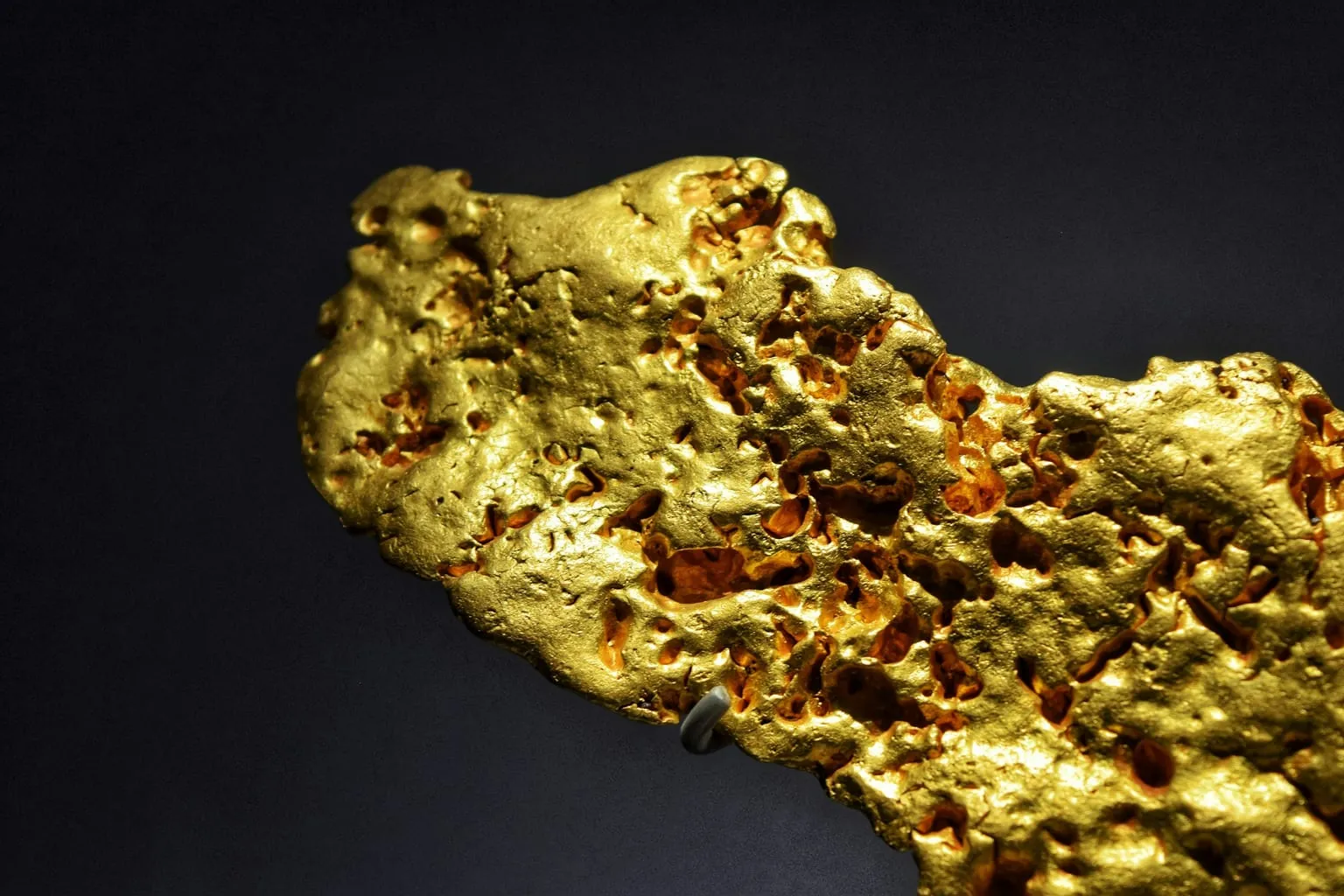
Every claim below is real, and each one certifies something different. The table lines them up with who checks them.
| Claim on the page | What it certifies | Who checks it |
|---|---|---|
| Conflict-free (Kimberley Process) | Rough diamond shipments between participant countries, against the rebel-financing definition | Participant governments |
| System of Warranties statement | A seller’s written guarantee on business invoices that diamonds are conflict free | The seller, after a self-assessment with the World Diamond Council |
| RJC certified member | The member business, audited against the RJC Code of Practices | An independent third-party audit firm |
| RJC Chain of Custody | Traceable, responsibly sourced gold, silver and platinum group metals | An independent third-party audit firm; voluntary for members |
| Fairmined | Artisanal and small-scale mining organizations meeting the Fairmined Standard | The Fairmined assurance system of the Alliance for Responsible Mining |
| Recycled or reclaimed metal | Metal recovered from the waste stream before or after consumer use | The seller must be able to substantiate it (FTC Green Guides, 16 CFR 260.13) |
| Lab-grown diamond | A diamond made in a laboratory, disclosed as not mined | FTC Jewelry Guides, 16 CFR 23.12 |
RJC Membership and Chain of Custody
The industry standards body RJC (“Responsible Jewellery Council”) runs two certifications that are easy to confuse. The Code of Practices certifies the member company through an independent audit, and a certified member may then display the RJC logo. The Chain of Custody standard is the one that follows material, and its scope is gold, silver and the platinum group metals. The RJC calls it voluntary for its members. A company logo therefore tells you about the company; it does not tell you where the diamond in your ring was mined.
Fairmined Gold
Fairmined certifies artisanal and small-scale mining organizations, with requirements covering legal mining practice, environmental protection, labor conditions, traceability and a premium paid to the miners. The standard publishes two tiers: Fairmined gold, with a gradual reduction of toxic chemicals, and Fairmined Ecological gold, with no toxic chemicals used. Bario Neal says it was among the first jewelry companies to take part, and describes its metals as 100% recycled or Fairmined certified. On the Avens listing we read, every metal option was labeled reclaimed.
Recycled Metal, and Why the Wording Matters
The FTC’s Green Guides are specific about recycled content. It is deceptive to claim recycled content unless the material was recovered or diverted from the waste stream, and an unqualified claim is for a product made entirely of recycled material, minor incidental components aside. A partly recycled product should say how much. That is the test to hold a seller to, and one of the sellers we read shows why: Valerie Madison’s About page says it uses “100% recycled gold”, while the FAQ on its product pages says it “prioritizes the use of recycled gold whenever possible”. Both may be true of different pieces; the order is where to ask.
Lab-Grown Diamonds
A lab-grown diamond removes mining from the question, and GIA is plain that it is a real diamond, with essentially the same chemical composition and crystal structure as one formed in nature. The FTC permits a word like “cultured” only alongside a clear disclosure that the stone was not mined. What a lab-grown stone does not settle is the energy used to grow it, and that is where the FTC has already stepped in: in 2019 its staff sent warning letters to jewelry marketers, several of which had advertised jewelry as “eco-friendly” or “sustainable”, telling them not to use such unqualified claims because they are highly unlikely to be substantiated. A clarity grade such as the “F VS” on Laura Preshong’s lab-grown side stones is the seller’s or another lab’s: since 1 October 2025 GIA no longer grades lab-grown diamonds on its natural clarity scale and describes them as “Premium” or “Standard” instead. Our lab-grown vs natural diamond guide covers the stones themselves.
Where the Picks’ Stones and Metal Come From
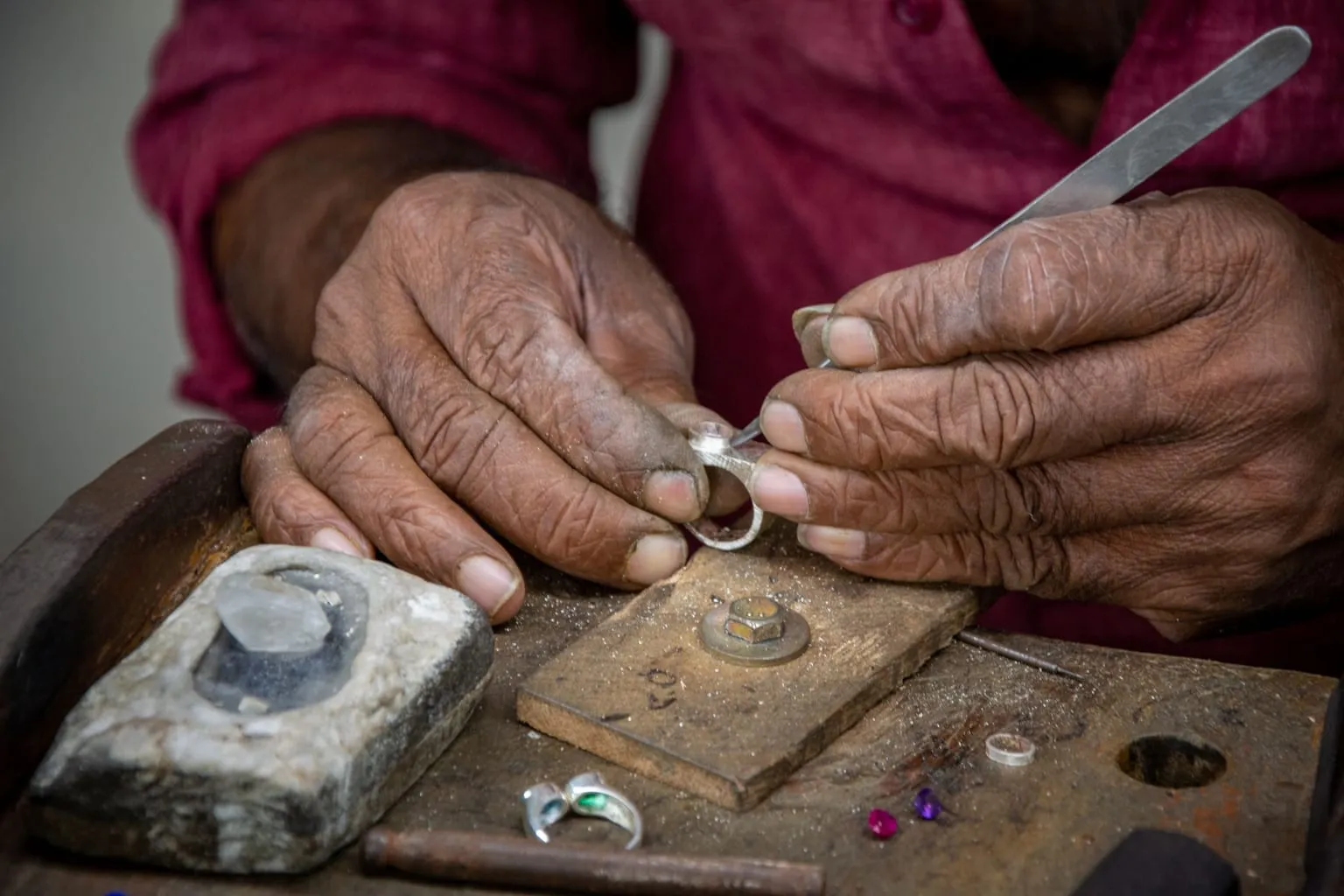
Each pick makes a different claim, and each claim is strongest where the listing itself repeats it.
| Seller | What the seller states | Where we read it |
|---|---|---|
| Bario Neal | Metals “100% recycled or Fairmined certified”; diamonds “primarily of recycled, Australian, and Canadian origin”; Canadian stones subject to the Canadian Diamond Code of Conduct | Ethics page and product page |
| Laura Preshong | Recycled 14K gold or 950 platinum; Canadian diamonds with a CanadaMark or Maple Leaf number and a Canadian certificate matched to the GIA report | Product page and craftsmanship page |
| Young in the Mountains | 14K recycled gold, a Rock Creek Montana sapphire, reclaimed white melee; large diamonds with known origin or reclaimed stated as a goal | Product page and sourcing page |
| With Clarity | Follows the Kimberley Process; no diamonds associated with Zimbabwean mining | Policy page |
| Brilliant Earth (not a pick) | “Beyond Conflict Free” natural diamonds from Botswana, Namibia, South Africa and Canada; “less than 1% of the world’s diamonds” meet the standard | Transparency page |
The pattern is worth noticing. The strongest claims here are the ones attached to a specific stone or a specific line on the order form: a reclaimed metal option, a named deposit, a certificate number. The weakest are the ones attached to the brand. If a claim matters to you, ask the seller to write the origin of your particular diamond on the receipt.
Returns and Resizing, Seller by Seller
An ethical ring is still a ring you may need to send back or resize, and these four sellers differ more on that than on price.
| Seller | Return window, per the seller | What ends it or costs extra | Resizing |
|---|---|---|---|
| Bario Neal | 30 days for the setting | Restocking fee on rings; diamonds of 0.25 carat or larger cannot be returned | One complimentary resize within 1 year |
| Laura Preshong | 14 days from delivery | A 15% return fee on every order; resized or engraved rings are non-refundable | One complimentary resize within 90 days |
| Young in the Mountains | 14 days on unworn Available Now pieces | A 10% restocking fee; resized, custom and sale items are final | Free within one year from the website; a resized ring is final sale |
| With Clarity | 30 calendar days from receipt | Items submitted for resizing are final, even inside the window | One free resize within 30 days |
The same rule holds at all four: settle the size before you resize, because at Laura Preshong, Young in the Mountains and With Clarity a resized ring can no longer be returned. What a resize costs outside these windows is in our guide to ring resizing costs.
Which Ethical Engagement Ring Fits You?
| Your priority | What to look for | Pick on this page |
|---|---|---|
| No new mining at all | A lab-grown or reclaimed center stone and recycled metal | Bario Neal Avens with a lab-grown diamond |
| A mined diamond with paperwork | A certificate or inscription that follows the stone | Laura Preshong August with a Canadian diamond |
| A colored stone with a named source | A deposit named on the listing | Young in the Mountains Suisaiga |
| The lowest price | A lab-grown center in a simple setting | With Clarity Petite Solitaire |
| An heirloom stone | Resetting a family diamond | Bario Neal’s ethics page lists heirloom resetting |
If budget is the constraint, our pages on engagement rings under $1,000 and where to buy an engagement ring compare more sellers on price and policy. A colored center is another route, set out in sapphire engagement rings and diamond alternatives.
Frequently Asked Questions
What Is the Most Ethical Engagement Ring?
No authority ranks one, so it depends on the harm you care about most. A reclaimed or heirloom stone involves no new mining, a lab-grown diamond removes mining from the stone, and recycled or Fairmined metal addresses the gold. The most defensible choice pairs one of these with the origin written on your receipt.
What Is the 3 Month Ring Rule?
It is the idea that an engagement ring should cost three months of salary. Brilliant Earth traces it to a 1930s De Beers advertising campaign that suggested one month’s salary, which became two to three months by the 1980s, and says it was designed to boost diamond sales. Our spending guide covers what people actually spend.
Where Can I Buy Ethically Sourced Wedding Rings?
From a seller that states the origin of the metal on the listing itself. Bario Neal labels every metal option on its solitaire as reclaimed, Laura Preshong states recycled 14K gold or 950 platinum, and Young in the Mountains names recycled gold in the materials line of the ring we read. Ask for the same wording on the band you choose.
Is There Such a Thing as Ethically Sourced Diamonds?
Yes, if you define the standard first. The Kimberley Process only addresses rebel-financed conflict, so sellers who go further name a country, a mine, a certificate or a reclaimed source. Laura Preshong says its Canadian diamonds carry a CanadaMark or Maple Leaf number, and Brilliant Earth names four source countries for its natural diamonds.
Sources
- Kimberley Process, What Is the Kimberley Process?, undated, accessed 18 September 2026.
- World Diamond Council, System of Warranties, undated, accessed 18 September 2026.
- Responsible Jewellery Council, Code of Practices, undated, accessed 18 September 2026.
- Responsible Jewellery Council, Chain of Custody, undated, accessed 18 September 2026.
- Fairmined, The Fairmined Standard, undated, accessed 18 September 2026.
- Federal Trade Commission, 16 CFR Part 260, Guides for the Use of Environmental Marketing Claims, eCFR, current as of 18 September 2026.
- Federal Trade Commission, 16 CFR 23.12, Definition and misuse of the word “diamond”, eCFR, current as of 18 September 2026.
- Federal Trade Commission, FTC Sends Warning Letters to Companies Regarding Diamond Ad Disclosures, press release, 2 April 2019.
- GIA, Laboratory-Grown Diamond Report, undated, accessed 18 September 2026.
- GIA, GIA Launches Updated Laboratory-Grown Diamond Services October 1, 2025, accessed 18 September 2026.
- Brilliant Earth, Beyond Conflict Free Diamonds and Ethical Diamonds (retailer), undated, accessed 18 September 2026.
- Brilliant Earth, Why the 3 Months’ Salary Engagement Ring Rule Is Outdated (retailer), undated, accessed 18 September 2026.
- Bario Neal, Ethics, Avens Diamond Ring, Returns and Exchanges and Ring Resizing (retailer), undated, accessed 18 September 2026.
- Laura Preshong, August Round Brilliant Cut Engagement Ring, Craftsmanship and Ethics, Shipping and Purchasing Policies and FAQ (retailer), undated, accessed 18 September 2026.
- Young in the Mountains, Suisaiga Montana Sapphire Solitaire Ring, Sourcing, Customer Service and Resize and Repair (retailer), undated, accessed 18 September 2026.
- With Clarity, Classic Four Prong Petite Comfort Fit Solitaire Engagement Ring and Our Policies and Terms (retailer), undated, accessed 18 September 2026.
- Valerie Madison, About and a product page FAQ (retailer), undated, accessed 18 September 2026.