

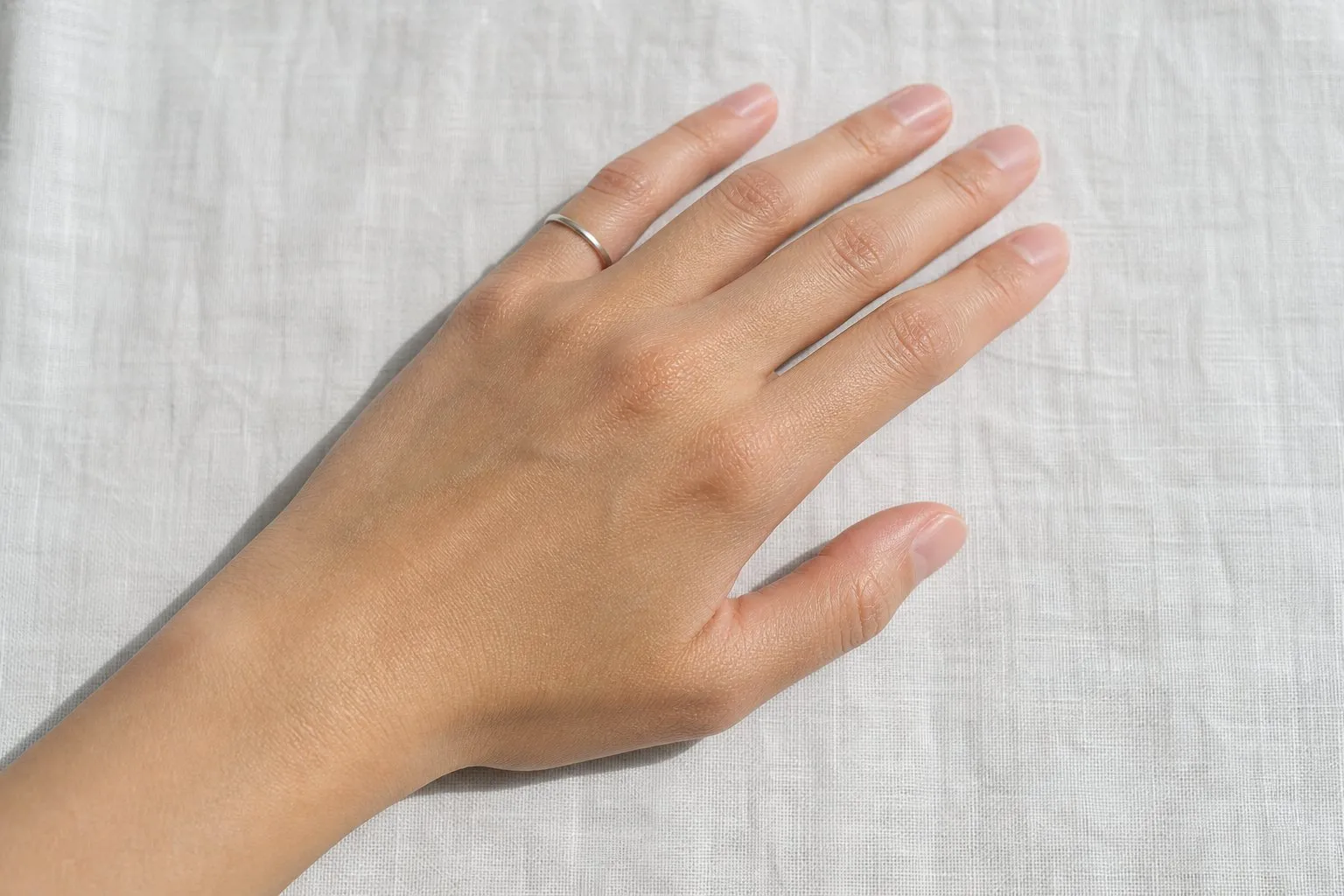
In the United States a promise ring is most often worn on the ring finger, the fourth finger counting the thumb as the first, and the right hand is the usual pick for anyone who does not want the ring mistaken for an engagement ring. Ask what finger does a promise ring go on and you will find that no church, museum, standards body or jewelry authority publishes an answer, so this guide describes how a ring on each hand and finger is actually read by other people rather than inventing a rule, and names every source it has.
That leaves three decisions: which hand, which finger, and what you want other people to assume. The last one drives the other two.
What is on this page10 sections
Key Takeaways
- No church, museum, standards body or jewelry authority publishes a hand or finger for a promise ring. Every placement here is a US reading convention or a named source’s claim.
- Brilliant Earth wrote in 2026 that there are “no strict rules about which finger or hand the wedding ring should be worn on.”
- The fourth finger of the left hand is tied to marriage by the 1662 Book of Common Prayer, which is why a promise ring worn there gets read as an engagement.
- GIA suggested in 2025 that an engagement ring can be worn on the right hand and the wedding band on the left, so moving a significant ring between hands is a normal choice.
- A 2026 paper in Archives of Plastic Surgery states that “blood returns to the heart from all fingers,” so the vein of love is a belief, not anatomy.
The Short Answer
The ring finger of the right hand is the placement least likely to get you congratulated on an engagement you have not announced, and the ring finger of the left hand is the one most likely to. Neither is a rule, and the reason is worth understanding before you pick.
The Convention, and What Backs It
Nothing published backs it. Every article currently answering this question in search is a retailer’s guide or a forum thread, and not one of them names a source for the finger it prescribes. There is no standards body for jewelry etiquette, no church rubric that mentions promise rings, no museum catalog that assigns them a finger. Even the documented predecessor object, the inscribed posy ring, is described by Museum Wales as a ring of mottoes and short phrases about love and fidelity, with no finger attached to it.
The strongest available statement comes from a retailer’s own voice. Brilliant Earth, writing in 2026, says rings are “traditionally worn on the left hand’s ring finger” but that “there are no strict rules about which finger or hand the wedding ring should be worn on.” If the placement of a wedding ring is not a rule, a promise ring has nothing behind it at all. This is not a case of sources disagreeing. It is a case of there being no sources.
Why the Fourth Finger Gets Read as Engaged
The fourth finger of the left hand does have a documented association, and it is with marriage. The Church of England’s 1662 Book of Common Prayer instructs that the priest “taking the Ring, shall deliver it unto the Man, to put it upon the fourth finger of the Woman’s left hand.” That rubric traveled with the English-speaking world, which is why a ring there is read as a wedding or engagement ring. For the full history, see what hand a wedding ring goes on.
A promise ring lands on that finger by borrowing the association, not by a tradition of its own.
What a Promise Ring Is, in One Paragraph
A promise ring marks a commitment that is not an engagement. That guide covers the definition and the full range of meanings, so this page stays on placement.
What Hand Does a Promise Ring Go On?
Both hands are in use, and the choice comes down to one question: do you want the ring read as a step toward marriage, or as a personal ring? Because no authority assigns a hand, the only evidence is how the ring is read, and the two hands are read differently.
Left Hand
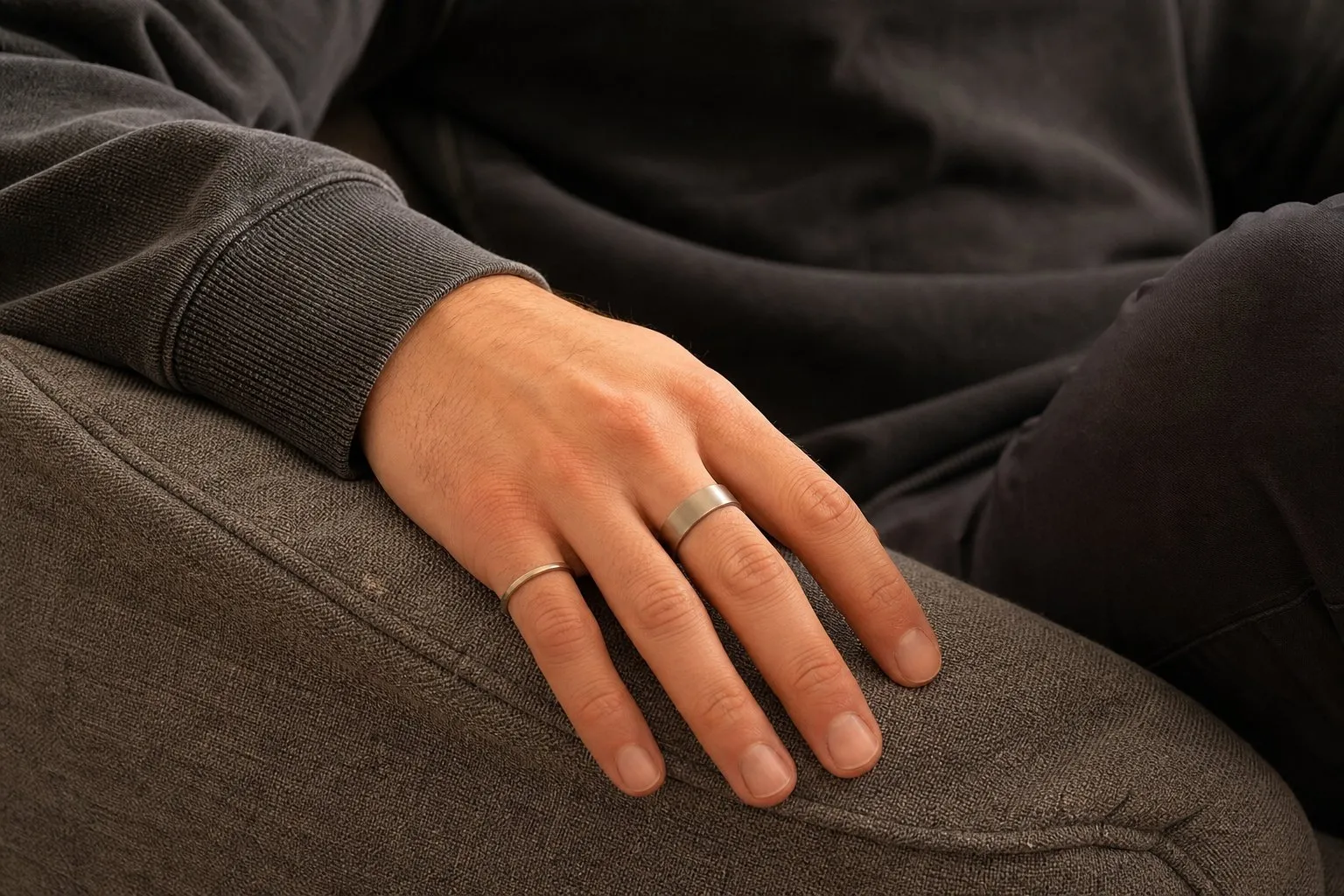
The left hand carries the marriage association described above, so a promise ring on the left ring finger is the most likely to be taken for an engagement ring. That is not a problem for a couple who want the ring to signal a serious intent and are glad to explain it. It is a cost for anyone who does not want the subject raised at work or at a family dinner. On the left hand, any finger other than the ring finger is read as a style choice by most people.
Right Hand
The right hand keeps the same look and removes most of the confusion, which is why it is the common workaround. It also has the nearest thing to authoritative cover: GIA suggested in 2025 that you might “consider wearing your engagement ring on your right hand and your wedding band on your left.” If a gemological body is comfortable moving an engagement ring to the right hand, a promise ring there breaches nothing. Sizing is the one practical catch, covered further down.
Switching Hands When You Get Engaged
Many people move the promise ring to the other hand or another finger once an engagement ring arrives, so the left ring finger is free for the new ring. Others keep wearing the promise ring alongside it, and others retire it. No authority publishes any of this as etiquette, so treat all three as options rather than steps. If you start on the right hand, the switch is often unnecessary, which is one practical argument for starting there. Read how an engagement ring differs from a wedding ring if you are working out what the new ring needs to do, and see which finger the engagement ring goes on for the other side of the pair.
What Each Finger Signals in the US
Every line below is about how other people read the ring, not about what a finger means. General finger symbolism is a separate subject with its own sourcing problems.
| Finger and hand | How it is commonly read in the US | Risk of being taken for engaged | What actually backs it |
|---|---|---|---|
| Left ring finger | Read as an engagement or wedding ring by most people | High | The 1662 marriage service places the wedding ring on this finger. Nothing published ties it to promise rings |
| Right ring finger | Read as a personal or meaningful ring, rarely as an engagement | Low | Nothing published. GIA notes an engagement ring may be worn on the right hand by choice |
| Left middle finger | Read as a style choice | Very low | Nothing published |
| Right middle finger | Read as a style choice | Very low | Nothing published |
| Index finger or pinky, either hand | Read as a fashion ring or a signet | Very low | Nothing published for promise rings. A Jewish ceremony does place the wedding band on the right index finger |
Four of those five rows say nothing is published, and that is the honest state of the subject.
Left Ring Finger
This is the most common choice and the one most likely to be misread. What happens in practice is simple: coworkers glance at your hand, assume you got engaged, and say congratulations. That is the entire cost, and for a couple happy to talk about it the cost is nothing. For someone who does not want the subject raised, it is real, and it repeats every time a new person notices.
Right Ring Finger
The same look as the left, read very differently. GIA also described stacking rings on one finger as a way to show personal style, which makes a slim promise ring on the right ring finger an easy fit beside other jewelry.
Middle Finger, Index and Pinky
Almost nobody in the US reads a ring on these fingers as an engagement, which is the whole of what can be said about them. They are the plainest way to wear a meaningful ring without the question. A significant ring does sit elsewhere in a living tradition: My Jewish Learning says that during the ceremony “the groom places the ring on the right index finger of the bride,” and that many people move the ring after the wedding ceremony.
Promise Ring Finger for Men and Women
The finger does not change for a man or a woman. No source distinguishes the finger by gender, and the convention described above applies the same way to a promise ring for him and a promise ring for her.
For Him
A man given a promise ring faces the same reading as anyone else: the left ring finger looks like an engagement or wedding band, and the right ring finger or another finger looks like a personal ring. Because plain bands are common on men’s hands, a slim band on the right hand rarely draws a question. The practical issues are size and work. A hand that does manual work or wears gloves may do better with a durable band, or with the chain option below. If you are choosing the band itself, our best promise rings page lists options and size ranges.
For Her
The same fingers apply, and the same trade-off: the left ring finger invites congratulations, the right does not. We found no authority publishing a different finger for women, so this page does not invent one. A promise ring finger for a girl and a promise ring finger for a guy are the same finger, read the same way by the same people. The differences that do exist are practical: ring size, band width, and whether the wearer already wears rings at all.
When the Ring Is Worn on a Chain
A chain is a real option, not a compromise. Anyone whose employer restricts hand jewelry may not be able to wear a ring during the day, and some people simply do not want the question at work. Wearing it on a chain changes nothing about what the ring means and removes the placement problem entirely. If you would rather keep it on your hand, how a band’s fit actually feels day to day covers what makes a slim band easy to forget you are wearing.
What the Finger Says About the Promise
A finger does not carry a meaning of its own. What it carries is a prediction about how the promise will be read. The left ring finger says “serious, possibly heading toward marriage” to strangers, whatever the two of you agreed. The right ring finger says “meaningful to me,” and leaves the explanation to you. Any other finger says “style,” which suits a friendship, family or personal-commitment ring.
So choose the finger that matches the promise you actually made. A ring that stands for exclusivity or a plan to marry later is understood best on the left or right ring finger. A ring for sobriety, friendship or a family bond is clearer on another finger, where it will not prompt engagement questions. The full range of meanings, and how couples decide what theirs stands for, is in the promise ring guide.
The Story About a Vein to the Heart
You have probably been told that the fourth finger connects to the heart by a dedicated vein, the vena amoris. It is a belief with a traceable history, and the anatomy does not support it.
What the Paper Actually Says
A 2026 article by Hong, Innocenti and Hallock in Archives of Plastic Surgery addresses the claim directly and states that “blood returns to the heart from all fingers, not just the sinister ring finger, that functions primarily only as a stabilizer.” There is no vein unique to the ring finger. The story was never a description of the body, so it cannot be used to argue that a ring belongs on one finger rather than another.
Where the Phrase Came From
The same paper traces the Latin phrase itself, reporting that the ecclesiastical lawyer Swinburne published a work in 1686 containing the earliest known occurrence of vena amoris. That matters because retailer articles routinely call the idea ancient. A phrase first recorded in print in the late seventeenth century is not antiquity.
Choosing the Finger for Your Situation
Pick the finger by what you want people to assume and by what will actually fit, in that order. Nothing below is etiquette, because no etiquette exists to cite. If you have not chosen the ring yet, our best promise rings lists the size range of each pick, which can decide the finger for you.
| Your situation | Finger to consider | Why | What to check |
|---|---|---|---|
| You are happy to be asked about it | Left ring finger | It is the most common choice and reads as significant | That you both have an answer ready for the question |
| You do not want to be congratulated on an engagement | Right ring finger | Same look, and few people in the US read it as an engagement | The dominant hand is usually about half a size larger1 |
| It is a friendship or family ring | Middle finger or index finger | Almost nobody reads a ring there as a romantic commitment | That the band is narrow enough to be comfortable between two fingers |
| You already wear an engagement or wedding ring | The other hand, or a different finger | Stacking on the same finger is a choice, not a requirement (GIA) | Whether the two rings rub, and how they sit together |
| You have never worn a ring on this finger | Whichever you choose, sized on that exact finger | The knuckle is larger than the rest of the finger for most people (GIA) | It should pass the knuckle with gentle resistance, not spin or slide off2 |
| Your job rules out rings during the day | None. On a chain, or a soft band at work | The placement custom does not change, and neither does what the ring means | Your employer’s rules before assuming a metal band is acceptable, and how nurses handle rings on shift |
2 sources cited in this table
If You Do Not Want to Be Asked
Three things work: the other hand, another finger, or a style that does not read like a solitaire. A plain band, a signet or a stacking ring will rarely be taken for an engagement ring wherever you wear it. As for whether it is bad luck to wear a promise ring on the ring finger, no source treats it as a matter of luck at all, and the only real consequence is being misread by people who mean well.
Getting the Size Right on an Unfamiliar Finger
This is the part the retailer guides skip, and it matters most on a finger that has never held a ring. GIA’s ring size guide, published in 2018, warns that “for most people, the joint is larger than the rest of the finger,” so measuring only where the ring will sit can produce a size that never makes it over the knuckle.
Brilliant Earth’s 2026 fit guide adds the conditions: measure at a normal temperature, because “fingers contract in cold conditions and expand in heat,” and judge the result by feel, since a correctly sized ring “should pass over the knuckle with gentle resistance and sit securely at the base of the finger” without spinning excessively or sliding off a relaxed hand.
One more point is load-bearing, because this page suggests the right hand. Thom Duma Fine Jewelers notes that the dominant hand is usually about half a size larger than the non-dominant one. For starting points, see the men’s ring size chart and the average ring size for women, then measure the finger the ring will actually live on with the ring sizer.
Frequently Asked Questions
What Are the Rules for a Promise Ring?
There are none published by any authority, and what circulates online as rules is retailer advice with no source behind it. Two things genuinely matter: agreeing with the other person on what the ring stands for, and picking a hand and finger knowing how strangers will interpret it. Everything else is preference.
Do Both Couples Wear a Promise Ring?
Not necessarily. No source requires both partners to wear one, and plenty of couples have only one person wearing a ring while the other holds the promise in another form. Matching rings are a choice some couples enjoy, not a convention. Decide together, since the ring is a shared signal either way.
How Long Should You Wear a Promise Ring?
No source sets a period, so there is nothing to comply with. In practice people wear one until the situation changes: some shift it to a different finger when an engagement ring arrives, some keep wearing both, and some put it away. A promise ring that has stopped meaning anything can simply stop being worn.
How Long Should You Be Dating Before a Promise Ring?
No authority sets a minimum, and we found no sourced figure, so any number you read online is opinion. A better test is whether you can both say plainly what the ring promises. If you cannot yet explain it in a sentence, the conversation is not finished, and the ring can wait.
How Much Should You Spend on a Promise Ring?
No source sets a standard amount, and a promise ring does not follow the old spending rules people quote for engagement rings. Spend what fits your budget without strain, because the meaning comes from the promise, not the price. Our best promise rings page shows price ranges across materials.
What Finger Does a Promise Ring Go On for a Male?
The same finger as for anyone else. No source distinguishes the finger by gender, so a man can wear it on the right ring finger to avoid an engagement reading, or on the left ring finger if he wants that signal. Another finger works too, especially with a plain band and manual work.
What Are the Four Rings in a Relationship?
People usually mean the promise ring, the engagement ring, the wedding ring and an eternity or anniversary ring. No institution publishes that as a sequence, and it is not a checklist anyone is expected to complete. Plenty of couples use only one or two of the four, and plenty skip the promise ring entirely.
Sources
- Brilliant Earth, Engagement Ring & Wedding Band Rules: 18 Traditions Worth Breaking, 2026.
- Church of England, The Book of Common Prayer (1662): The Form of Solemnization of Matrimony, 1662.
- Hong, Innocenti and Hallock, Archives of Plastic Surgery, Congestion … Sinister … Vena Amoris … and the LOVE of Microsurgery, 2026.
- GIA 4Cs, How to Wear Your Engagement Ring and Wedding Band, 2025.
- My Jewish Learning, All About Jewish Wedding Rings, undated, accessed October 22, 2026.
- GIA 4Cs, Ring Size Guide: Tips and Ring Size Chart, 2018.
- Brilliant Earth, Comfort Fit Ring vs. Standard Fit Ring: What’s the Difference?, 2026.
- Thom Duma Fine Jewelers, What is the Average Ring Size for Women? (And How to Get Her Size), undated, accessed 11/09/2026.
- Museum Wales, Posy Rings, undated, accessed 11/09/2026.