


Are lab grown diamonds worth it? For the ring on your hand, usually yes: the stone is a diamond, and at the same grades it costs a fraction of a mined one. On 25 September 2026, Blue Nile listed a 1.06 carat, D color, VS1 lab-grown round for 557 dollars, while the natural 1.00 carat D VS1 rounds on the first page of its search started at 4,023 dollars. As an asset, no. Wholesale lab-grown prices have kept falling since they were first tracked in 2018, the largest diamond resale platform we checked will not take one, and the stores that do take them back only give credit toward a lab-grown stone twice the price.
So the question is not whether a lab-grown diamond is good, but what you want from the money. This guide puts the prices, the resale record and the stores’ own terms side by side.
What is on this page9 sections
Key Takeaways
- At the same grades, lab-grown is far cheaper: a 2.02 carat D VS1 lab round was 1,702 dollars at Blue Nile on 25 September 2026, and the lowest natural 2.00 carat D VS1 on the first page of results was 22,928 dollars.
- Edahn Golan’s wholesale index for lab-grown diamonds fell 13% in the year to the second quarter of 2026 and 96% since July 2018, and De Beers said in 2025 that it expects prices “to fall further”.
- Worthy, a resale platform for diamonds, lists “Lab-grown diamonds of any shape and size” under what it does not accept.
- Blue Nile, Rare Carat, Brilliant Earth, VRAI and Kay all give full credit on a lab-grown diamond only toward a new one at least twice the original price.
- Signet, which describes itself as the world’s leading retailer of diamond jewelry, warns its own investors that buyers who paid more for lab-grown stones “may become disappointed in the relative value of their purchase”.
What You Save: The Same Grades, Two Origins
The simplest test of whether lab-grown is worth it is to hold everything else still. We searched one store’s loose diamonds for round stones in D color and VS1 clarity on 25 September 2026, once for lab-grown and once for natural.
| Blue Nile, round, D color, VS1, 25/09/2026 | Lab-grown (IGI report) | Natural (GIA report) |
|---|---|---|
| Around 1 carat | 557 dollars for 1.06 ct | From 4,023 dollars for 1.00 ct |
| Around 2 carats | 1,702 dollars for 2.02 ct | From 22,928 dollars for 2.00 ct |
| Around 3 carats | 3,707 dollars for 3.02 ct | Not searched |
At one carat the natural stone costs about seven times the lab-grown one; at two carats, about thirteen times. The gap widens with size because natural prices climb steeply with weight and lab-grown prices do not. The same lab-grown prices, at more weights and at a second store, are in our guide to lab-grown diamond prices by carat.
What Couples Actually Chose
Buyers have voted with that gap. The Knot’s 2026 Real Weddings Study, reported by Rapaport News in February 2026, found that 61% of engagement rings bought by US couples married in 2025 had a lab-grown center stone, and that those rings averaged 4,300 dollars at 2 carats against 7,000 dollars at 1.6 carats for natural. Signet’s annual report for the year to January 2026 says about 27% of its merchandise sales were products containing lab-grown diamonds.
What You Are Not Giving Up
The material is the same. The Federal Trade Commission removed the word “natural” from its definition of a diamond in 2018, and GIA says lab-grown and mined diamonds share essentially the same chemical composition and crystal structure. Hardness, sparkle and durability are not where the two differ; our guide to lab-grown vs natural diamonds covers how they are made and told apart.
Lab Grown Diamond Resale Value
This is where the answer turns. A lab-grown diamond is cheap to buy because it can be made in quantity, and the same fact makes it worth little to anyone buying it back.
Wholesale Prices Keep Falling
Edahn Golan Diamond Research & Data reported in July 2026 that its Lab-Grown Wholesale Price Index “declined 13% year over year and is down 96% since we began tracking wholesale prices in July 2018”. The fall was not even: wholesale prices for 1-carat rounds rose 1%, while 1.50 to 1.99 carat stones fell 11% and 2-carat stones fell 20%. De Beers, announcing in May 2025 its “intention to close” Lightbox, its own lab-grown jewelry brand, said Lightbox launched at 800 dollars a carat and that lab-grown prices “have fallen 90% at wholesale” since, adding “we expect both the cost and price of lab-grown diamonds to fall further”.
The Resale Market Is Thin
Worthy, a diamond resale platform, lists “Lab-grown diamonds of any shape and size” under the heading “What We Do Not Accept”. JCK reported as far back as 2019 that jewelers reluctant to sell lab-grown stones name trade-ins and buybacks as their first concern. We found no named, dated survey of what lab-grown diamonds fetch on resale, and so we print no percentage.
Even the Seller Warns About It
Signet, which owns Kay, Zales, Jared and Blue Nile and calls itself a leading retailer of lab-grown diamonds, tells investors in its annual report that lower costs “may continue to drive down retail prices of lab-grown diamonds”, and that “consumers who purchased lab-grown diamonds at higher prices may become disappointed in the relative value of their purchase”. Its chief executive told CNBC in September 2025 that buyers above 5,000 dollars lean natural, “thinking about holding value as an asset”.
What Stores Will Take Back
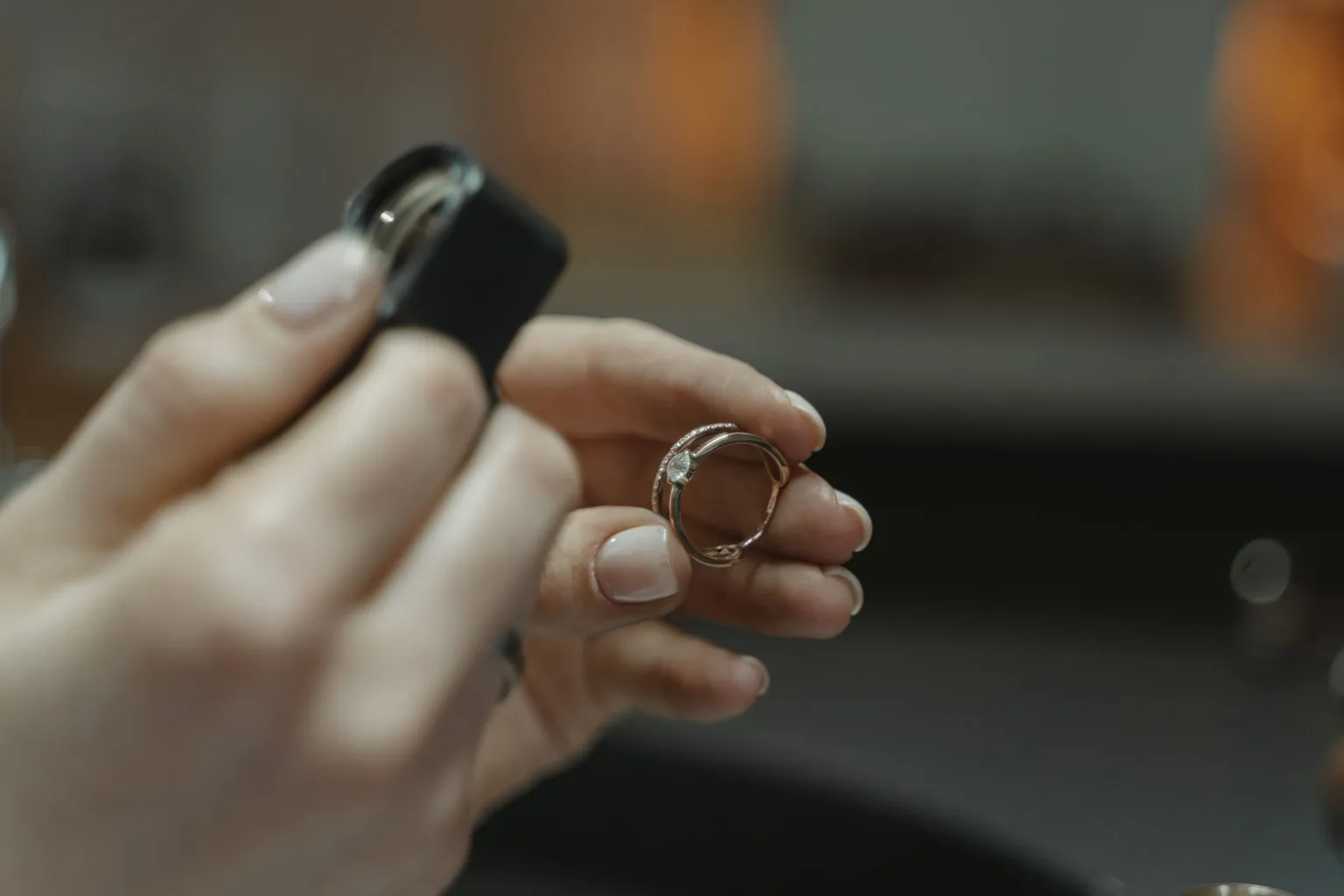
No store we checked buys a lab-grown diamond back for cash. What they offer is an upgrade: full credit for the original price toward a more expensive stone.
| Store | Lab-grown upgrade terms, as published | Read on |
|---|---|---|
| Blue Nile | 100% credit toward a diamond “at least twice the original price”, like for like, IGI or GIA graded | 25/09/2026 |
| Rare Carat | Lab-grown bought after 7 August 2023, toward a new lab-grown diamond “at least twice the price” | 25/09/2026 |
| Brilliant Earth | Credit toward “a new lab grown diamond of at least 2x greater value”, against 1.5x for natural | 25/09/2026 |
| VRAI | Credit toward jewelry “at least twice the value of the original purchase price”, for diamonds of 1 carat and up in a VRAI setting | 25/09/2026 |
| Kay | Lab-grown pieces traded toward new lab-grown jewelry “at least double the value” | 25/09/2026 |
The fine print narrows the offer further. Rare Carat’s program excludes lab-grown stones bought before 7 August 2023, accepts only stones graded D to K in color, and says diamonds bought through the upgrade “may not be returned for credit but can be exchanged within 30 days”. Blue Nile’s requires the original grading report “in reusable condition” and excludes upgrade orders from discounts, coupons and price matching. Read the table as what it is: a way to keep spending, not a way to get money back. Brilliant Earth’s lower bar for natural stones, 1.5 times rather than 2, is the one place in the table where origin changes the terms. If you expect to upgrade, pick the store now, because the credit only works where you bought the stone. Our comparison of the best place to buy lab-grown diamonds sets those terms against returns and grading.
The Downsides Worth Weighing
Beyond resale, three things count against lab-grown for some buyers.
Prices Will Likely Keep Falling
A stone bought today will probably cost less next year, and De Beers and Signet both say so. That matters only if you care what the ring would cost to replace, or if you want its value to hold. It also means insurance matters differently: ask whether a policy pays the replacement cost of a new lab-grown stone, which our guide to engagement ring insurance explains.
Grading Tells You Less
Most lab-grown stones we saw on sale were graded by IGI with the familiar color and clarity letters, while GIA since October 2025 describes them only as “Premium” or “Standard”, on the grounds that more than 95% fall into a narrow range of color and clarity. In practice many lab-grown stones are very white and very clean, so the grades separate them less. Our guide to IGI vs GIA explains what each report now says.
”Eco-Friendly” Is a Claim, Not a Fact
In April 2019 the FTC sent warning letters to eight jewelry marketers, telling them not to use unqualified claims such as “eco-friendly,” “eco-conscious,” or “sustainable” for lab-created diamonds. If environmental impact is the reason you are choosing lab-grown, ask the seller what the claim is based on. Our guide to ethical engagement rings looks at what each kind of claim certifies.
Why Many Jewelers Are Wary
Jewelers’ reservations are mostly about money, theirs and yours. Rapaport News explained in April 2024 that when wholesale prices fall faster than retail ones, “jewelers’ margins will increase in percentage terms”, yet “a retailer must sell more volume to make the same profit”. Edahn Golan told National Jeweler in May 2025 that jewelers were earning “as much as a 70 percent margin” on loose lab-grown diamonds, and that “many retailers would prefer to quit carrying lab-grown diamonds, but they can’t because they don’t want to lose the customer”. One ten-store chain in the same report refuses to sell them at all.
None of that is a reason for you to avoid a lab-grown stone. It is a reason to compare prices across stores, because a high margin on the retailer’s side is room to negotiate or to shop elsewhere.
So, Are Lab Grown Diamonds Worth It for You?
| Your situation | Worth it? | Why |
|---|---|---|
| You want the largest or whitest stone for your budget | Yes | The same grades cost a fraction of natural |
| You may want to sell the stone one day | No | Resale buyers such as Worthy do not accept lab-grown |
| You expect to trade up at the same store | Yeswith care | Credit is full, but only toward a stone twice the price |
| You want the ring’s value to hold | No | Wholesale prices are down 96% since 2018 and still falling |
| You chose lab-grown for environmental reasons | Ask first | The FTC has warned against unqualified eco claims |
| You want a mined stone for its rarity or history | No | Choose natural, and keep the GIA report |
If your budget is the deciding factor, our guide to affordable engagement rings prices complete rings with lab-grown and natural stones.
Frequently Asked Questions
What Are the Downsides of Lab-Grown Diamonds?
The main downsides are resale and falling prices. Wholesale prices lost more than nine-tenths of their value between July 2018 and mid-2026, Worthy does not accept lab-grown stones, and stores give credit only toward a lab-grown stone twice the price. Grading also separates them less, and “eco-friendly” claims may not be backed up.
Why Do Jewelers Not Like Lab Diamonds?
Mostly because of profit and trade-ins. As lab-grown prices fall, jewelers must sell more stones to earn the same dollars, and they cannot resell what customers bring back. Edahn Golan told National Jeweler in 2025 that many retailers would stop carrying lab-grown if they did not fear losing customers.
Are Tiffany Diamonds Mined or Lab-Grown?
Tiffany’s diamonds are mined, going by its own pages: its sourcing page says its rough diamonds come “directly from a known mine or from a supplier with a limited number of known mines”. We found no lab-grown engagement diamonds on the pages we read, and its then chief executive said in 2019 that synthetics have “little to do with the world of luxury”.
Sources
- Blue Nile, Lab-Grown Diamonds search, including IGI 1.06 Carat D-VS1 Round, IGI 2.02 Carat D-VS1 Round and IGI 3.02 Carat D-VS1 Round, accessed 25/09/2026.
- Blue Nile, Natural diamond search, round, D, VS1, accessed 25/09/2026.
- Blue Nile, Diamond Upgrade Program, undated, accessed 25/09/2026.
- Rare Carat, Diamond Upgrade Program, undated, accessed 25/09/2026.
- Brilliant Earth, Online Shopping Assistance, undated, accessed 25/09/2026.
- VRAI, Guarantees, undated, accessed 25/09/2026.
- Kay, Diamond Jewelry Upgrades and Trade-in Services, undated, accessed 25/09/2026.
- Worthy, What We Accept, undated, accessed 25/09/2026.
- Edahn Golan Diamond Research & Data, After a 96% Decline, What’s Next for Lab-Grown Diamond Prices?, 2026, accessed 25/09/2026.
- De Beers Group, De Beers Group announces intention to close Lightbox business, 2025, accessed 25/09/2026.
- Signet Jewelers, Form 10-K for the fiscal year ended January 31, 2026, 2026, accessed 25/09/2026.
- CNBC, Signet Jewelers CEO explains why there’s a market for both natural and lab-grown diamonds, 2025, accessed 25/09/2026.
- JCK, Is There a Resale Market for Lab-Grown Diamonds?, 2019, accessed 25/09/2026.
- Rapaport News, Lab-Grown Margins Might Be High, but Profits Aren’t, 2024, accessed 25/09/2026.
- National Jeweler, State of Diamonds: What’s Next for Lab-Grown Diamonds?, 2025, accessed 25/09/2026.
- The Knot Worldwide, The Knot Worldwide Unveils 2026 Real Weddings Study, 2026.
- Rapaport News, Lab-Grown ‘Taking Over’ Engagement-Ring Spending: The Knot, 2026.
- GIA, GIA to Use New Descriptive Terminology for Laboratory-Grown Diamonds, 2025, accessed 25/09/2026.
- Federal Trade Commission, FTC Sends Warning Letters to Companies Regarding Diamond Ad Disclosures, 2019, accessed 25/09/2026.
- Federal Trade Commission, FTC Approves Final Revisions to Jewelry Guides, 2018, accessed 25/09/2026.
- Tiffany & Co., Diamond Provenance & Source Initiative, undated, accessed 25/09/2026.
- FashionNetwork (Reuters), Top jewellery CEOs say lab-grown diamonds are fashion, not luxury, 2019, accessed 25/09/2026.