

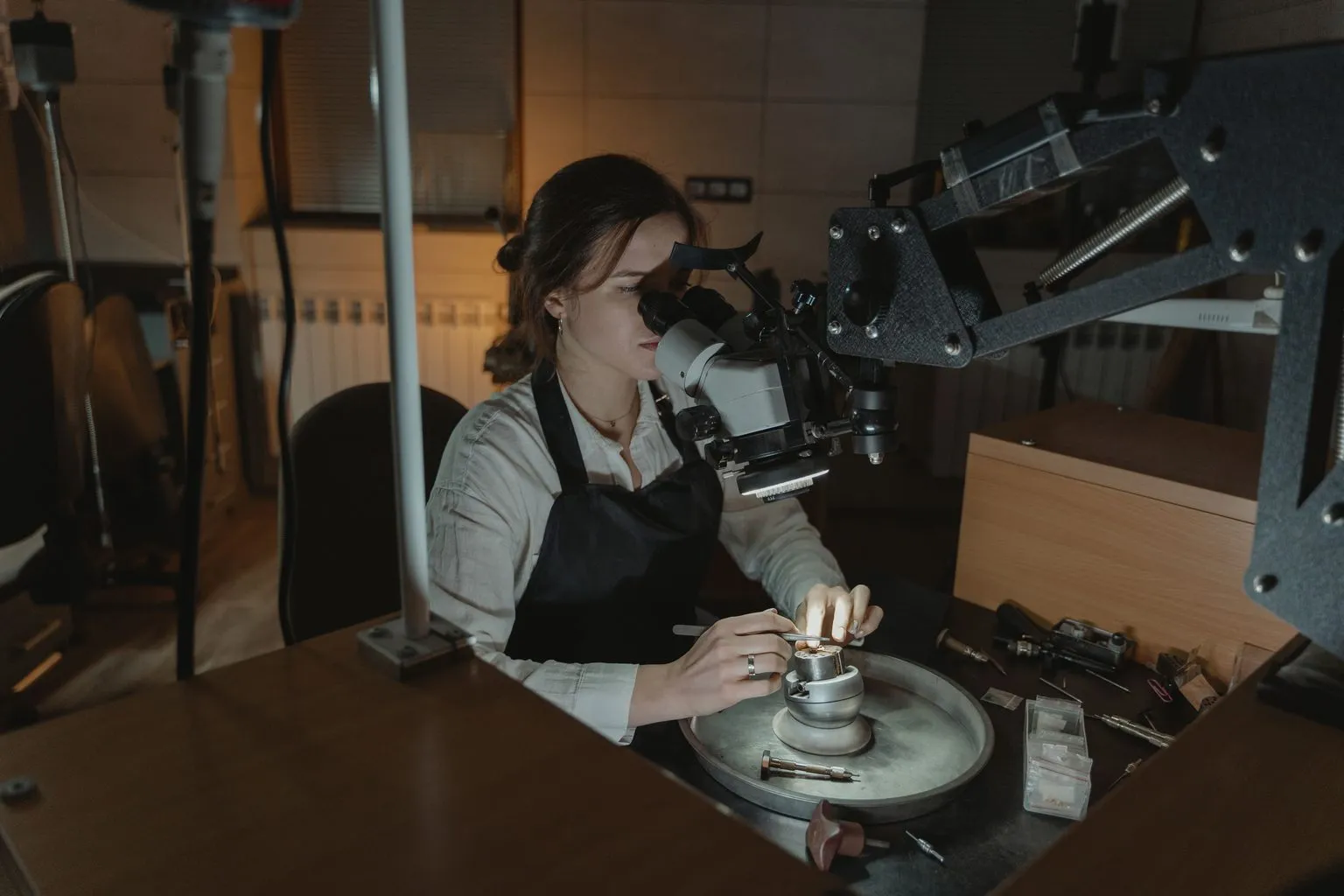
An IGI certified lab grown diamond comes with a report that still reads like a natural diamond’s: a color letter from D to Z, a clarity grade, a cut grade and a report number inscribed on the girdle. A GIA report on the same kind of stone no longer does. Since 1 October 2025 GIA describes lab-grown diamonds only as “Premium” or “Standard”, and gives no assessment at all to stones below its minimums. That single change is most of the IGI vs GIA question today. The rest is price, and there the common claim that a GIA-graded lab stone always costs more held at one store we checked and not at the other.
This guide sets the two reports side by side from what IGI and GIA publish themselves, then shows what the choice does to the price of a stone and how to check a report before you pay.
What is on this page10 sections
Key Takeaways
- IGI says it has graded lab-grown diamonds since 2005 and, in its 2025-26 annual report, claims a 65% global share of lab-grown certification.
- An IGI lab-grown report gives D-to-Z color, clarity at 10x magnification, cut, polish and symmetry, and notes the growth method or treatments only on request or “in some cases”.
- Since 1 October 2025 GIA assesses lab-grown stones as Premium or Standard, prints the document, and inscribes “Laboratory-Grown” on every stone it assesses.
- GIA’s published fee for that assessment is 15 dollars a carat, against 82 dollars for a GIA report on a natural 1.00 to 1.19 carat diamond (fee schedules effective 1 July 2026); IGI publishes no lab-grown fees.
- The report changed the price at one store and not the other: at Blue Nile on 25 September 2026 a GIA-graded 3.03 carat D VS1 lab round cost about 20% more than an IGI-graded 3.02 carat one, while at Rare Carat the few GIA-graded 2 and 3 carat stones sat at or below the IGI median.
IGI vs GIA at a Glance
Every row comes from the lab’s own pages or filings unless another source is named.
| IGI | GIA | |
|---|---|---|
| Founded | Antwerp, 1975, by Marcel Lorie | Not part of this comparison |
| Grading lab-grown since | 2005, in IGI’s words | 2007, when it began issuing synthetic diamond reports |
| Color on a lab-grown report | D to Z letter | None since 1 October 2025: “Premium” (D only) or “Standard” (E to J) |
| Clarity | Clarity grade at 10x | Folded into Premium (VVS and higher) or Standard (VS) |
| Growth method (CVD or HPHT) | “Upon request”, or “in some cases” | Assessed on colored lab-grown reports; not mentioned in GIA’s description of the Premium and Standard assessment |
| Girdle inscription | Report number, by Laserscribe | “Laboratory-Grown” and the assessment number, on every stone |
| Format | Report with online lookup by number | Printed document since October 2025 |
| Published fee | None found | 15 dollars a carat, 15 dollar minimum |
| Owner | Blackstone since May 2023; listed in India since December 2024 | Not part of this comparison |
What an IGI Lab-Grown Report Shows
IGI’s report page describes a full grading in the same language used for mined diamonds, which is what most online listings for lab-grown stones repeat.
Grades on the Natural Diamond Scales
IGI says its gemologists “analyze color in the D to Z color range”, that “Diamond clarity is assessed at 10X magnification”, and that “All diamond shapes and colors will have craftsmanship grades for polish and symmetry noted on the grading report”. That is why a listing can say “1.06 carat, D, VS1, Ideal” for a lab-grown stone: those are IGI’s grades. What they mean in practice for the clarity step most buyers debate is covered in our guide to VS1 vs VS2.
Growth Method Only on Request
The growth process is not a standard line. IGI writes that “Upon request the growth process used and presence of treatments will be noted in the comments section”, and its FAQ says a report “may include” HPHT or CVD “in some cases”. If you care whether a stone was grown by CVD and then treated after growth, ask the seller for the comments section or the report itself before you buy.
Inscription and Lookup
IGI adds the report number to the girdle with Laserscribe, which “permits fast identification of a gemstone under magnification”, and offers a digital copy of each report by number. IGI also says plainly that a report “is not itself an appraisal”: it describes the stone, it does not value it.
What GIA Does Now
GIA graded lab-grown diamonds on its natural color and clarity scales from August 2020 until September 2025, which is why older GIA reports on lab stones still carry letters like D and VS1. It changed course in two announcements in 2025.
Premium and Standard
From 1 October 2025, GIA’s Laboratory-Grown Diamond Quality Assessment places each stone in one of two categories, and any stone that misses the minimums “will not receive a GIA assessment”.
| Factor | Premium (all criteria) | Standard (minimum) |
|---|---|---|
| Clarity | Very, Very Slightly included and higher | Very Slightly included |
| Color | D | E to J |
| Polish | Excellent | Very Good |
| Symmetry | Excellent | Very Good (Good for fancy shapes) |
| Cut grade (round brilliants only) | Excellent | Very Good |
A Premium stone is therefore D color and VVS or better; a Standard stone can be anything from E to J and VS upward. The assessment will not tell you whether a Standard stone is an F or an I.
Why GIA Stopped Using Letters
GIA’s reasoning is about spread. Tom Moses, its chief laboratory officer, said in June 2025 that “More than 95% of laboratory-grown diamonds entering the market fall into a very narrow range of color and clarity”. Pritesh Patel, GIA’s president, put it more bluntly in August: GIA “will no longer use the nomenclature created for natural diamonds to describe what is a manufactured product.” GIA added that existing lab-grown reports “remain valid”.
Printed, Inscribed and Cheap
The new assessment comes back as “A printed document”, replacing the digital-only lab-grown reports GIA had issued since 2020, and every stone’s girdle is laser inscribed “Laboratory-Grown” with its number. Some stores’ help pages still describe GIA lab reports as digital: Rare Carat’s FAQ, read on 25 September 2026, says GIA-graded lab stones “have a digital copy of the grading report”, while IGI and GCAL stones come with paper. Ask which document ships with the stone you are buying.
Why IGI Is Cheaper Than GIA
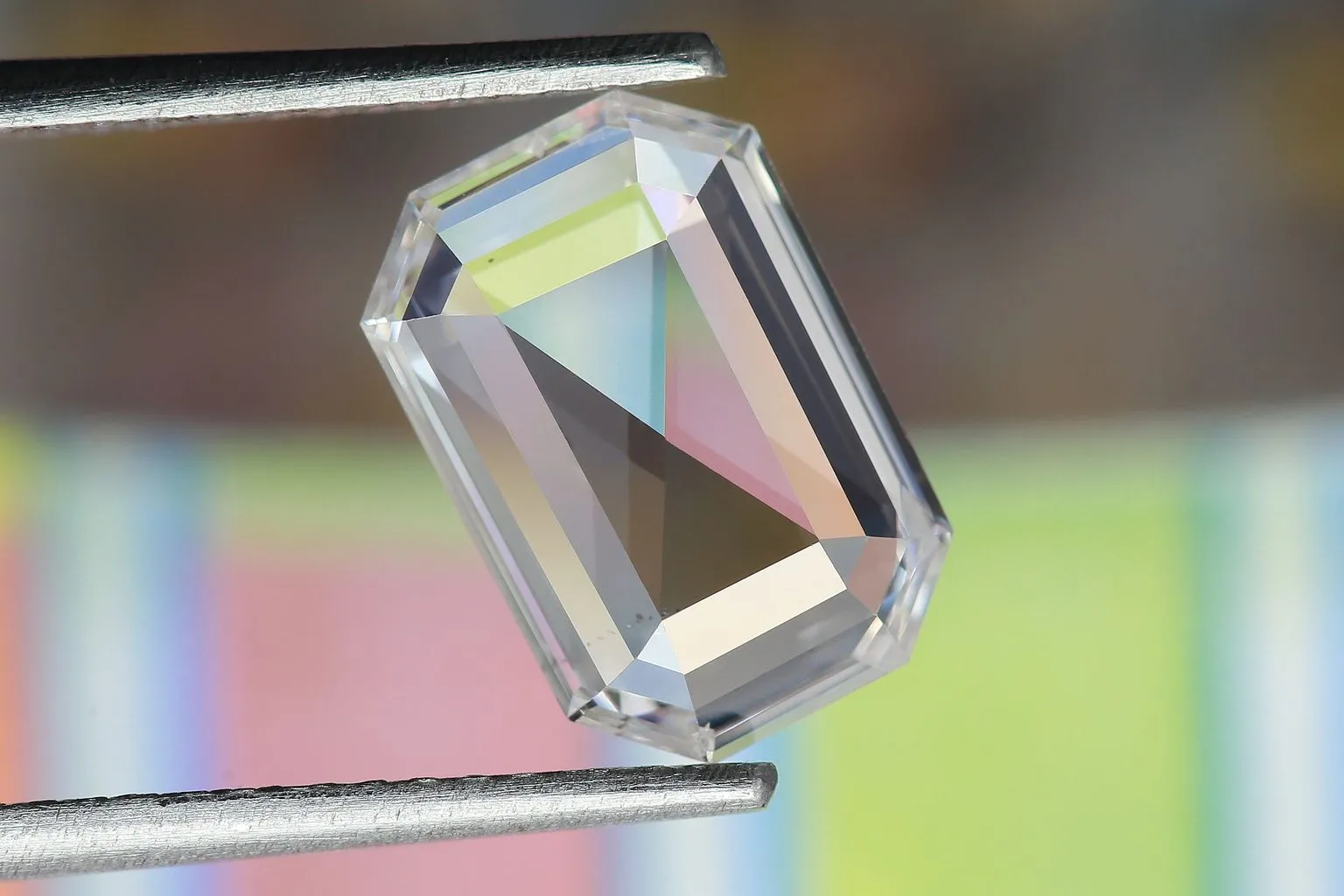
The question usually means one of two things: why grading costs less at IGI, or why an IGI-graded stone costs less than a GIA-graded one. Only the second can be measured.
The Grading Fee
IGI publishes no fee schedule for lab-grown reports that we could find, so no honest comparison of the two labs’ fees is possible. What GIA publishes is striking in its own right. Its fee schedule effective 1 July 2026 charges 15 dollars a carat for the lab-grown Quality Assessment, with a 15 dollar minimum, while a GIA report on a natural diamond of 1.00 to 1.19 carats costs 82 dollars under the natural schedule of the same date. On a one-carat stone, the grading fee is a small fraction of the stone’s price at either lab.
The Price of the Stone
The gap shows up in the price of graded stones. Rapaport News reported in April 2024 that a New York jeweler paid 160 to 190 dollars for a 1-carat D VS1 lab-grown diamond with an IGI report, and that “The same stone with a report from the Gemological Institute of America (GIA) would cost him $250 to $300.” We found the same direction at retail on 25 September 2026: Blue Nile listed a 3.02 carat D VS1 Ideal lab round with an IGI report at 3,707 dollars and a 3.03 carat D VS1 Excellent round with a GIA report at 4,464 dollars in the same search. The GIA stone’s report, issued before GIA’s October 2025 change, still carried D and VS1.
Rare Carat, the same day, told a different story. Its search listed 683 round lab-grown stones of 2.00 to 2.09 carats in G or H color, VS1 or VS2 clarity and Ideal or Excellent cut: 676 graded by IGI, 4 by GIA and 3 by GCAL. The cheapest GIA stone, a 2.09 carat G VS1, was 1,005 dollars, against an IGI median of 1,015 dollars for the band. At 3.00 to 3.09 carats the three GIA stones started at 1,860 dollars, below the IGI median of 2,015. The two GIA reports we opened there were dated 2022 and 2024, before the change, with ordinary letter grades.
Neither store explains its prices, and we will not invent a reason. What the numbers support is narrower than the usual claim: a GIA premium showed up in the 2024 trade report and at Blue Nile, but not at Rare Carat, and at both stores IGI reports dominated the lab-grown listings. Every lab-grown stone on the first page of Blue Nile’s 1 carat and 2 carat D VS1 searches was IGI graded. Our guide to lab-grown diamond prices by carat shows what those grades cost at each weight.
How Much Weight to Put on the Report
The report matters, but for different reasons than it does on a natural stone.
What the Lab Business Looks Like
IGI’s 2025-26 annual report calls it “the world’s foremost certifier of lab-grown diamonds” with “a 65% global market share”, a figure IGI states about itself. The same report records that Blackstone acquired IGI in May 2023 and that its Indian company listed on the BSE and National Stock Exchange from 20 December 2024. It also discloses a lawsuit filed in New York in 2017 by KS Trade alleging “intentionally over-grading diamonds” at affiliated labs outside New York, which IGI says it has “refuted” and which remains in litigation; that case is not about lab-grown stones. Rapaport News reported in July 2025 that lab-grown grading makes up “more than half of IGI’s business”.
Why Some in the Trade Discount Lab Reports
Other labs have stepped back. AWDC, the Antwerp diamond trade body, announced in June 2025 that HRD Antwerp would stop issuing quality certificates for loose lab-grown diamonds from 2026. Analyst Paul Zimnisky told Rapaport that such reports have often been “primarily used as a marketing tool for retailers trying to imply an inherent rarity to the product that doesn’t really exist”. Edahn Golan told the same outlet that “growers are moving quickly toward a D-flawless product”. Read together, the grades on a lab-grown report separate stones less than they do on mined diamonds, which is GIA’s own argument.
How to Check a Report Before You Buy
A report is only useful if it belongs to the stone in the box.
- Look the number up on the lab’s own site. IGI shows a digital copy of each report by its number; the listing should give you the number before you pay.
- Match the inscription. IGI inscribes the report number; GIA inscribes “Laboratory-Grown” and its assessment number. A jeweler can read either under magnification.
- Check the word “laboratory-grown”. The Federal Trade Commission’s guidance says sellers of lab-created diamonds “should disclose that the products aren’t mined diamonds”, and the report should say the same.
- Be wary of a GIA inscription on a stone sold as natural. Rapaport News reported in January 2024 that GIA, IGI and Italy’s Gem-Tech had received lab-grown stones “cut to resemble a natural stone graded by the GIA”, which is why GIA added report verification steps.
Which lab each online store uses, and whether the report arrives on paper, is compared store by store in our guide to the best place to buy lab-grown diamonds, and what five IGI reports behind finished rings say that the listings do not is on our lab grown diamond engagement rings page. The origin question itself, and what the Federal Trade Commission calls a diamond, is in our guide to lab-grown vs natural diamonds.
Which Report Should You Want?
| Your situation | Report to look for | Why |
|---|---|---|
| You want to compare stones by color and clarity letters | IGI | GIA no longer gives letters on lab-grown stones |
| You want the lowest price at a given grade | Compare both | GIA cost more at Blue Nile, not at Rare Carat |
| You want a D color, VVS stone confirmed as such | Either; GIA Premium says exactly that | Premium is D and VVS or better |
| You want to know whether the stone was CVD or HPHT grown | Ask for it in writing | IGI notes it only on request or in some cases |
| You may trade the stone up later | The lab the store’s upgrade program names | Blue Nile’s program accepts IGI and GIA stones |
| You are buying an older GIA-graded lab stone | Check the report date | Reports before October 2025 still carry letters and “remain valid” |
For a store that lets you filter by lab and returns in 30 days, see our Rare Carat review, and for a store whose price match covers only GIA stones, our Blue Nile review.
Frequently Asked Questions
Is IGI Certification Good for Lab Diamonds?
Yes, it is the report most lab-grown diamonds are sold with. IGI grades color from D to Z, clarity at 10x, cut, polish and symmetry, and inscribes the report number on the girdle. Ask for the growth method, because IGI notes it only on request or in some cases, and check the number on IGI’s site.
Is IGI or GIA Certified Better?
For a lab-grown diamond, neither is simply better; they say different things. IGI gives color and clarity letters, which let you compare stones closely. GIA, since October 2025, says only Premium or Standard, and a Standard stone can be anything from E to J color. Whether a GIA stone costs more depends on the store: it did at Blue Nile, not at Rare Carat.
Why Is IGI So Much Cheaper Than GIA?
IGI does not publish its fees, so the grading fees cannot be compared. The measurable gap is in stone prices: Rapaport reported in 2024 that a jeweler paid about a third less for a 1-carat D VS1 lab stone with an IGI report, and Blue Nile’s GIA-graded 3-carat D VS1 cost about 20% more in September 2026, though Rare Carat showed no such gap.
Is an IGI Diamond Real?
An IGI report describes a real diamond, lab-grown or mined; the report itself does not make a stone real or fake. Under the Federal Trade Commission’s Jewelry Guides a lab-grown diamond is a diamond, sold with a disclosure that it was not mined. The report should name the stone as laboratory-grown and match its girdle inscription.
Sources
- IGI, Lab Grown Diamond Report & Certification For Authenticity, undated, accessed 25/09/2026.
- IGI, The IGI Timeline, undated, accessed 25/09/2026.
- International Gemmological Institute (India) Ltd, 28th Annual Report 2025-26, 2026, accessed 25/09/2026.
- GIA, GIA to Use New Descriptive Terminology for Laboratory-Grown Diamonds, 2025, accessed 25/09/2026.
- GIA, GIA Launches Updated Laboratory-Grown Diamond Services October 1, 2025, accessed 25/09/2026.
- GIA, Laboratory-Grown Diamond Services, undated, accessed 25/09/2026.
- GIA, Laboratory-Grown Diamond Services fee schedule, US dollars, effective July 1, 2026, 2026, accessed 25/09/2026.
- GIA, Natural D-to-Z Diamond Services fee schedule, US dollars, effective July 1, 2026, 2026, accessed 25/09/2026.
- GIA, Laboratory-Grown Diamond Report (LGDR) by GIA, undated, accessed 10/09/2026.
- National Jeweler, GIA’s New ‘Quality Assessment’ for Lab-Grown Diamonds Is Coming, 2025, accessed 25/09/2026.
- National Jeweler, GIA Is Changing Its Lab-Grown Diamond Grading Reports Again, 2020, accessed 25/09/2026.
- Rapaport News, Lab-Grown Margins Might Be High, but Profits Aren’t, 2024, accessed 25/09/2026.
- Rapaport News, Does the New Certification Stance Affect Lab-Grown Diamonds?, 2025, accessed 25/09/2026.
- Rapaport News, GIA Takes Steps to Counter Fraudulent Inscriptions on Lab-Grown, 2024, accessed 25/09/2026.
- Antwerp World Diamond Centre, Antwerp Diamond Lab HRD Becomes First in the World to End Quality Certification for Loose Synthetic Diamonds, 2025, accessed 25/09/2026.
- Federal Trade Commission, The many facets of advertising diamonds with clarity, 2019, accessed 25/09/2026.
- Federal Trade Commission, FTC Approves Final Revisions to Jewelry Guides, 2018, accessed 25/09/2026.
- Blue Nile, IGI 3.02 Carat D-VS1 Round Lab-Grown Diamond and GIA 3.03 Carat D-VS1 Round Lab-Grown Diamond, accessed 25/09/2026.
- Rare Carat, FAQ, undated, accessed 25/09/2026.
- Rare Carat, Lab Grown Diamonds search, round, G to H, VS1 to VS2, Ideal or Excellent, 2.00 to 2.09 and 3.00 to 3.09 carats, including 2.09 Carat G VS1 GIA and 3.06 Carat H VS1 GIA, accessed 25/09/2026.