

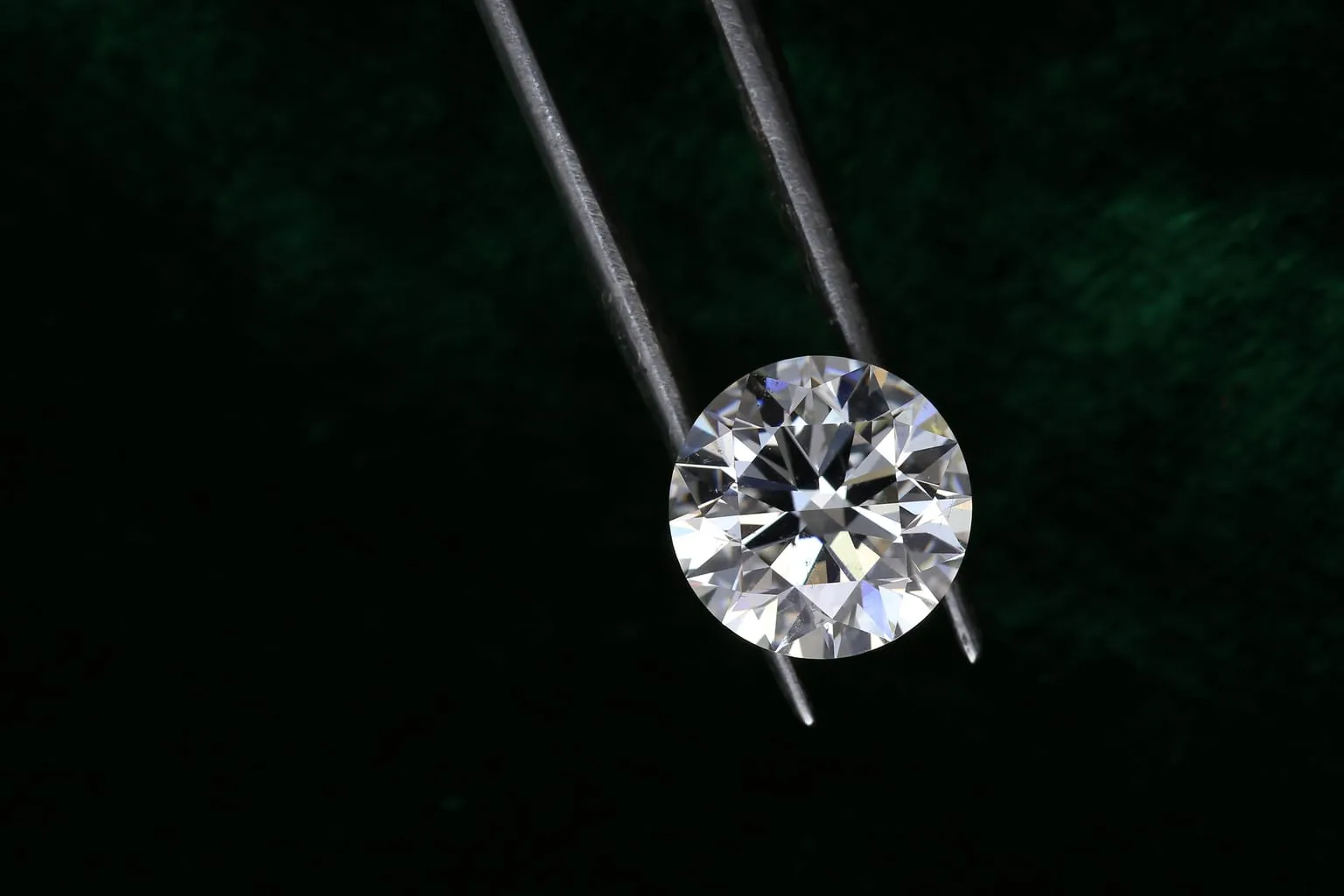
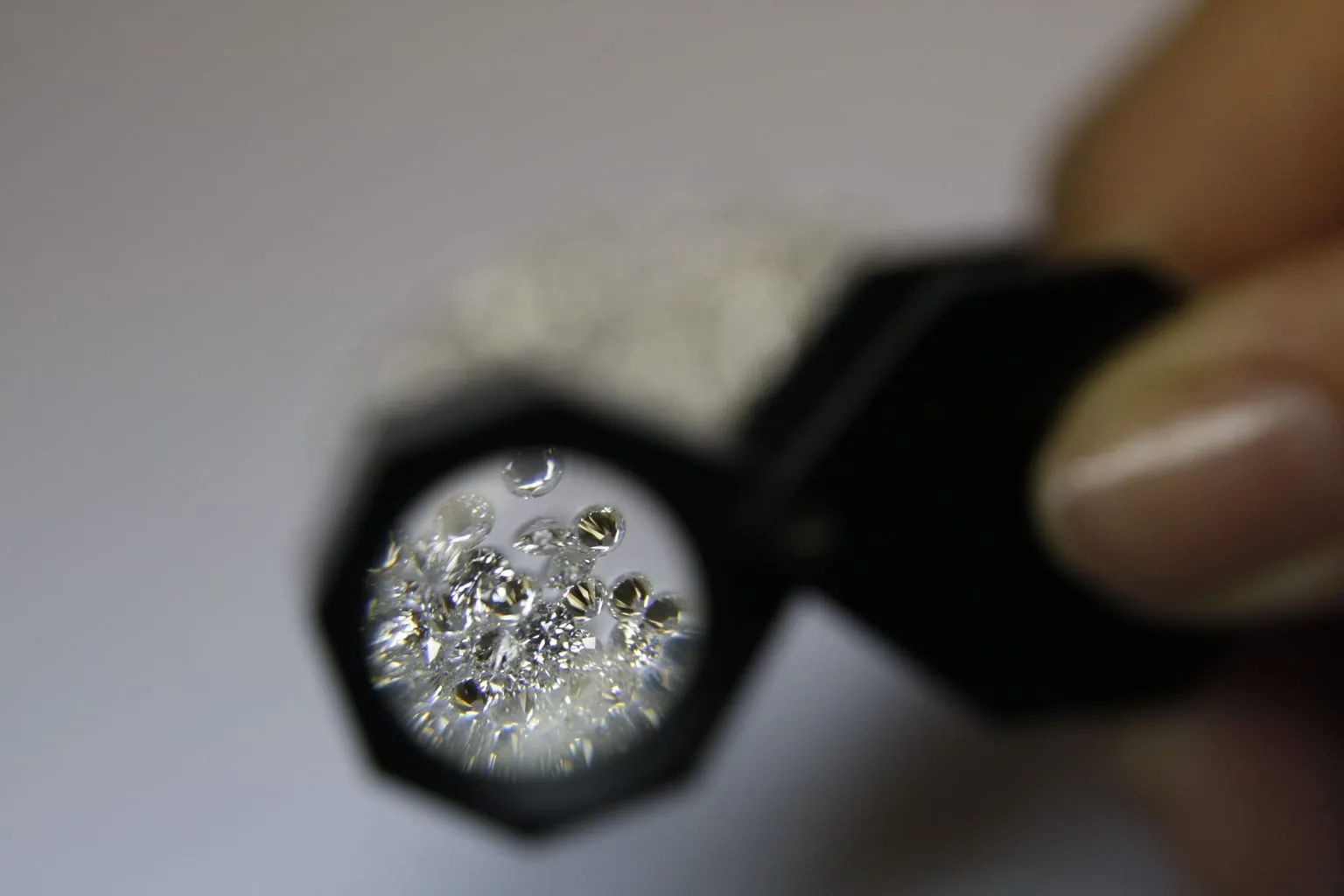
VS1 vs VS2 is a question about one step on GIA’s clarity scale. GIA puts both grades in a single band, Very Slightly Included, where inclusions “are minor and range from difficult to somewhat easy for a skilled grader to see under 10x magnification”. VS1 sits at the difficult end and VS2 at the easier end. Everything else a buyer hears, including “eye clean”, comes from sellers rather than from the scale. We then priced the two grades in one setting at one store on the same day, and the gap was not what the grade names suggest.
What is on this page7 sections
Key Takeaways
- GIA grades clarity under 10x magnification, and both VS1 and VS2 fall in its Very Slightly Included band; neither GIA clarity page we read uses the phrase “eye clean”.
- GIA says most diamonds fall into the VS or SI categories, and that its grade weighs the size, nature, position, color or relief, and quantity of what the grader sees.
- In one Rare Carat setting on 18 September 2026, a VS2 round cost 40 dollars less than a VS1 at 1 carat and 1,890 dollars less at 2 carats, and one VS2 emerald cut cost more than its VS1 pair.
- GIA recommends VS2 or higher for emerald cuts, because their open facets show inclusions more easily than a brilliant does.
- GIA stopped using VS1 and VS2 on lab-grown reports from 1 October 2025, so a lab stone sold with those grades was graded by another lab.
What GIA Says VS1 and VS2 Mean
GIA’s clarity scale has 11 grades, from Flawless to I3, and every grade is set by a skilled grader using 10x magnification. That last point is the one most comparisons skip.
The Definition, Word for Word
On gia.edu, GIA defines the band in one line: Very Slightly Included (VS1 and VS2), “Inclusions are minor and range from difficult to somewhat easy for a skilled grader to see under 10x magnification.” Its consumer site, GIA 4Cs, puts it more briefly: inclusions “are observed with effort but can be characterized as minor.” The step above, VVS1 and VVS2, is where inclusions are difficult for a skilled grader to see at all under the same lens. So VS1 is the cleaner half of the band and VS2 the half where a trained eye with a loupe finds things sooner.
What the Grader Weighs
GIA says its system considers “the size, nature, position, color or relief, and quantity” of clarity characteristics. Position matters as much as size: GIA 4Cs lists location among the things a grade is based on. Two VS2 stones can differ in where the inclusion sits, and the report’s plot, not the letters, tells you where.
Where “Eye Clean” Comes From
We read both GIA clarity pages on 18 September 2026 and found no use of “eye clean” on either. GIA 4Cs does say that many clarity characteristics “will likely not be visible to the naked eye”, and it says most diamonds seen in jewelry stores fall between VS and SI. “Eye clean” is a seller’s promise about one stone, so ask the seller who looked, at what distance, and whether a photo or video backs it.
VS1 vs VS2 Price: One Setting, One Store, One Day
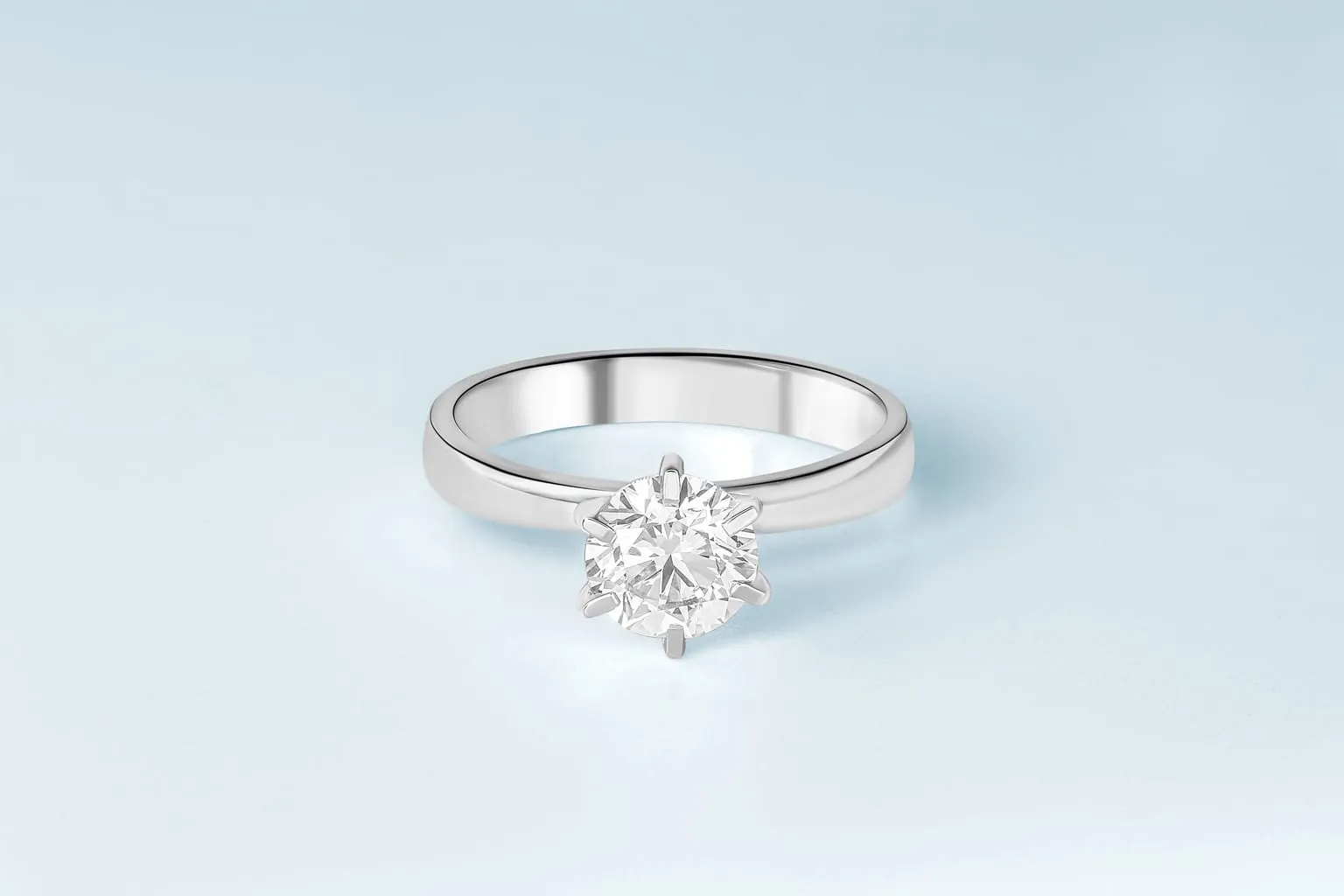
To see what the letter change does to a bill, we held everything we could constant: one store, Rare Carat, one setting, its Linda comfort-fit solitaire in 14K white gold, and G color throughout. We asked Rare Carat’s own pages for each grade on 18 September 2026 from a US connection. Rare Carat is a marketplace, so each price below belongs to one listed stone, not to the grade.
| Stone (all G color unless noted) | Grading lab | Stone, in dollars | Complete ring, in dollars |
|---|---|---|---|
| 1.00 ct round, VVS2 | IGI | 2,735 | 3,345 |
| 1.00 ct round, VS1 (Rare Carat Ideal cut) | IGI | 2,290 | 2,900 |
| 1.00 ct round, VS2 (excellent cut) | IGI | 2,250 | 2,860 |
| 1.00 ct round, SI1 | IGI | 1,800 | 2,410 |
| 1.50 ct round, VS1 | IGI | 6,225 | 6,835 |
| 1.51 ct round, VS2 | GIA | 6,030 | 6,640 |
| 2.00 ct round, VS1 | IGI | 12,175 | 12,785 |
| 2.03 ct round, VS2 | IGI | 10,285 | 10,895 |
| 1.01 ct emerald cut, VS1 | GIA | 1,820 | 2,430 |
| 1.01 ct emerald cut, VS2 | GIA | 1,900 | 2,510 |
| 1.00 ct lab-grown round, H, VS1 | IGI | 395 | 1,005 |
| 1.04 ct lab-grown round, H, VS2 | IGI | 380 | 990 |
The setting came to $610 on every row in September 2026, so the difference in each pair is the stone alone.
What the Pairs Show
At 1 carat the VS2 was 40 dollars cheaper than the VS1 on 18 September 2026, and above it an SI1 saved another 450. At 2 carats the VS2 saved 1,890 dollars on 18 September 2026 while weighing more. The emerald pair ran backwards, with the VS2 costing 80 dollars more on the same day, and both of those were GIA graded. The lab-grown pair differed by 15 dollars. Our reading: the clarity grade moves price least on a small lab stone and most on a large natural one, and a single listing can override the grade entirely.
Why One Pair Is Not a Market Price
Cut, fluorescence, the grading lab and where the inclusion sits all change a stone’s price, and our pairs do not hold all of them equal: the 1 carat VS1 carries Rare Carat’s “Ideal” label and its VS2 an excellent cut, and the 1.5 carat pair mixes an IGI and a GIA report. GIA’s own line is that rarity affects value, and the value of a diamond reflects all 4Cs. Treat the table as proof that the gap varies, then compare the stones you are actually offered.
Why the Shape Decides How Much Clarity You Need
GIA 4Cs says brilliant cuts “can conceal small flaws through their many facets”, while step cuts like emerald cuts, “with their larger open facets, may reveal them more easily”. For the emerald cut specifically it recommends “a grade of VS 2 clarity and G color or above”, and higher grades for stones of 2 to 3 carats or above. It gives the Asscher, the other step cut, the same VS2 advice.
| Your stone | What GIA says | What it means for VS1 vs VS2 |
|---|---|---|
| Round brilliant | Brilliant cuts can conceal small flaws through their many facets | The case where VS2 is easiest to justify; ask where the inclusion sits |
| Princess | Its pointed corners are great at hiding inclusions | Same logic as the round |
| Radiant | Its facet pattern helps mask inclusions, more forgiving than step cuts | Same logic as the round |
| Emerald cut or Asscher | Step cuts reveal clarity more; VS2 and G or above recommended | VS2 is GIA’s floor, not a compromise, so VS1 is worth pricing |
| Emerald cut of 2 to 3 carats or more | Even higher grades are recommended | Look above VS2 |
If the stone is an emerald cut, the band beside it matters too; our guide to wedding bands for emerald cut engagement rings covers that, and every diamond shape compared covers the rest.
Lab-Grown Stones and the VS Grades
GIA announced on 26 August 2025 that from 1 October it would describe lab-grown diamonds as “Premium” or “Standard” and would no longer use the nomenclature it created for natural diamonds. Its Premium tier requires “Very, Very Slightly included and higher” clarity and Standard requires “Very Slightly included”, so a VS1 and a VS2 lab stone land in the same GIA tier. The lab-grown VS grades you see on listings come from other labs, IGI in both of ours. See lab-grown vs natural diamonds and where to buy lab-grown diamonds.
Which One to Buy
For a round or other brilliant under 2 carats, VS2 is where the saving sits, provided the report places the inclusion away from the center. For an emerald or Asscher cut, VS2 is GIA’s minimum, so price VS1 as well. For a lab-grown stone, the clarity step barely moved the price in our pair, so buy the grade you want. Budgets are set out in engagement rings under $1,000, under $500 and under $10,000, and carat pricing in diamond prices by carat. Our Rare Carat review covers the store itself. RingReel is part of Rare Carat’s affiliate program on Awin, so its links on this page can earn us a commission at no cost to you.
Frequently Asked Questions
Is VS1 clarity worth the extra cost over VS2?
It depends on the shape and the stone. In our same-setting check on 18 September 2026 the VS1 cost 40 dollars more at 1 carat and 1,890 more at 2 carats. For emerald and Asscher cuts GIA recommends VS2 or higher, so VS1 buys margin; for a round, the inclusion’s position matters more.
Is VS2 a bad diamond?
No. GIA describes VS2 inclusions as minor, and it says most diamonds fall into the VS or SI categories. VS2 is the lower half of the Very Slightly Included band, graded under 10x magnification. Whether a particular VS2 shows anything to the naked eye depends on where the inclusion sits, so read the plot on the report.
Is VS1 a good quality diamond?
Yes, by GIA’s scale it sits in the Very Slightly Included band, where inclusions are minor and difficult to somewhat easy for a skilled grader to see under 10x. Only the VVS, IF and FL grades rank above it. Clarity is one of four Cs, so a VS1 with a weak cut can still look dull.
What is the price difference between VS1 and VS2?
There is no fixed gap. On 18 September 2026, in one Rare Carat setting with G color stones, it was 40 dollars at 1 carat, 195 at 1.5 carats and 1,890 at 2 carats, and an emerald VS2 cost 80 more than its VS1. Compare the actual stones offered.
Is VS1 or VVS2 better?
VVS2 is the higher grade. GIA says VVS inclusions are difficult for a skilled grader to see under 10x magnification, while VS inclusions range from difficult to somewhat easy. At 1 carat and G color in our check, the VVS2 cost 445 dollars more than the VS1, a larger step than VS1 to VS2.
Sources
- GIA, GIA 4Cs Clarity, undated, accessed 18/09/2026.
- GIA 4Cs, Diamond Clarity, updated 16/10/2025, accessed 18/09/2026.
- GIA 4Cs, Guide to Diamond Shapes for Engagement Rings, 2025.
- GIA, GIA Launches Updated Laboratory-Grown Diamond Services October 1, 26/08/2025, accessed 18/09/2026.
- GIA 4Cs, Diamond Carat Weight, 2025.
- Rare Carat, Linda ring with a 1.00 ct G VS1 round, accessed 18/09/2026 from a US connection; the other rows came from the same address with the carat, color and clarity changed, and resolve to the listed stone Rare Carat shows for that description.
- Rare Carat, Linda ring with a 1.00 ct G VS2 round, accessed 18/09/2026.
- Rare Carat, Linda ring with a 1.01 ct G VS1 emerald cut, accessed 18/09/2026.
- Rare Carat, Linda ring with a 1.00 ct H VS1 lab-grown round, accessed 18/09/2026.