

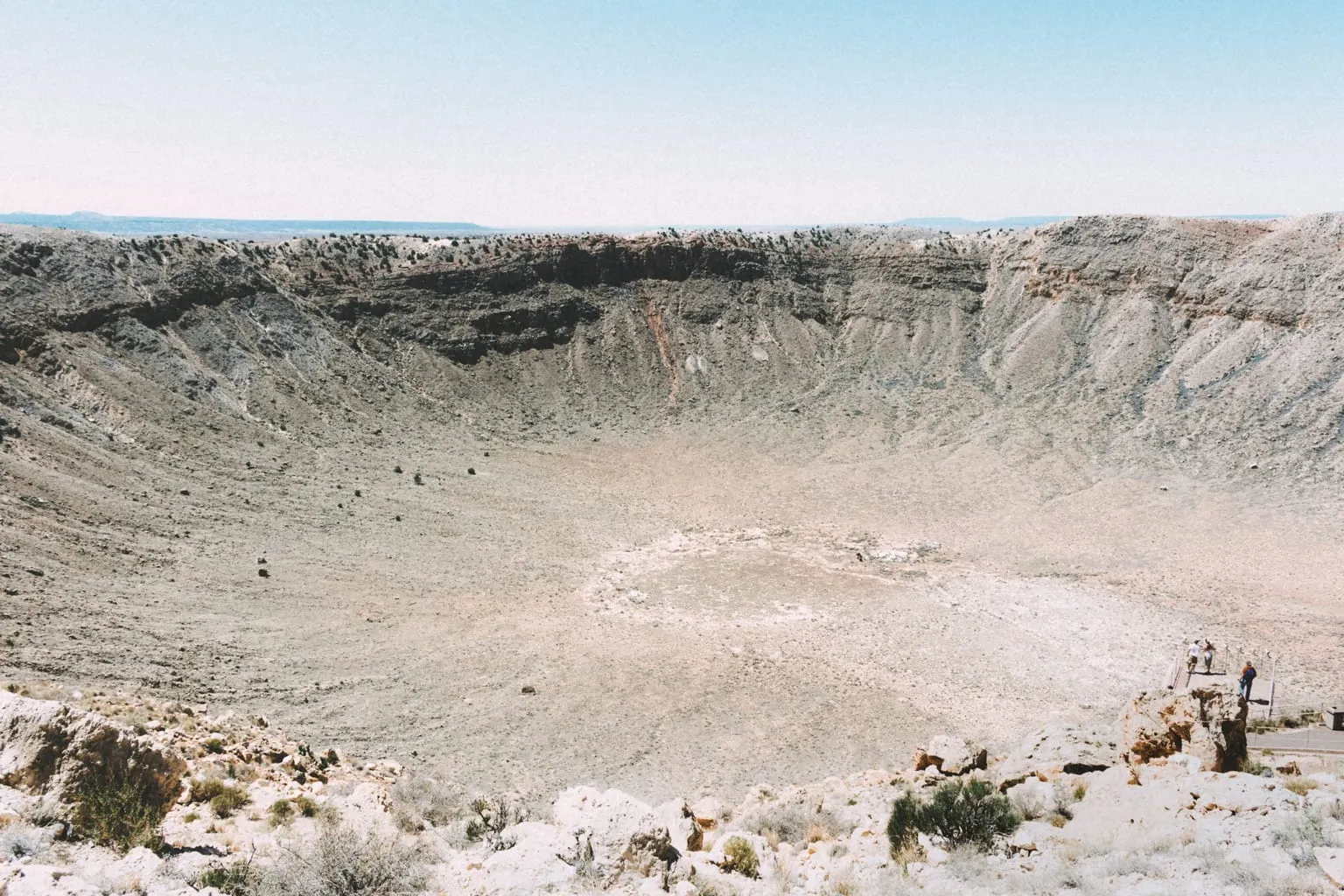
What is moissanite? It is silicon carbide, a compound of silicon and carbon that the French chemist Henri Moissan found in fragments of the Canyon Diablo meteorite in Arizona, and the moissanite sold in rings today is grown in a laboratory, because the natural mineral turns up only in tiny amounts. GIA, the Gemological Institute of America, classes it as a diamond simulant. Charles & Colvard, the company that brought it to jewelry counters, insists it is “not a diamond substitute or a fake diamond” but “its own gemstone”. Both statements are about the same stone, and the gap between them is most of what a buyer needs to understand.
This guide covers what the stone is, how it is made, who puts the color and clarity grade on it, and what a 2 carat moissanite ring actually cost on 18 September 2026, priced in the same setting against a lab-grown diamond. If your question is how it compares with a diamond on hardness, sparkle and labeling law, our guide to moissanite vs diamond answers that in detail.
What is on this page10 sections
Key Takeaways
- Moissanite is silicon carbide. GIA’s 1997 research paper credits Henri Moissan with finding the natural mineral in the Canyon Diablo meteorite and George Kunz with naming it after him in 1905.
- Natural moissanite occurs only in tiny amounts, and GIA notes that some reported finds may have been contamination, so jewelry moissanite is grown by seeded sublimation in a lab.
- The D to K color letters on a moissanite are graded by the seller against GIA’s diamond scale; none of the moissanite pages we read offered an independent laboratory report.
- On 18 September 2026 one seller priced the same 14K white gold solitaire at 1,095 dollars with a 2 carat moissanite and 1,420 dollars with a 2 carat IGI-graded lab diamond.
- No named, dated source publishes resale values for moissanite, so treat it as a stone you buy to wear.
Where Moissanite Comes From
The short history is a meteorite, a century of industrial abrasive, and a semiconductor company that learned to grow clear crystals.
Henri Moissan and the Canyon Diablo Meteorite
GIA’s Gems & Gemology journal set out the origin in 1997: “chemist Henri Moissan discovered natural silicon carbide in the Canyon Diablo meteorite1. Kunz (1905) applied the name moissanite to the natural mineral in Moissan’s honor.” MoissaniteCo, a moissanite retailer, tells the same story and calls Kunz a “well-known gem expert and mineralogist”.
The sellers date the discovery earlier. Charles & Colvard’s product pages say moissanite was “discovered by Henri Moissan in 1893”, and MoissaniteCo gives the same year. GIA’s reference is Moissan’s published study of 1904. We could not open that original paper, so we report both dates rather than choose between them.
Why the Stone in Your Ring Was Grown
Natural moissanite is too rare to cut into jewelry. GIA writes that since Moissan’s find it “reportedly has been found in tiny amounts in other meteorites as well as in many terrestrial occurrences”, and adds a caution few retail pages repeat: “Some or all of these occurrences may have been spurious”, with the material possibly coming from the silicon carbide cutting wheels used to slice rock samples. Charles & Colvard puts the practical result plainly on its product pages: “Due to its rarity, moissanite available today is laboratory-created.”
From Abrasive to Gemstone
Silicon carbide was a factory material long before it was a gem. GIA’s paper says Edward Acheson, whose patent dates from 1893, “appears to have been the first to recognize its hardness and potential as an abrasive”, after making it by accident while trying to grow diamond; he called it carborundum. Colorless crystals large enough to facet came much later. In 1997 GIA reported near-colorless material “being produced by Cree Research Inc. of Durham, North Carolina, and distributed by C3 Inc.”, with a trade release planned for early 1998.
MoissaniteCo’s history page says Charles & Colvard’s patents kept competing gems out of the American market “until late 2015”, and that “several new overseas sources have entered the American market” since. That is why today’s listings mix Charles & Colvard’s Forever One with house brands such as MoissaniteCo’s own.
How Moissanite Is Made
Jewelry moissanite is grown from vapor, not melted and cooled. GIA’s 1997 paper describes the only method that had then proved viable for large single crystals, a seeded sublimation process in which silicon carbide powder is heated until it “vaporizes and then recrystallizes without ever passing through a liquid stage”, growing on a seed crystal. The exact process used for the gem material, GIA noted, had “not been released”.
Silicon carbide also comes in many crystal arrangements. GIA counts “more than 150 polytypes”, all properly called moissanite, of which only the 4H and 6H forms could then be grown in bulk; the 1997 gem material was 6H. MoissaniteCo says its own house stone is “made of the same type of Moissanite crystal as the Forever One brand (called 4H Silicon Carbide)”. None of this changes how the stone looks on a hand, but it explains why two brands can sell chemically identical stones at different prices.
Cubic zirconia, the other common simulant, is made the opposite way. GIA describes powdered zirconium oxide heated to its melting point inside a metal chamber, with crystals growing as the melt cools.
| Stone | What it is | How it is made | Mohs hardness | What GIA notes |
|---|---|---|---|---|
| Moissanite | Silicon carbide | Grown from vapor on a seed crystal (seeded sublimation) | 9.25 | More than twice the fire of diamond and slightly more brilliance; a few more inclusions than CZ |
| Cubic zirconia | Zirconium oxide | Melted, then crystallized as the melt cools | 8.5 | Slightly more fire but less brilliance than diamond; yellows over time |
| Glass | Manufactured glass | Melted and formed | Not given on the page | An “age-old gem imitation”, less brilliant |
| Lab-grown diamond | Essentially pure carbon, a diamond | Grown in a lab | 10, per the FTC’s definition of diamond | A diamond, not a simulant |
What Moissanite Looks Like
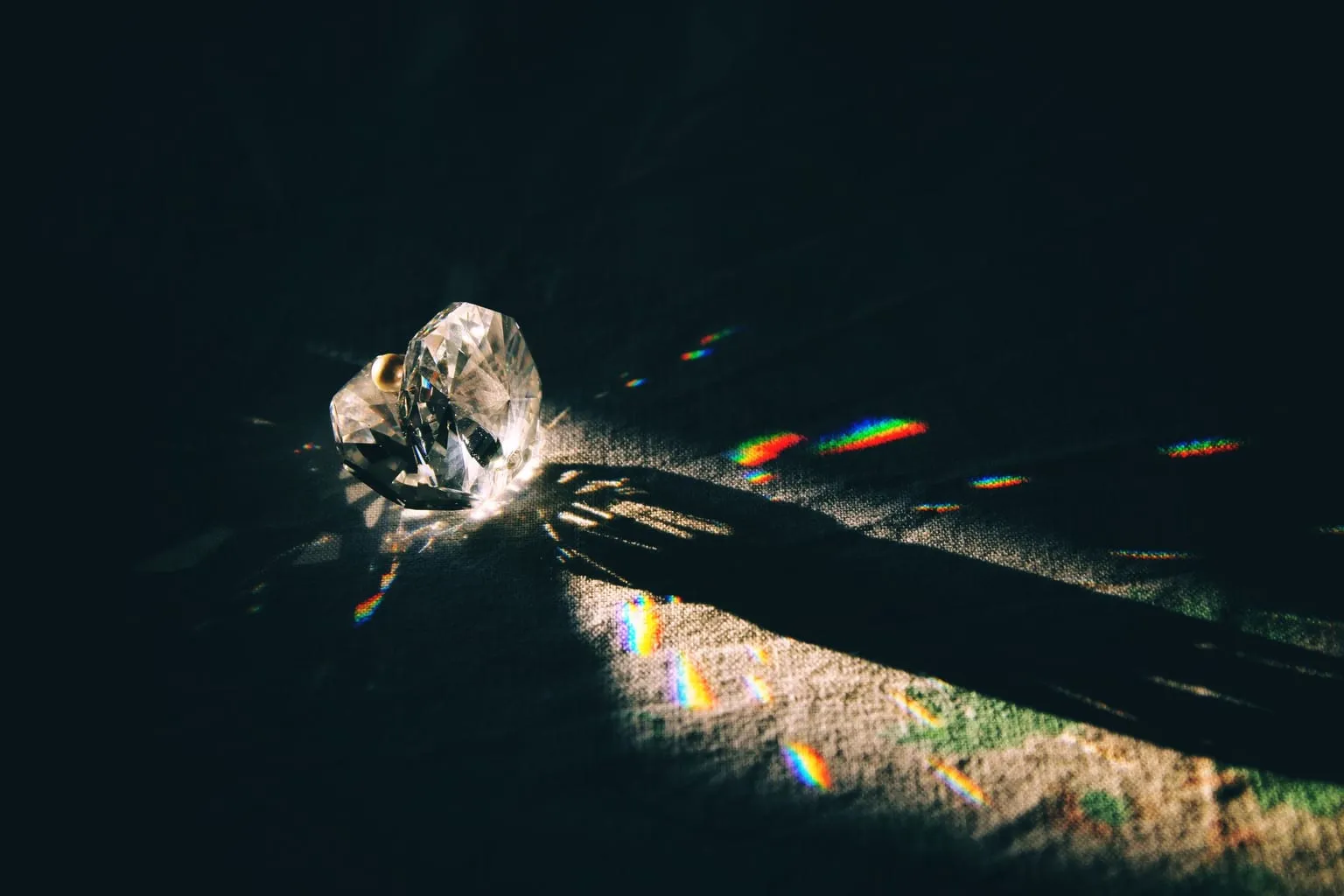
Moissanite’s signature is color in its sparkle. GIA’s page on imitation gems says it “has more than twice the fire of diamond and slightly more brilliance”, and warns that “In large sizes, one carat or above, its intense fire may give it away as a non-diamond gem.” GIA also notes that “Some moissanites look slightly yellow or gray when viewed at certain angles”, and that moissanite comes in yellow, black and blue, used as substitutes for colored diamonds.
The optical reason, double refraction, and the tell it leaves under a loupe are covered in our moissanite vs diamond guide, so we will not repeat them here.
Who Grades a Moissanite

The letters on a moissanite listing are borrowed from diamond grading and applied by the seller. Charles & Colvard writes that “Moissanite is actually graded for color using the same scale” as GIA’s diamond color scale, and sorts its stones into “Colorless (D-E-F), Near Colorless (G-H-I), and Faint Color (J-K)”. MoissaniteCo uses the same letters and the same three bands.
Who does the grading is stated too. In a post on its grading process, Charles & Colvard describes stones reviewed four times at its headquarters in North Carolina, the last time by its own grader, who compares each stone “to a set of master stones” and told the company a stone takes “About 15 seconds in total”. That is a manufacturer’s quality control, which is useful, but it is not an independent laboratory report of the kind a diamond can come with. None of the moissanite product or education pages we read offered one.
MoissaniteCo is candid about what the top grades mean: “The difference between D and F is a difference on paper only,” and in a ring under normal light “its difficult to tell the difference between a D color and a G or even H color stone.” GIA adds that moissanite’s “value often depends on its degree of colorlessness.”
Clarity and Carat, the Other Two Labels
Clarity is described in general terms, not graded stone by stone. MoissaniteCo says “the average clarity of Moissanite is equivalent to VS clarity on the GIA scale”, and sells its house stone as “visually flawless clarity (VVS+)”. GIA’s own comparison is that moissanite “tends to have a few more inclusions than CZ”.
Carat is the label most likely to mislead. Moissanite is lighter than diamond, so sellers quote a diamond equivalent weight instead of the stone’s real weight. MoissaniteCo’s example: a 6.5mm round diamond weighs 1.0 carat, while a 6.5mm round moissanite weighs “approximately 0.88 carats”. A “2 carat” moissanite is therefore a stone the size of a 2 carat diamond, not one that weighs two carats.
| Label on a listing | What it means | Who says so |
|---|---|---|
| Colorless (D, E, F) | No visible color; Charles & Colvard calls D-E-F Forever One its first colorless grade | Charles & Colvard; MoissaniteCo |
| Near colorless (G, H, I) | A “slightly warmer or steely white” | MoissaniteCo |
| Faint color (J, K) | “the yellow tint becomes more noticeable” | MoissaniteCo |
| VVS+ or “VS equivalent” | The seller’s description of clarity, not a lab grade | MoissaniteCo |
| DEW, or a carat figure | Diamond equivalent weight: the size of a diamond of that weight | MoissaniteCo |
| Forever One | Charles & Colvard’s brand of moissanite | Charles & Colvard |
| MC | MoissaniteCo’s house brand, “a lower cost alternative” in E-F color | MoissaniteCo |
What a 2 Carat Moissanite Costs
The only honest answer is one seller’s price on one day, so here is one setting priced every way it is offered. We read MoissaniteCo’s Petite Moissanite Solitaire Ring 1.5mm on 18 September 2026 from its product page, where each center stone option carries the price of the complete ring in the starting metal, 14K white gold; choosing 18K white gold adds 435 dollars. When we configured this ring on 14 September 2026 with the 0.75 carat house stone, the price shown was 740 dollars, matching the option price read on 18 September.
| Center stone in the same 14K white gold solitaire | Complete ring price, read 18/09/2026 |
|---|---|
| Round MC moissanite, colorless, 2.0 ct DEW | 1,095 dollars |
| Round moissanite sold as “Super Ideal Cut: AGS0”, colorless, 2 ct DEW | 1,200 dollars |
| Round Forever One moissanite, near colorless, 2.0 ct DEW | 1,215 dollars |
| Round Forever One moissanite, colorless, 2.0 ct DEW | 1,375 dollars |
| Round lab-grown diamond, 2.0 ct, D/E, VS1, Ideal cut, IGI certificate | 1,420 dollars |
| Round MC moissanite, colorless, 1.0 ct DEW | 805 dollars |
| Round lab-grown diamond, 1.0 ct, D, VS1, Ideal cut, IGI certificate | 980 dollars |
The difference between the cheapest 2 carat moissanite and the 2 carat lab-grown diamond in that ring was 325 dollars on 18 September 2026, so the moissanite ring cost about 77% of the diamond ring. At 1 carat it was about 82%. The VS1 on those lab diamonds is an IGI grade: since 1 October 2025 GIA no longer grades lab-grown diamonds on its natural clarity scale and describes them as “Premium” or “Standard” instead.
For scale, GIA’s 1997 paper recorded the plan for the first gem moissanite: a price range of 5% to 10% of “the average retail price of comparable diamonds”. Measured against a lab-grown diamond in the same mounting, one seller’s gap in 2026 is nothing like that. The comparison that made moissanite a bargain was against mined diamonds, and a lab-grown diamond is a diamond, as our guide to lab-grown and natural diamonds explains.
Charles & Colvard sells complete rings rather than loose stones on the pages we opened. Its 3 carat DEW round Forever One solitaire in 14K white gold, colorless D-E-F, was 1,319.20 dollars on 18 September 2026, marked down from 1,649 dollars during a sitewide sale.
Two cautions. These are one retailer’s options in one setting, not market prices, and GIA’s hardness and sparkle figures say nothing about value. And a lab diamond option that close in price is a reason to decide on appearance and paperwork, not on the assumption that moissanite is always far cheaper. If the budget is the deciding factor, our lists of affordable engagement rings and engagement rings under 500 dollars compare complete rings across sellers.
Is Moissanite Worth Anything Later?
We found no named, dated source that publishes resale prices or buy-back rates for moissanite, and we will not invent one. What the sources do say is narrower. GIA ties its value to how colorless it is. MoissaniteCo says its color cannot change over time: “it is impossible for the color to change with time”, with dirt the only thing that alters how it looks. That is a statement about the stone staying the same, not about what anyone will pay for it later.
So buy moissanite for what it does on the hand: a large, hard, bright stone at a price that suits the budget. Insure the ring for replacement if losing it would hurt, and do not count on selling it.
Is Moissanite Right for You?
| If this is you | Moissanite? | Why |
|---|---|---|
| You want the biggest look for a fixed budget | A good fit | GIA says it costs much less than a comparable diamond, letting buyers choose larger stones |
| You love colored flashes | A good fit | GIA: more than twice the fire of diamond |
| You want white, quiet sparkle at 2 carats or more | Look first | GIA says fire at one carat or above may give it away |
| You want an independent report on your stone | Choose a diamond | The moissanite pages we read offered the seller’s grade, not a lab report |
| A lab-grown diamond of the same size costs little more | Compare both | One seller’s gap at 2 carats was 325 dollars on 18 September 2026 |
| You may want to resell it | Do not count on it | Not published |
| You work hard with your hands | Either stone, in a protective setting | Hardness is not toughness; see diamond alternatives |
If moissanite is the answer for you, our picks and what each seller’s listing actually prints are in moissanite engagement rings.
Frequently Asked Questions
Is Moissanite a Fake Diamond?
It is not a diamond, but it is a real material, silicon carbide. GIA classes it as a diamond simulant; its maker calls it its own gemstone. What matters is the label: FTC guidance calls the unqualified word “diamond” deceptive for anything that is not one, and a simulant needs “simulated” or “imitation” beside its name.
What Is the Downside of Moissanite?
Four, from the sources we read. Its strong colored fire can mark it as a non-diamond at one carat or above, per GIA. Some stones look slightly yellow or gray at certain angles. Its grades come from the seller, not an independent lab. And no one publishes a resale value for it, so it is not a store of money.
Is a Moissanite Worth Anything?
It has a price, but no published resale value. We found no named, dated source reporting what used moissanite sells for or what jewelers pay to buy it back. GIA says its value depends mostly on how colorless it is. Buy it to wear, insure the ring for replacement, and treat any promise of resale as unverified.
Is Moissanite Better Than Cubic Zirconia?
On the points GIA publishes, moissanite is the harder and more stable stone: 9.25 on the Mohs scale against 8.5 for cubic zirconia, and GIA says CZ yellows over time. Cubic zirconia is cleaner, since GIA notes moissanite tends to have a few more inclusions than CZ, and it costs far less.
How Much Is a 2 Carat Moissanite Worth?
On 18 September 2026 MoissaniteCo priced one 14K white gold solitaire at 1,095 dollars with its own 2 carat equivalent moissanite and 1,375 dollars with Charles & Colvard’s Forever One. That is one seller’s retail price. No source we found publishes a resale value, so “worth” means what you pay.
What Is Better, Swarovski or Moissanite?
We could not open Swarovski’s own pages on 18 September 2026, so we cannot quote what its crystal is made of or how hard it is. Swarovski’s menu, archived in June 2026, also sells lab-grown diamonds as Swarovski Created Diamonds. Those are diamonds, so compare them with moissanite on size, sparkle and price.
Sources
- Nassau, K., McClure, S. F., Elen, S. and Shigley, J. E., GIA Gems & Gemology, Synthetic Moissanite: A New Diamond Substitute, Winter 1997, full paper accessed 18/09/2026.
- GIA (Robert Weldon), An Introduction to Imitation Diamonds & Other Gems, undated, accessed 18/09/2026.
- GIA, GIA Launches Updated Laboratory-Grown Diamond Services October 1, 2025, accessed 18/09/2026.
- GIA 4Cs, Diamond Alternatives: Engagement Rings, undated, read through the Internet Archive capture of 20/01/2026 on 18/09/2026.
- Federal Trade Commission, eCFR, 16 CFR 23.12, Definition and misuse of the word “diamond”, current as accessed 18/09/2026.
- Federal Trade Commission, eCFR, 16 CFR 23.25, Misuse of the word “gem”, current as accessed 18/09/2026.
- Charles & Colvard, What Is Moissanite? Answered by the Creators, themselves., undated, accessed 18/09/2026.
- Charles & Colvard, Making the Grade, undated, accessed 18/09/2026.
- Charles & Colvard, 3 ctw Round Solitaire Engagement Ring, product page and price, accessed 18/09/2026.
- MoissaniteCo, Moissanite and Charles & Colvard History, undated, accessed 18/09/2026.
- MoissaniteCo, Color, Clarity, & Carat, undated, accessed 18/09/2026.
- MoissaniteCo, Is Moissanite Graded on the GIA Color Grading Scale?, undated, accessed 18/09/2026.
- MoissaniteCo, What is the Difference Between F1 and MC?, undated, accessed 18/09/2026.
- MoissaniteCo, Will Moissanite Change Color with Time?, undated, accessed 18/09/2026.
- MoissaniteCo, Petite Moissanite Solitaire Ring 1.5mm, center stone and metal option prices, accessed 18/09/2026.
- Swarovski, Brand page, site menu read through the Internet Archive capture of 11/06/2026 on 18/09/2026.